How to Sit on a Doughnut Pillow
Sitting with tailbone pain, hemorrhoids, or post-surgical soreness can make even simple tasks feel unbearable. A donut pillow, also called a hemorrhoid cushion or coccyx ring, removes pressure from sensitive areas by redistributing your weight across the hips and thighs. But simply tossing it on your chair won’t help. You need to know how to sit on a donut pillow the right way. Misalignment can cancel out the benefits or even create new discomfort.
This guide shows you proper positioning, ideal usage scenarios, and common mistakes to avoid. Whether you’re recovering from childbirth, managing chronic tailbone pain, or sitting for long hours at work, using the pillow correctly makes all the difference.
Choose the Right Cushion Type

Before mastering sitting technique, make sure you have the right cushion. Not all models work the same for every condition or lifestyle.
Match Material to Your Needs
Your daily routine and health condition determine the best material. Memory foam offers firm, lasting support ideal for office use or chronic pain. It contours to your shape, evenly distributing weight across your hips and thighs. For hot climates or long sessions, gel-infused foam adds cooling comfort to prevent overheating.
If you travel often, inflatable models are lightweight and packable. Deflate them for your bag and reinflate in the car or airplane. Just note: they may require refilling and offer less stability than solid foam.
For postpartum recovery or post-surgery care, prioritize hygiene. Pick a model with a removable, machine-washable cover to maintain cleanliness and prevent irritation.
Size Matters for Proper Fit
A cushion too small won’t support your sit bones. One too large may slide or tilt. Most standard donut pillows fit average body types, but check diameter and hole size. The central void should fully clear your tailbone and perineum, typically 2.5 to 3.5 inches in diameter.
Sit on it clothed first. If you feel pressure in the center, the hole may be too small or the cushion too flat. A properly sized ring lets your buttocks rest fully on the padded ring while your tailbone floats freely.
Position the Pillow Correctly
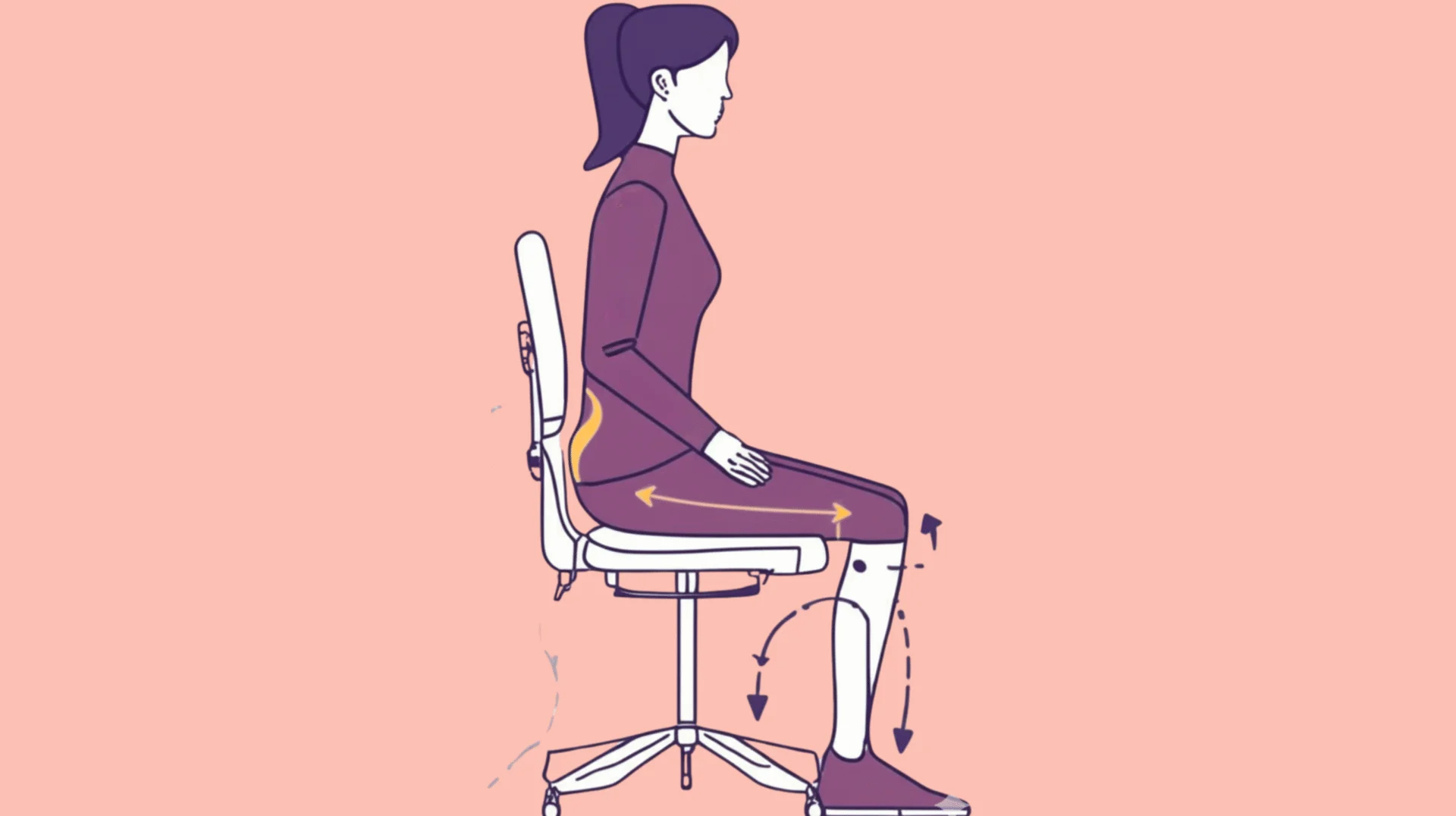
Even the best cushion won’t help if it’s placed wrong. Proper setup ensures your tailbone avoids contact and your weight shifts where it should.
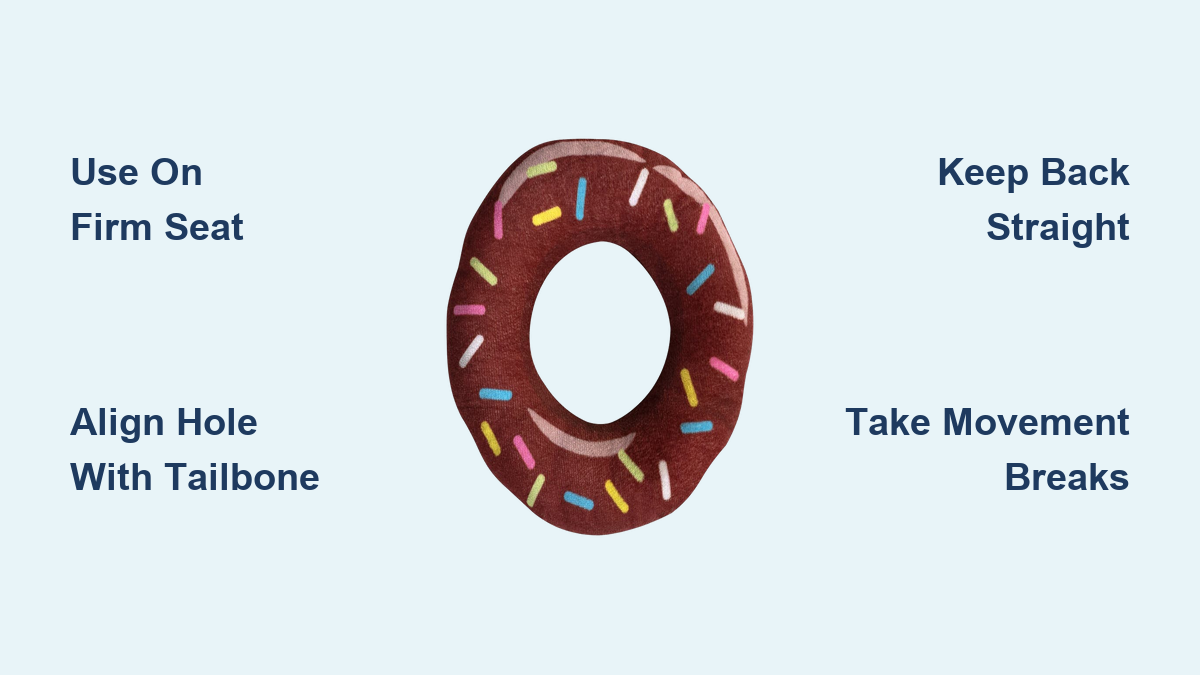
Use a Firm, Stable Seat
Place the donut pillow on a hard, flat surface like an office chair, dining seat, or car seat. Avoid plush sofas or sinking armchairs. Soft surfaces cause the cushion to collapse, misaligning the hole and reducing effectiveness.
Push the cushion snugly against the backrest so it doesn’t slide forward when you sit. If it moves during use, it disrupts alignment and forces you to readjust constantly.
Align the Hole with Your Tailbone
Center the cushion so the hole runs vertically, not tilted. Your goal: the coccyx (tailbone) must line up exactly with the opening. Misalignment, like sitting too far forward or backward, puts pressure back on injured tissue.
To test alignment, slowly lower yourself onto the cushion. Pause halfway and shift slightly forward or back until you feel complete relief in the tailbone area. You should feel support under your sit bones and thighs, with no contact in the center.
Sit with Proper Posture
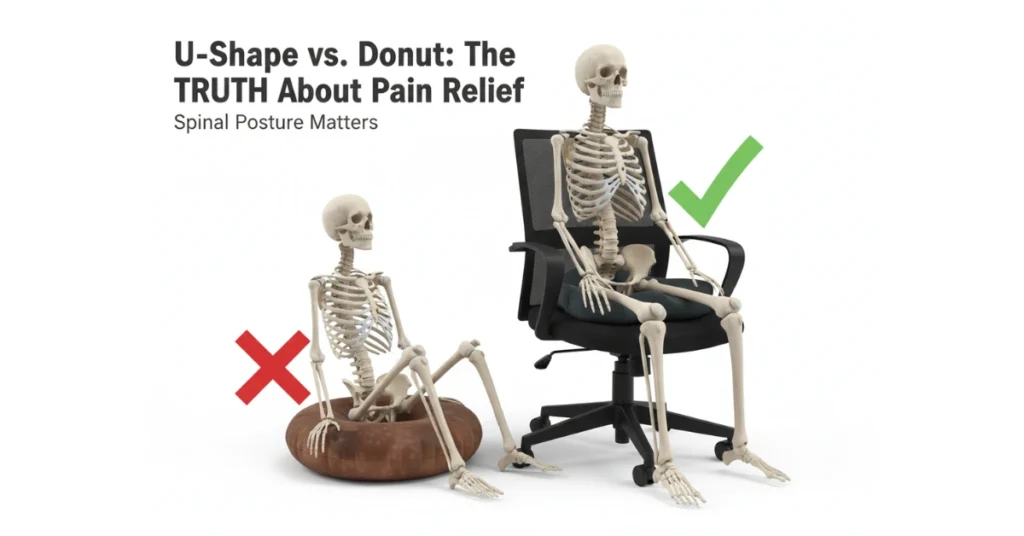
How you sit matters as much as the cushion itself. Good posture maximizes pressure relief and prevents strain elsewhere.
Keep Your Back Straight
Once seated, sit up tall with your spine neutral. Don’t hunch forward or lean heavily on the backrest. Slouching shifts weight back onto the tailbone, defeating the cushion’s purpose.
If needed, pair your donut pillow with a lumbar roll or small back cushion to maintain the natural curve of your lower spine. This combo supports both tailbone and back.
Place Feet Flat on the Floor
Keep your feet flat, hip-width apart, with knees bent at 90 degrees. This stabilizes your pelvis and promotes even weight distribution. If your chair is too high, use a footrest to avoid dangling legs, which increases pressure on the buttocks.
Lean Slightly Forward if Needed
Some users find slight forward tilt improves alignment. Gently shift your pelvis forward so your hips are slightly higher than your knees. This opens the hip angle, tilts the pelvis, and helps keep the tailbone clear of the seat.
Don’t force it. If it feels strained, return to a neutral position. The goal is comfort, not contortion.
Avoid Common Sitting Mistakes
Even small errors can reduce the pillow’s effectiveness or cause new discomfort.
Don’t Use It on Soft Furniture
Deep couches or plush chairs compress the cushion unevenly. The foam or air chamber sinks, misaligning the hole. If you must use it on a sofa, place a firm board or tray underneath to create a stable base.
Never Sit Directly on the Inner Rim
Some people mistakenly sit with the tailbone resting on the inner edge of the ring. This concentrates pressure instead of relieving it. Your tailbone should hover over empty space, not touch any part of the cushion.
If you feel a hard edge under your tailbone, the cushion may be too flat or worn out. Replace it with a higher-density model.
Don’t Ignore Breaks and Movement
A donut pillow reduces pressure, but it’s not a license to sit for hours. Prolonged sitting, even with relief, can still impair circulation and stiffen muscles.
Follow the 20-20-20 rule: every 20 minutes, stand for 20 seconds and move 20 feet. Stretch your hips, walk around, or do a quick pelvic tilt. This boosts blood flow and prevents secondary stiffness.
Use the Pillow in Different Settings

The donut pillow isn’t just for home use. With the right model, it can help wherever you sit.
Office and Desk Work
For long workdays, use a memory foam cushion with a breathable cover. Adjust your chair height so your feet stay flat when the pillow adds extra elevation. Pair it with an ergonomic setup: monitor at eye level, arms at 90 degrees, to reduce overall strain.
Driving and Commuting
Yes, you can use a donut pillow while driving. Choose a low-profile or inflatable model so it doesn’t raise you too high. Ensure you can still reach the pedals comfortably and maintain full visibility.
Avoid bulky cushions that shift during turns. Secure it with a seat strap if needed. Many drivers report significant relief on long trips, especially with sciatica or post-surgery pain.
Travel and Airplanes
Inflatable cushions are travel-friendly. Pack one in your carry-on for flights, trains, or car rides. Airplane seats are notoriously hard and narrow, so using a donut pillow can make a 6-hour flight bearable.
Postpartum and Recovery Use
New mothers with perineal tears or hemorrhoids find donut pillows essential. Use it while nursing, feeding, or resting. Combine with ice packs, sitz baths, and witch hazel pads for maximum comfort.
Wash the cover frequently. Stains and moisture can cause infections or irritation during healing.
Clean and Maintain the Pillow
A dirty cushion can worsen skin conditions or cause odors. Proper care extends its life and keeps it hygienic.
Wash Covers Regularly
If your pillow has a removable cover, wash it weekly, or more often during postpartum or recovery use. Use mild detergent and cold water. Air dry or tumble dry on low to prevent shrinkage.
Never use bleach or fabric softener, which can degrade fabric and irritate sensitive skin.
Spot Clean the Foam Core
Never soak memory foam or gel cores. Use a damp cloth with mild soap to wipe down spills or stains. Let it air dry completely, preferably in a well-ventilated area, before re-covering.
Moisture trapped inside can lead to mold or mildew, especially in humid environments.
Store Properly
Keep the cushion in a cool, dry place away from sunlight. UV rays can break down foam and vinyl over time. Don’t stack heavy items on top, as they can permanently compress the material.
For inflatable models, deflate partially before storing. Fully inflated cushions may burst due to air expansion. Fully deflated ones can crease and weaken seams.
Know When to Replace It
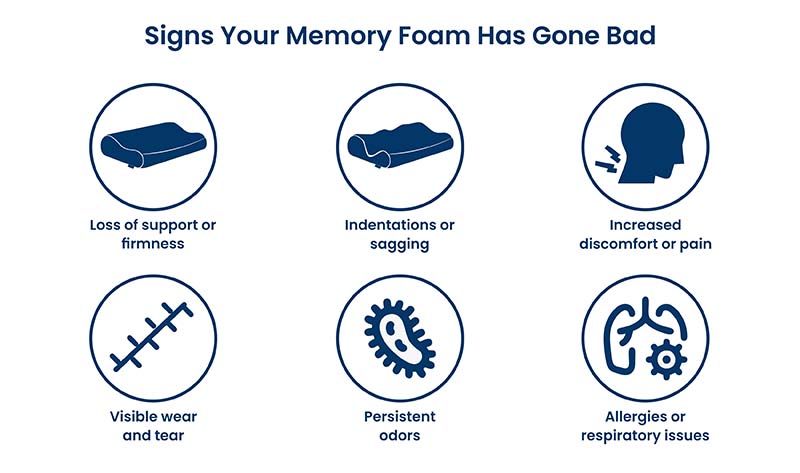
Even high-quality cushions wear out. A worn pillow loses support and stops relieving pressure.
Watch for these signs:
- Foam no longer bounces back after sitting
- Visible sagging or permanent indentations
- Inner hole has collapsed or shifted
- Cover is frayed, stained, or hard to clean
- Pain returns despite correct use
Most memory foam cushions last 1–3 years with daily use. Inflatable models may need patching or replacement sooner if leaks develop.
Combine With Other Pain Relief Strategies
A donut pillow works best as part of a full care plan, not a standalone fix.
Add Lumbar Support
Pair your ring cushion with a lumbar pillow to support your lower back. This combo corrects overall posture, reducing strain on both spine and tailbone.
Stay Active
Movement is medicine. Gentle walking, pelvic tilts, or yoga can speed healing by improving circulation. Avoid bed rest unless medically advised.
Improve Your Diet
For hemorrhoid sufferers, high-fiber foods and hydration prevent constipation, the main trigger for flare-ups. Eat more fruits, vegetables, and whole grains. Avoid straining during bowel movements.
Consult a Doctor if Pain Persists
If pain continues after 1–2 weeks of proper cushion use and lifestyle changes, see a healthcare provider. You may need physical therapy, medication, or further diagnosis. Conditions like coccydynia or sciatica sometimes require targeted treatment beyond seating aids.
Frequently Asked Questions About Donut Pillows
Can a donut pillow prevent hemorrhoids?
No. There is no conclusive proof that sitting on a donut cushion prevents hemorrhoids. It relieves pain associated with existing hemorrhoids but does not stop them from forming.
Is it safe to drive with a donut pillow?
Yes, provided the cushion does not elevate you so much that visibility is compromised or you can’t reach the pedals safely. It’s widely used to make long drives more tolerable.
How long can I sit on a donut pillow?
The cushion mitigates pressure, but movement is essential for circulation. Take regular breaks to stand and stretch. Avoid sitting for excessively long uninterrupted periods.
Are there alternatives if a donut pillow is uncomfortable?
Yes. Depending on your condition, alternatives include wedge cushions (which tilt the pelvis forward), U-shaped coccyx cushions (with a rear cutout instead of a full hole), or high-density memory foam seat pads. For mobility issues, a padded swivel cushion may help.
Does the cushion cure tailbone pain?
No. The cushion relieves the symptom (pain caused by pressure) by removing the pressure source. It does not cure the underlying injury, though it creates an environment conducive to healing by preventing further irritation.
Key Takeaways for Sitting on a Donut Pillow
Learning how to sit on a donut pillow correctly transforms it from a simple pad into a powerful tool for comfort and recovery. Start by choosing the right material and size for your needs. Place it on a firm surface, align the hole with your tailbone, and maintain upright posture with feet flat on the floor.
Avoid common errors like using soft furniture, sitting on the inner rim, or ignoring movement breaks. Clean the cover regularly, spot clean the foam core, and replace the cushion when it loses support. For best results, combine the pillow with lumbar support, gentle activity, and proper hydration.
If pain persists beyond a couple of weeks, consult a healthcare provider. Use the pillow wisely, stay active, and pair it with healthy habits to truly heal and sit comfortably again.