How to Use a Moist Dry Heating Pad
You’ve just finished a long day, and your lower back is screaming from tension. Or maybe your shoulders feel like concrete after hours at the desk. You reach for your heating pad and wonder: How do I actually use this safely and effectively?
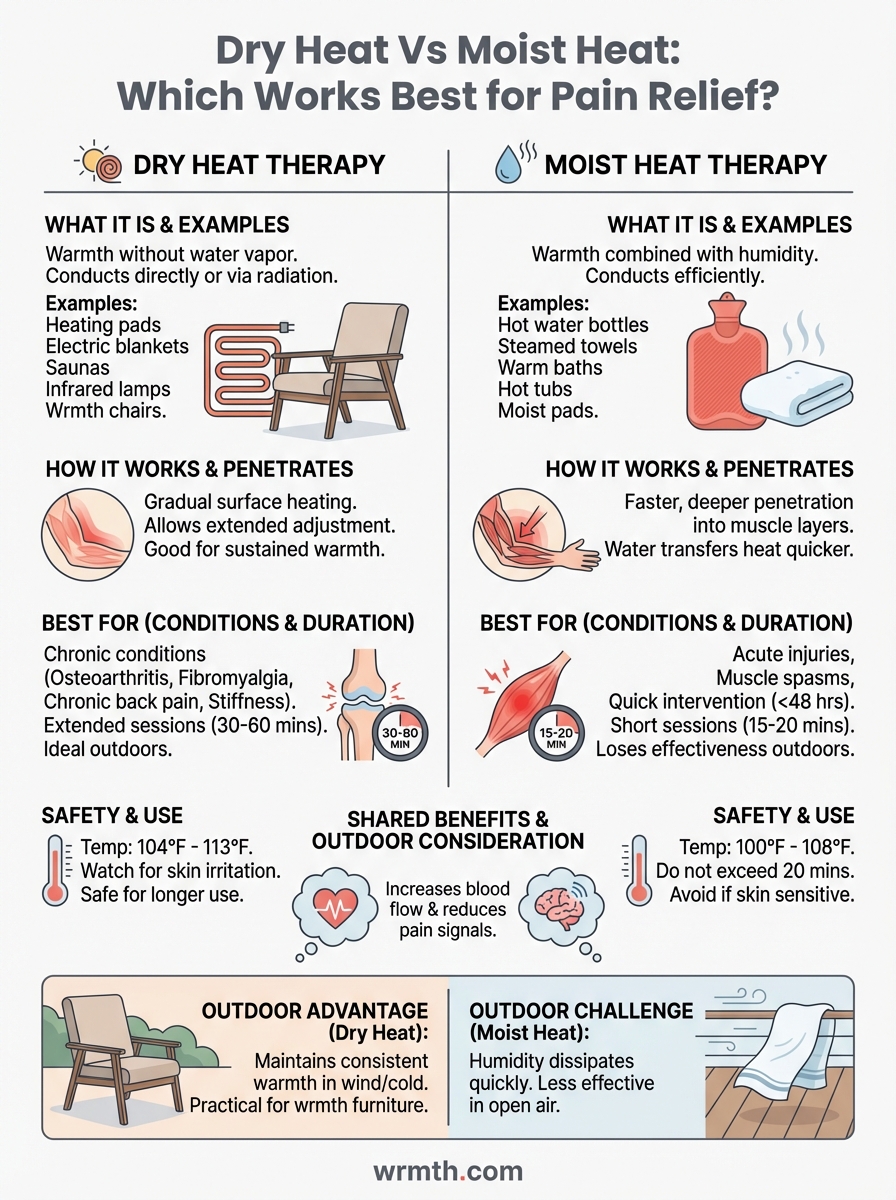
A moist dry heating pad offers the best of both worlds: deep-penetrating moist heat for sore muscles and the convenience of a reusable electric pad. Unlike dry heat alone, moist heat reaches deeper into muscle tissue, increases blood flow, and relaxes tight areas faster. But using it wrong can lead to burns, skin irritation, or even worsen inflammation.
This guide breaks down exactly how to use a moist dry heating pad, including setup, safety rules, timing, and maintenance. Whether you’re using a BodyMed digital pad, a microwaveable compress, or a homemade towel method, you’ll learn how to maximize pain relief while avoiding common mistakes.
Choose the Right Heat Type

When to Use Moist Heat
Moist heat is ideal for chronic pain, stiffness, and deep muscle tension that’s been present for more than 48 hours. It works by dilating blood vessels to boost circulation, increasing tissue elasticity, and penetrating deeper than dry heat. A 2013 study showed moist heat relieved muscle soreness in one-quarter of the time dry heat required.
Use moist heat for lower back pain, shoulder stiffness, leg cramps, joint aches in hips or knees, and sinus congestion with a warm facial compress.
When to Use Dry Heat
Dry heat is better when you need portability at work, when moisture could irritate sensitive skin, or when managing postnatal pain. A 2024 systematic review found dry heat reduced pain and improved episiotomy site healing more effectively than moist sitz baths.
Avoid moist heat if you have eczema, open wounds, or poor skin sensation.
Prepare Your Moist Heating Pad
For Electric Moist Pads
- Plug in the unit and lay it flat on your target area like the back, abdomen, or shoulders.
- Set temperature using the digital LCD control, starting low around 104°F to 113°F.
- Set timer for up to 20 minutes.
- Allow automatic moisture release, with no added water needed.
- Check skin every 5 minutes during first use.
The BodyMed Digital Moist Heating Pad measures 14 inches by 27 inches, features soft flexible fabric that conforms to body contours, and comes in four sizes for different application areas.
For Homemade Moist Compress (Bowl and Towel Method)
- Fill a bowl with hot water that feels hot to the touch but is not scalding.
- Soak a small towel completely, then wring until damp but not dripping.
- Fold into a square and apply directly to skin.
- Reheat every 5 to 7 minutes by re-soaking.
- Limit session to 20 minutes total.
Never leave a wet compress unattended since it cools quickly and may overheat if reheated too long.
For Microwave Ziplock Bag Method
- Dampen two towels and squeeze out excess water.
- Place one in a microwave-safe ziplock bag and leave it open.
- Microwave for 2 minutes and use oven mitts to remove.
- Seal bag immediately to trap steam.
- Wrap second damp towel around bag as a buffer.
- Apply to sore area for up to 20 minutes.
Test temperature on your inner wrist before full application.
Apply Heat Safely

Protect Your Skin
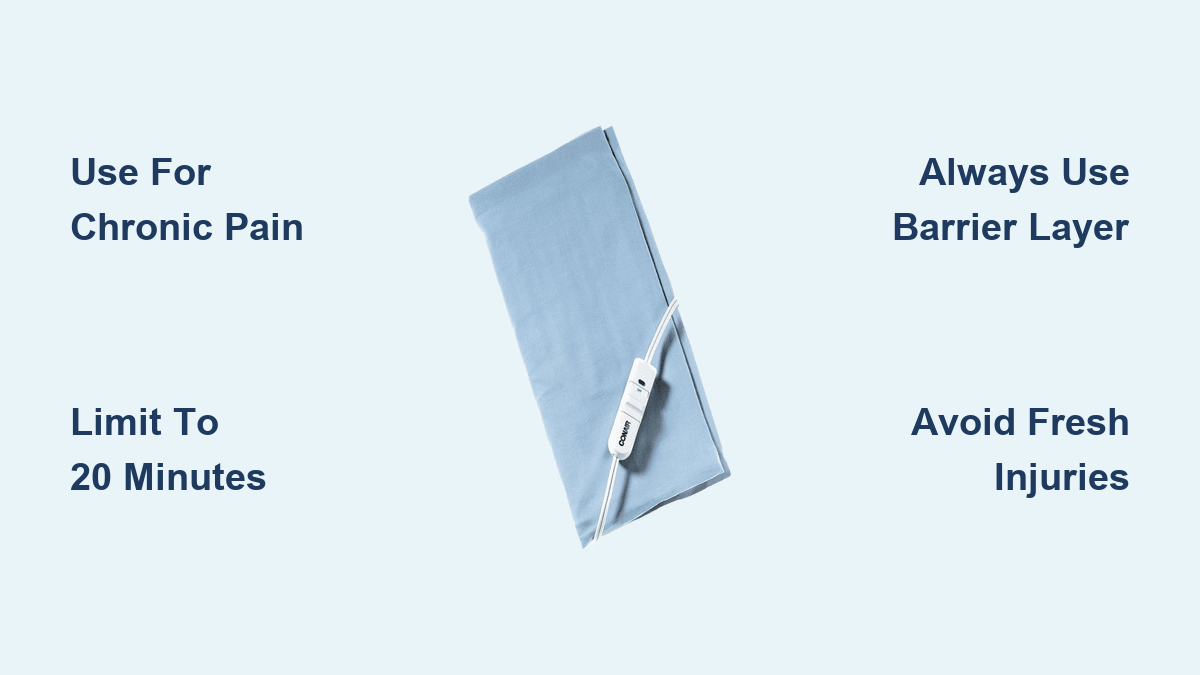
Always place a thin barrier between the heat source and your skin. Use a cotton T-shirt, pillowcase, or towel layer. Even safe temperatures can cause burns with prolonged contact, especially in people with diabetes or nerve damage.
Monitor Time and Temperature
Keep sessions to a maximum of 20 minutes, wait 1 to 2 hours before reapplying, and never sleep with a heating pad on. Burns often occur when users fall asleep or lose sensation over time.
Watch for Warning Signs
Stop immediately if you notice redness that doesn’t fade, blistering, numbness or tingling, or increased pain. Heat should feel soothing, not scalding or prickly.
Avoid Common Mistakes
Using Heat Too Early on Injuries
Do not apply any heat within the first 48 hours of an injury. During this acute phase, heat can increase swelling and delay healing. Use cold therapy instead for recent sprains, bruises, swollen joints, and post-exercise inflammation. Switch to heat only after swelling goes down, following UK National Health Service guidelines.
Overheating Microwaveable Pads
Microwaving too long can melt plastic bags, cause steam burns, and degrade fabric over time. Stick to 2 minutes max for ziplocks and always test temperature first.
Skipping the Protective Layer
Even moist heating pads with automatic release can burn bare skin. Always use a cloth barrier, even with electric models designed for safety.
Clean and Maintain Your Pad
For Electric Moist Heating Pads
Wipe the surface with a damp cloth after each use. Never submerge in water. Store flat or loosely rolled to avoid kinks in wires. Follow manufacturer instructions for deep cleaning.
Moisture-resistant fabric helps prevent mold, but regular hygiene matters. Electric pads with automatic release eliminate fabric degradation from repeated soaking, potentially extending product lifespan.
For Towels and Socks
Wash after every use to prevent bacterial growth. Dry rice socks completely before storage since moisture leads to mold. Replace rice if it smells musty or clumps. Homemade options are cost-effective but require more upkeep.
Compare Heating Methods
| Method | Heat Type | Prep Time | Duration | Best For |
|---|---|---|---|---|
| Electric Moist Pad | Moist | Under 1 min | 20 min | Back, abdomen, large areas |
| Hot Towel (Bowl) | Moist | 2 to 3 min | 15 to 20 min | Neck, joints, face |
| Microwave Ziplock | Moist | 3 min | 20 min | Targeted relief |
| Rice Sock | Dry | 1 min | 20 min | Small areas, no moisture |
| Metal Spoon | Dry | 10 sec | 5 to 10 min | Earache, small spots |
Moist heat wins for deep muscle pain, but dry heat wins for convenience and cleanup.
Optimize Pain Relief

Combine Heat with Movement
After 15 to 20 minutes of moist heat, stretch gently the warmed muscle group. Do light mobility exercises like shoulder rolls or cat-cow stretches for the back. Hydrate to support circulation. Heat loosens tissue, so use that window to improve flexibility.
Use at Strategic Times
Best times to apply moist heat include morning to ease stiffness, post-workout after the 48-hour recovery window, and before bedtime to relax. Never sleep with it on. Avoid using before intense exercise since overly relaxed muscles may be prone to strain.
Know When to See a Doctor
Stop using heat and consult a healthcare provider if pain lasts more than 2 weeks despite treatment, you develop swelling or redness, numbness or weakness spreads, or you have diabetes or circulation issues. Persistent pain may signal an underlying condition needing diagnosis.
Physiotherapists can guide you on whether moist or dry heat is better for your specific issue and when to switch modalities.
Frequently Asked Questions About Moist Dry Heating Pads
Can I use a moist heating pad on a fresh injury?
No. Do not apply any heat, moist or dry, within the first 48 hours of an injury. During the acute phase, heat can increase swelling and delay healing. Use cold therapy instead for sprains, bruises, and swollen joints, then switch to heat once inflammation subsides.
How long should I use a moist heating pad per session?
Limit each session to 20 minutes at a time. Wait 1 to 2 hours before reapplying. Longer sessions increase burn risk, especially if you have reduced sensation from conditions like diabetic neuropathy.
Is moist heat better than dry heat for back pain?
Moist heat penetrates deeper and faster than dry heat, making it more effective for deep muscle tissue pain like chronic back pain. However, dry heat offers more convenience, portability, and consistent warmth without re-wetting. A 2013 study found moist heat relieved muscle soreness in one-quarter of the time dry heat required.
Do I need to add water to an electric moist heating pad?
Not necessarily. Electric moist heating pads like the BodyMed model feature an automatic moisture release system that generates moisture internally. You simply plug in the pad, set the temperature and timer on the LCD controls, and apply. No external water is needed.
When should I avoid using a moist heating pad?
Avoid moist heat on fresh injuries under 48 hours old, areas with active swelling or bruising, broken skin or open wounds, areas that already feel hot to the touch, regions with poor circulation or reduced sensation, and sensitive skin conditions like eczema. These contraindications exist because heat can worsen inflammation or cause burns when sensation is impaired.
Key Takeaways for Using a Moist Dry Heating Pad Safely
Start low and go slow by beginning with lower temperatures and shorter durations. Use a timer to prevent overuse, whether built into your device or a phone alarm. Always place a protective cloth layer between the pad and your skin, even with automatic moisture release models. Stay hydrated to support blood flow and healing, and pair heat therapy with gentle stretching for maximum benefit.
Moist dry heating pads are powerful tools, but only when used correctly. With proper technique, you’ll get faster relief, fewer flare-ups, and better mobility. Your next step: choose your method based on your pain type, set a 20-minute timer, and apply heat safely after the 48-hour mark for chronic or sub-acute pain.