How to Reheat a Heating Pad Safely
You reach for your microwavable heating pad after a long day, craving soothing warmth for sore muscles. But how long should you actually reheat it? And more importantly, how do you avoid burns or damage in the process? Reheating a heating pad the right way isn’t just about timing. It’s about understanding your microwave, your pad’s filling, and a few safety rules that make all the difference. Most pads need 60–90 seconds, but that range shifts based on wattage, filler type, and pad size.
This guide walks you through everything you need to know to reheat your heating pad safely and consistently. You’ll learn how to avoid common mistakes, troubleshoot problems like hot spots or burnt smells, and extend your pad’s lifespan so it keeps delivering reliable relief.
Know Your Microwave’s Wattage Before Anything Else

Find Your Microwave’s Power Rating
Your microwave’s wattage is the single biggest factor in how fast your heating pad warms up. A 1200-watt model will heat a pad far faster than a 700-watt one. Using the same time for both could leave one pad lukewarm and turn the other into a burn risk.
Look for the wattage on a label inside the door, on the back panel, or in your user manual. If you can’t find it, try this quick test: time how long it takes to bring 1 cup of water to a rolling boil.
- Under 2 minutes: roughly 1200 watts
- 2 to 3 minutes: roughly 800 to 1000 watts
- Over 3 minutes: roughly 700 watts or less
Use this number to adjust your heating time. A pad that takes 90 seconds in a 1200W microwave may need 2 to 2.5 minutes in a 700W model to reach the same warmth.
Why Wattage Affects Safety
Overheating is a real danger. Research shows that wheat-filled pads can exceed 157°F (69°C) when overheated. That’s hot enough to cause a full-thickness burn. Lower wattage doesn’t mean safer; it just means longer heating time. Always start low and build up in small bursts.
Match Your Heating Time to the Pad’s Filling
Grain Fillers: Rice, Wheat, and Corn
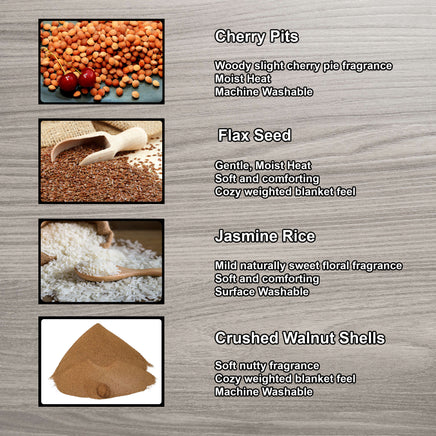
Grain-filled pads deliver deep, moist heat but are prone to scorching. They warm quickly and can develop hot spots if left too long. Always follow the manufacturer’s guidelines and never exceed 2 minutes total unless explicitly stated.
Signs your grain pad has scorched:
- A burnt or smoky smell
- Discoloration on the fabric
- Hardened or clumped grains
If you notice any of these, stop using the pad right away.
Seed Fillers: Flaxseed and Buckwheat
Flaxseed pads hold heat longer thanks to their natural oils and warm more gently. They’re less likely to burn but still need careful heating. Start with 30 seconds, then add 15-second bursts as needed.
Buckwheat heats evenly and resists clumping, making it a solid choice for consistent warmth. However, it does cool faster than flaxseed.
Clay Beads and Lava Sand
These synthetic fillers offer dry, even heat and resist odors. They’re less likely to scorch but can still overheat. Use short intervals and shake the pad between bursts to keep things even.
Heat in Short Bursts and Shake Between Cycles
Start With 30 Seconds
Never set the timer and walk away. Begin with 30 seconds on high. This gives the pad a chance to warm gradually without overheating.
After the first burst:
- Remove the pad carefully (oven mitts help)
- Shake it vigorously to redistribute the filler
- Touch-test in several spots
If it’s not warm enough yet, move to the next step.
Add Time in 15-Second Increments
After the initial 30 seconds, add heat in 15-second bursts. This prevents hot spots and lets you monitor the temperature closely.
Keep going until the pad feels:
- Warm, not hot
- Evenly heated throughout
- Comfortable against bare skin
Most people reach the ideal temperature in 60–90 seconds, but always trust your touch over the clock.
Always Shake Between Bursts
Shaking is essential. Clumped filler creates dangerous hot spots. After every heating cycle, give the pad a firm shake, holding it by two corners like you’re fluffing a pillow. This breaks up clumps and prevents scorching.
Avoid These Dangerous Reheating Habits
Never Reheat a Pad That’s Still Warm
One of the most common mistakes is reheating a pad before it has fully cooled. The core can retain heat even when the surface feels cool. Reheating too soon can spike internal temperatures, scorching the filler and creating a fire risk.
Golden Rule: Let your heating pad cool completely to room temperature before reheating. This takes at least 30–60 minutes.
Don’t Use Under Blankets or While Sleeping
Trapping heat under a blanket or dozing off with the pad raises burn risk significantly. Heat can’t escape, so the pad’s temperature keeps climbing. Australia’s Therapeutic Goods Administration found that most heating pad injuries occur during sleep or under bedding. Never use your pad under heavy covers or while drowsy.
Skip the Quick “Top-Off” Zap
It’s tempting to give a cooling pad another quick zap, but this leads to uneven heating and scorching. Instead, wait for a full cool-down and reheat from scratch.
Always Test the Temperature Before Use
Do the Touch Test
Before placing the pad on your skin, hold it against your inner wrist or forearm for 5–10 seconds. The ideal temperature feels warm and soothing, not intense. If you have to pull away, it’s too hot.
Check for Hot Spots
Even when the surface feels fine, internal hot spots can burn. Press gently on different areas after heating. If one spot feels noticeably hotter, shake the pad and reheat for another 15 seconds to even things out.
Troubleshoot Common Heating Pad Problems
Burnt Smell? Stop Immediately
A faint toasted-grain scent is normal in new pads. But a sharp, acrid, or smoky odor means the filler has scorched. Discontinue use right away. A scorched pad is a fire hazard and should be replaced.
Cold Spots? Shake and Reheat
If parts of the pad feel cool, the filler has clumped. Shake it vigorously and reheat for 15–20 seconds. This redistributes the material for even warmth.
Pad Overheats Too Fast?
If your pad gets too hot in under 60 seconds, your microwave may be high-powered. Try these adjustments:
- Reduce the initial time to 20 seconds
- Use 10-second increments from there
- Lower the microwave power to 70–80%
Many microwaves let you adjust power levels. Use this feature for better control.
Clean and Store Your Heating Pad the Right Way
Spot Clean Only
Most microwavable pads cannot be submerged in water. If there’s no removable cover, clean only with a damp cloth and a small amount of mild soap. Never soak or machine wash.
For pads with removable covers:
- Wash in cold water on a gentle cycle
- Air dry only
Moisture inside the pad can cause mold, odors, or clumping.
Store in a Cool, Dry Place
After each use:
- Let the pad cool completely
- Store it somewhere dry, like a linen closet
- Keep it away from humidity and direct sunlight
Never store a warm pad. Trapped heat can degrade the fabric and filler over time.
Replace Your Pad When It Shows Wear
Warning Signs to Watch For
Even well-cared-for pads wear out. Replace yours if you notice:
- A persistent burnt smell, even after cleaning
- Frayed or thinning fabric
- Hardened or clumped filler
- Leaking grains or beads
A damaged pad is a safety risk. When in doubt, replace it.
Average Lifespan: 1–2 Years
With regular use (3–4 times per week), most pads last 12–24 months. Frequent overheating or poor storage shortens that lifespan.
Special Use Cases and Safety Tips

Using a Heating Pad During Pregnancy
Always consult your doctor first. General guidelines suggest:
- Avoid placing the pad on your abdomen
- Use it only on your lower back, hips, or shoulders
- Limit sessions to 10–15 minutes
- Keep the temperature moderate
Excessive heat can raise core body temperature, which may affect fetal development.
Using a Heating Pad for Kids or Seniors
Yes, it’s safe, but only with supervision. Children and older adults have thinner, more sensitive skin. Always test the temperature first, never leave them unattended, and limit sessions to 10 minutes. A thin cloth barrier adds extra protection.
Combine Heat With Massage for Better Results
Warm First, Then Massage
Heat relaxes muscles and boosts blood flow. For best results:
- Apply the pad for 10–15 minutes
- Remove it and gently massage the area
- Use circular motions on tight spots
This combo works especially well for:
- Shoulder tension
- Lower back pain
- Menstrual cramps
The heat preps your muscles, making massage more effective.
Try a Heat-and-Stretch Routine
After heating, do gentle stretches like neck rolls or cat-cow poses. Focus on the warmed areas, move slowly, and breathe deeply. This enhances flexibility and reduces stiffness.
Frequently Asked Questions About Reheating a Heating Pad
How long should I microwave a heating pad?
Most heating pads need 60–90 seconds in a standard microwave. However, the exact time depends on your microwave’s wattage, the pad’s filling, and its size. Always start with 30 seconds and add time in 15-second bursts until you reach a comfortable warmth.
Can I reheat a heating pad that’s still warm?
No. Reheating a pad before it has fully cooled can create dangerous internal hot spots and scorch the filler. Always let your pad cool to room temperature for at least 30–60 minutes before reheating.
Why does my heating pad smell burnt?
A faint toasted-grain scent is normal in new pads. A sharp, acrid, or smoky smell means the filler has scorched, usually from overheating. Stop using the pad immediately. A scorched pad is a fire hazard and should be replaced.
What should I do if my heating pad has cold spots?
Cold spots mean the filler has clumped. Shake the pad vigorously to redistribute the contents, then reheat for another 15–20 seconds. This should restore even warmth.
Is it safe to use a heating pad while pregnant?
Consult your doctor first. General guidance is to avoid placing the pad on your abdomen and to limit use to your lower back, hips, or shoulders for 10–15 minutes at a moderate temperature. Excessive heat can raise core body temperature, which may pose risks during pregnancy.
How often should I replace my heating pad?
With regular use (3–4 times per week), most heating pads last 12–24 months. Replace yours if you notice a persistent burnt smell, frayed fabric, clumped filler, or leaking grains. A damaged pad is a safety risk.
Key Takeaways for Reheating Your Heating Pad Safely
Reheating a heating pad doesn’t have to be complicated. Start with 30 seconds, build up in 15-second bursts, and shake the pad between cycles. Always test the temperature on your inner wrist before use. Let the pad cool completely between sessions, and never use it under heavy blankets or while sleeping. With proper care, your heating pad can deliver reliable, drug-free relief for 1–2 years or more.
Your next step: Check your microwave’s wattage today and time your next heating session accordingly. A small adjustment now can prevent burns and extend your pad’s life.