How to Use Knee Support Pillow
Waking up with stiff hips, sore knees, or an aching lower back is a frustrating way to start the day. A knee support pillow can address these issues by keeping your spine aligned and reducing joint pressure while you sleep. The catch is that placement matters just as much as the pillow itself. Many people wedge a regular pillow between their legs and wonder why they still wake up in pain. With the right shape, firmness, and positioning for your sleep style, you can unlock real relief. This guide walks you through exactly how to use a knee support pillow so you wake up feeling rested, aligned, and pain-free.
Choose the Right Knee Pillow for Your Body
Before you focus on placement, you need a pillow that matches your sleep habits and body type. Not every knee pillow works the same way.
Match the Shape to Your Sleep Position
The shape of your pillow determines how well it stays in place and supports alignment.
- Hourglass (Contoured): Best for side sleepers. The narrow center fits between the knees while wider ends cradle the thighs and calves, preventing slippage.
- Cylindrical (Bolster): Ideal for back sleepers placing the pillow under the knees. May roll without a flat base or strap.
- Wedge: Offers angled support for elevating legs slightly or addressing specific postural needs.
- Rectangular: Versatile but tends to shift during sleep unless secured.
- Strap-Enabled Models: Great for restless sleepers because straps lock the pillow between the legs all night.
Pick a Material That Suits Your Comfort Needs
Your pillow’s material affects support, temperature, and durability.
- Memory Foam: Molds to your legs for personalized support. Choose ventilated or gel-infused versions if you sleep hot.
- Latex: Bouncy and breathable, sleeping cooler than traditional memory foam.
- Buckwheat Hulls: Firm, adjustable, and naturally cooling, though noisier and heavier.
- Wool or Cotton-Filled: Natural, temperature-regulating, and hypoallergenic. Some allow you to add or remove filling.
Select the Correct Firmness and Size
A pillow that is too soft collapses under leg weight and defeats its purpose.
- Firmness: Choose supportive firmness that resists compression but still feels cushioned.
- Length: Taller individuals need longer pillows (16 inches or more) to span from knees to ankles.
- Width: Ensure it fills the gap between your knees without forcing your legs too far apart.
Use a Knee Pillow for Side Sleeping

Side sleeping is the most common and effective position for knee pillow use. When done right, it aligns your spine and prevents hip rotation.
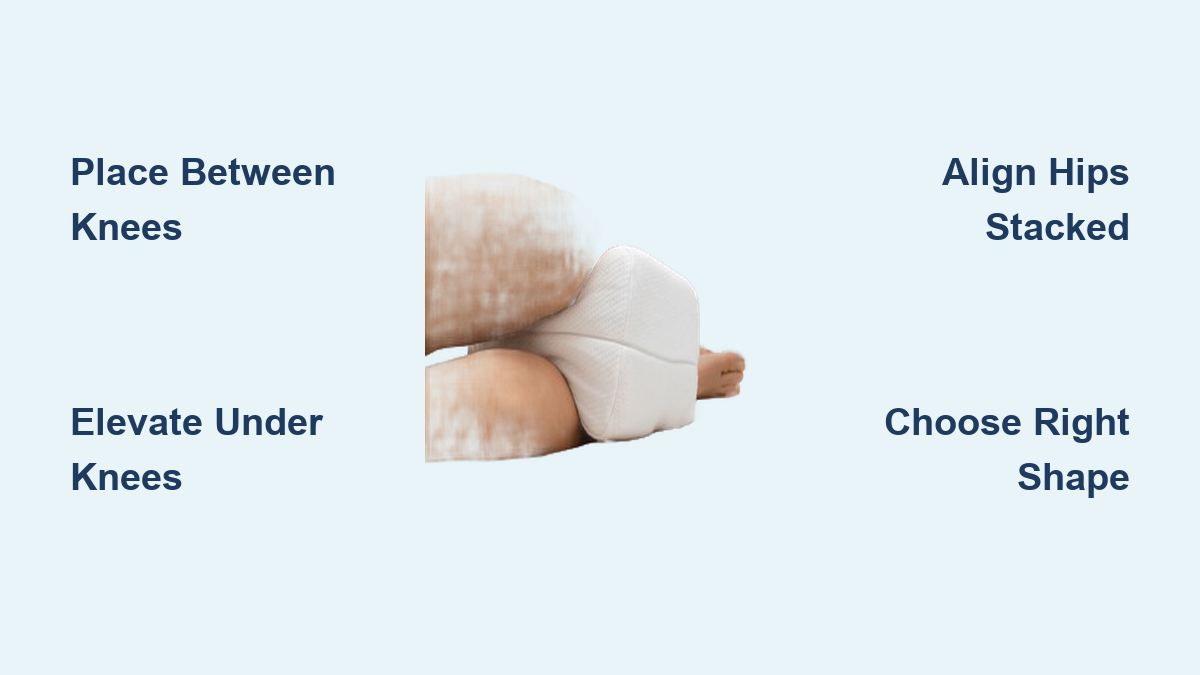
Align Your Hips and Stack Your Legs
Place the pillow between your knees before lying down.
- Lie on your side with your spine straight and knees slightly bent.
- Slide the pillow so it supports from just below your knees up toward your thighs.
- Keep your hips stacked vertically, with the top hip directly over the bottom one.
Visual Cue: If your top knee points forward, your pelvis is rotating. Adjust the pillow until both knees face the ceiling.
Prevent Spinal Twisting
A misaligned pelvis twists the lower back and causes morning pain.
- The pillow acts as a spacer, stopping the top leg from dropping forward.
- This keeps your spine neutral, reducing strain on ligaments and discs.
- If you feel a gap under your waist, place a small towel or thin pillow there to maintain full-body alignment.
Adjust Thickness for Comfort
Too thick and your inner thighs strain. Too thin and your legs collapse inward.
- Start with a medium-thickness pillow (3 to 5 inches at the center).
- Test it: if you cannot keep your legs parallel without tension, try a thinner or thicker model.
Pro Tip: Hourglass-shaped pillows naturally prevent over-spreading while keeping legs stable.
Use a Knee Pillow for Back Sleeping

Back sleepers benefit from placing the pillow under the knees, not between them.
Elevate Knees to Relieve Lower Back Tension
Lying flat can increase the arch in your lower back, straining muscles.
- Place the pillow under your knees, creating a slight bend of 15 to 30 degrees.
- This position flattens the lower back gently against the mattress, releasing tension in the psoas and lumbar spine.
Why It Works: Elevating the legs reduces pressure on spinal discs and improves venous return, helping with swelling and circulation.
Choose the Right Pillow Type for This Position
Not all knee pillows work well under the legs.
- Cylindrical or wedge pillows are ideal because they provide lift without sinking.
- Avoid overly soft cushions that compress completely.
- For better airflow, pick one with a breathable cover or gel infusion.
Improve Circulation and Reduce Swelling
Elevating the legs encourages blood flow back to the heart.
- Especially helpful if you have mild edema, varicose veins, or sit all day.
- Combined with a supportive mattress, this setup promotes restful, uninterrupted sleep.
Time to Benefit: Many users notice reduced leg fatigue within 2 to 3 nights of consistent use.
Use a Knee Pillow for Stomach Sleeping
Stomach sleeping is the least recommended position due to spinal strain, but if you cannot change it, a knee pillow may offer limited help.
Place the Pillow Between Your Knees Cautiously
- Lie face down and position the pillow between your knees.
- Keep your legs straight and avoid twisting your hips.
- The goal is slight cushioning without lifting the pelvis.
Warning: If the pillow raises your hips or forces leg rotation, remove it. This can worsen spinal misalignment.
Consider Alternatives for Better Support
- Knee pillows offer minimal support for stomach sleepers.
- A flatter pillow or none at all may be better.
- Consider transitioning to side or back sleeping for long-term spinal health.
Expert Note: Chronic back pain sufferers should consult a physical therapist before relying on pillows in this position.
Optimize Placement During Pregnancy

Pregnant women often struggle with hip and back pain, especially in the second and third trimesters.
Support the Gap Between Your Knees
- Lie on your left side to improve blood flow to the fetus.
- Place the knee pillow between your legs, extending from knees to ankles.
- This reduces pressure on the pelvis and prevents sciatic nerve irritation.
Bonus Tip: Combine with a full-body pregnancy pillow or add a small cushion under your belly for comprehensive support.
Prevent Pelvic Girdle Pain
Loose ligaments during pregnancy increase joint stress.
- A firm knee pillow stabilizes the hips and reduces shifting during sleep.
- It helps maintain alignment despite the growing belly’s pull on the spine.
Stay Cool and Comfortable
Pregnancy often brings night sweats.
- Choose a cooling gel-infused or breathable bamboo-covered pillow.
- Wash the removable cover weekly to prevent odor and irritation.
Avoid Common Mistakes
Even the best pillow fails if used incorrectly.
Do Not Use a Pillow That Is Too Soft
- A soft pillow flattens under leg weight, providing zero separation.
- Result: hips rotate, spine twists, and pain continues.
- Fix: Press the pillow. If it collapses easily, upgrade to firmer foam.
Do Not Place It Too High or Too Low
- The pillow should sit directly between the knees, not up by the thighs or down by the calves.
- Misplacement shifts pressure points and reduces effectiveness.
Do Not Ignore the Adjustment Period
- First-time users may feel awkward for 2 to 4 nights.
- Keep adjusting position and thickness until comfort improves.
- Consistency matters, so use it every night to train your body.
Do Not Skip Cleaning
- Sweat and oils build up over time, causing odors and skin issues.
- Clean every 2 to 4 weeks: remove the cover and wash in cold water on a gentle cycle.
- Spot clean the foam with mild soap and air dry. Never machine wash the foam.
Maintain and Replace Your Pillow
A well-maintained knee pillow lasts 1 to 2 years. After that, it loses support.
Clean the Foam and Cover Properly
- Foam core: Wipe with a damp cloth and mild detergent. Let air dry.
- Cover: Machine washable (check the label). Avoid fabric softeners because they clog breathable fibers.
- Drying: Never use a dryer for the foam. Sunlight can degrade foam, so dry in shade.
Know When to Replace It
Replace your pillow if:
- It is visibly flattened or lumpy.
- You wake up with more pain than before.
- Odors persist after washing.
- It has been over 2 years, even if it looks okay.
Replacement Cost: Expect $25 to $50 for high-quality models like the Contour Legacy or Xtreme Comforts.
Troubleshoot Pain and Discomfort

If your knee pillow causes pain, the issue is likely misuse.
Hip or Inner Thigh Pain? Check the Thickness
- Pain on the inner thigh means the pillow is too thick, forcing your legs too far apart.
- Switch to a lower-profile model or try a softer compression foam.
Still Have Back Pain? Reassess Your Alignment
- Ensure your shoulders, hips, and knees are stacked.
- If your waist sags, add a small roll under your waistline.
- For back sleepers, make sure the pillow under the knees is not too high. It should create a gentle bend, not a sharp angle.
Pillow Slides Out? Upgrade the Design
- Standard rectangles slip easily.
- Fix: Use a contoured or strap-equipped pillow such as the Groove X.
- Place it snugly and hug it lightly with your legs.
Who Should Use a Knee Pillow?
Not everyone needs one, but certain groups benefit most.
Ideal Candidates
- Side Sleepers: Prevent hip drop and spinal twist.
- Back Pain Sufferers: Maintain a neutral spine and reduce disc pressure.
- Sciatica Patients: Minimize nerve compression by stabilizing the pelvis.
- Arthritis or Bursitis Sufferers: Cushion joints and reduce inflammation.
- Post-Surgery Patients: Follow doctor’s orders for safe leg positioning.
- Pregnant Women: Support shifting weight and prevent pelvic pain.
Who Should Be Cautious?
- Stomach Sleepers: Limited benefit; may worsen alignment.
- Severe Circulation Disorders: Consult a doctor because elevation or pressure may not be safe.
- Anyone Experiencing Increased Pain: Stop use and reassess fit or consult a professional.
Maximize Long-Term Benefits
Using a knee pillow is a habit that pays off over time.
Combine It With Good Sleep Hygiene
- Use a supportive mattress and ergonomic pillow for your head.
- Keep your bedroom cool, dark, and quiet.
- Avoid screens before bed to improve sleep continuity.
Use It Daily for Best Results
- Benefits build over weeks.
- Track improvements in pain levels and sleep quality.
- Many users report less daytime stiffness and fewer nighttime awakenings within 1 to 2 weeks.
Pair It With Stretching and Strengthening
- Gentle hip flexor and glute stretches enhance pillow benefits.
- Core strengthening improves spinal stability, making alignment easier to maintain.
Frequently Asked Questions About Knee Support Pillows
How long does it take to get used to sleeping with a knee pillow?
Most people need 2 to 4 nights to adjust. Keep repositioning the pillow until it feels natural, and use it consistently every night for the best results.
Can a knee pillow help with sciatica pain?
Yes. By keeping the pelvis neutral and preventing the top leg from dropping forward, a knee pillow reduces rotation that can compress the sciatic nerve, easing discomfort.
Where exactly should the pillow sit between my knees?
The pillow should rest directly between your knees, extending slightly above and below to cushion the thighs and shins. It should not sit too high near the thighs or too low near the ankles.
Is a knee pillow safe to use during pregnancy?
Yes, especially for side sleeping in the second and third trimesters. It supports the hips and reduces pelvic pressure. Choose a firm, breathable pillow and always follow your doctor’s guidance.
How often should I replace my knee pillow?
Replace it every 1 to 2 years, or sooner if it flattens, develops odors, or stops relieving your pain. Foam loses firmness over time, even if it looks fine.
Can stomach sleepers benefit from a knee pillow?
Stomach sleepers get limited benefit and may actually worsen spinal alignment. It is better to transition to side or back sleeping for long-term comfort and health.
Final Thoughts on Using a Knee Support Pillow for Better Sleep
A knee support pillow is more than just a cushion. It is a tool for better posture, pain relief, and deeper sleep. Whether you use it between your knees as a side sleeper or under your knees as a back sleeper, correct placement and consistent use are essential. Choose the right shape, firmness, and size, avoid common mistakes, and replace it every 1 to 2 years. Start tonight by placing your pillow correctly based on your sleep position, and give your body a few nights to adjust. With this simple addition to your bedtime routine, you can wake up feeling aligned, rested, and pain-free.