How to Wear an Airplane Pillow
Traveling by plane often means trying to sleep in awkward positions, leading to stiff necks, sore shoulders, and restless flights. A travel pillow can be your best ally if worn correctly. Many people use their airplane pillows the wrong way, defeating the purpose and even worsening discomfort. The key is learning how to wear an airplane pillow so it supports your neck, prevents head bobbing, and keeps your spine aligned. Whether you sleep on your side, suffer from neck pain, or just want to rest better at 30,000 feet, this guide covers every effective method.
Below, you’ll learn the viral “backward” technique, seat-specific strategies, and how to pick the right pillow for your body. No more waking up with a crick in your neck or drooling on your neighbor’s shoulder. Let’s fix your travel sleep, starting with the most important decision: front gap or back gap?
Front Gap vs. Back Gap: The Great Pillow Debate
The way you orient your U-shaped pillow changes everything. Most travelers instinctively wear it with the gap in front, but that might be why they wake up with neck strain. The real question is whether the open part should face forward or backward.
Conventional: Gap in Front
This is the standard setup, with bulk behind your neck and the opening under your chin. It cradles the cervical spine and keeps your head from tilting back.
Who it’s best for: Travelers with normal neck alignment who sit upright and don’t fall into deep sleep.
Pros: Supports the natural curve of the neck and reduces upper back tension.
Cons: When you fall asleep, gravity pulls your head forward, causing your chin to drop onto your chest. This “chin drop” jerks you awake and creates stiffness.
Visual cue: If your head wobbles forward every few minutes, this position isn’t working.
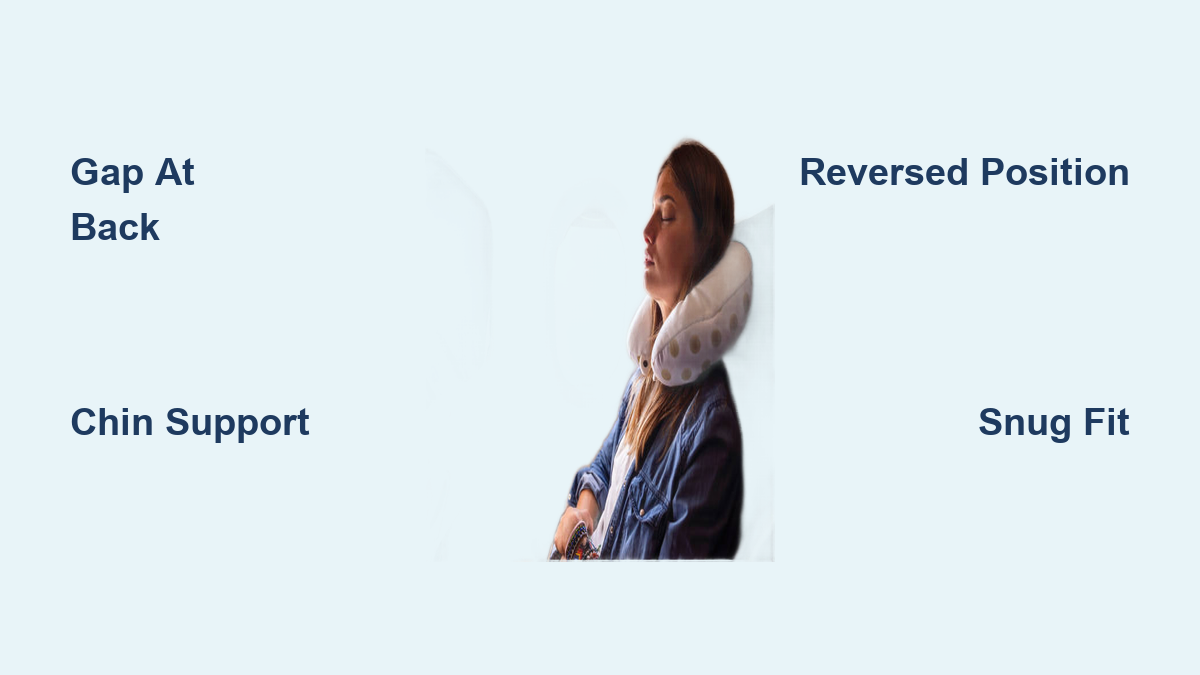
Reversed: Gap at the Back
Flip the pillow so the solid part supports your chin and jaw, and the opening sits at the back of your neck. This method went viral for good reason because it stops head bobbing.
Who it’s best for: Deep sleepers, side leaners, jaw clenchers, or anyone who wakes up with neck pain.
Pros:
- Stops forward head drop
- Keeps your airway open (helpful for snoring)
- Supports the jaw (great for TMJ)
- Feels like a 360-degree hug for your head
Cons: Can feel bulky during meals and may not suit those with cervical spine issues needing rear support.
Pro tip: Use this if you tend to slump or nod off mid-conversation.
Which Is Better?
For general posture, the conventional method wins.
For actual sleep, the reversed method is superior.
Expert verdict: Try both. If you move a lot or sleep deeply, go reversed. If you have neck pain or a medical condition, consult your doctor before flipping.
Alternative Wearing Positions
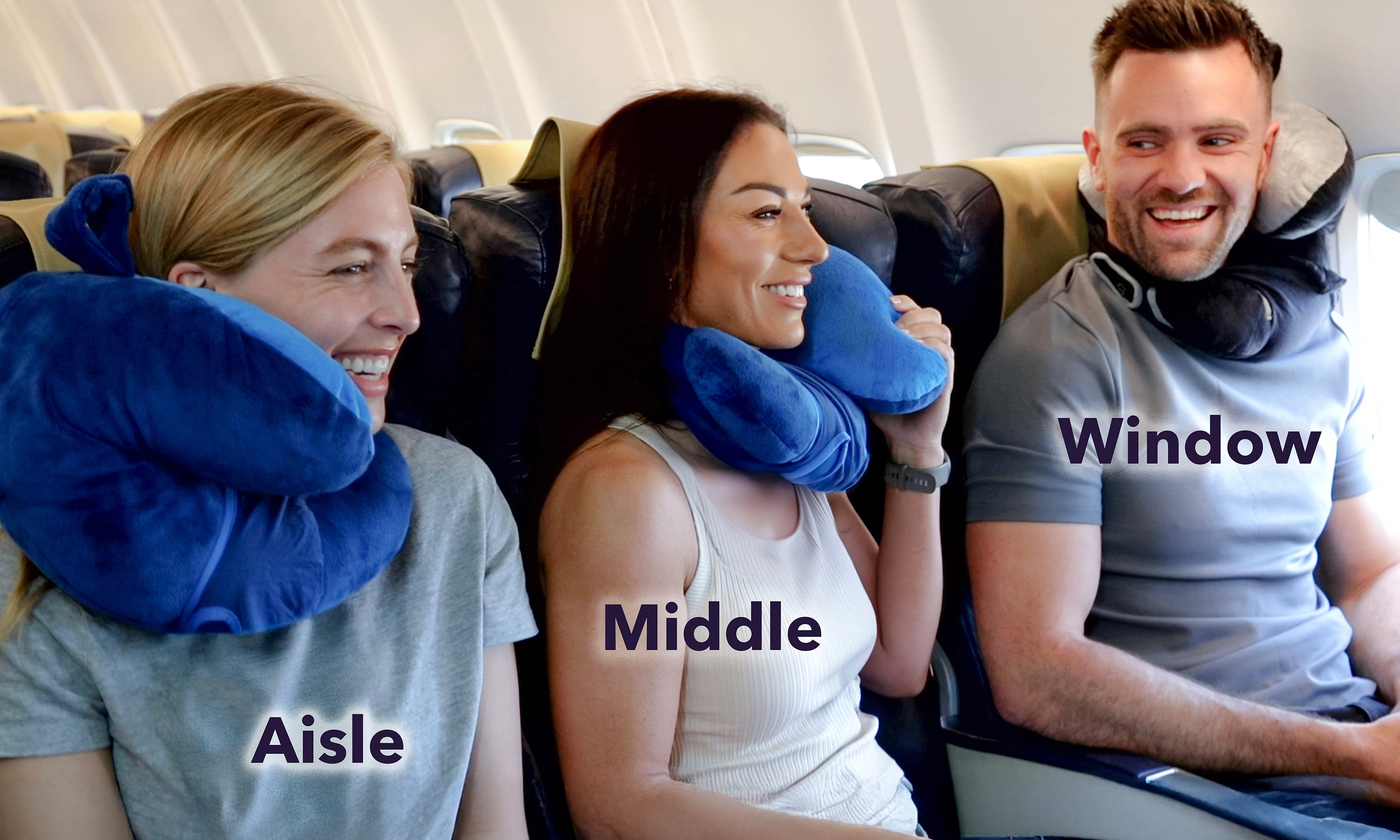
Beyond front and back, your travel style and seat location may call for different setups.
Scarf Style: Front Wrap
Loop the pillow tightly around the front of your neck like a soft scarf.
Best for: Short naps, relaxation, or when you want warmth without full support.
How to do it:
- Place the pillow vertically in front of your neck.
- Fasten the ends behind your neck.
- Tuck your chin slightly into the cushion.
Avoid if: You need structural support, since this won’t stop head drooping.
Over-the-Shoulder: Side Support
Rotate the pillow so the bulk sits on one shoulder, supporting your head as you lean sideways.
Best for: Window seat passengers or side sleepers.
How to do it:
- Position the pillow diagonally across your chest.
- Let the thick side rest on your dominant shoulder.
- Lean your head into the cushion.
Warning: Don’t use this all flight. Switch sides to avoid uneven strain.
Lumbar Support: Behind the Back
Place the pillow in the small of your back instead of your neck.
Best for: Eating, watching movies, or travelers with lower back pain.
Why it works: Airplane seats have poor lumbar support. This fills the gap and keeps your spine aligned.
Time to switch: During meals or when you’re awake and upright.
Window Lean Combo
Use the airplane window as a wall and place your pillow between your head and the fuselage.
Best for: Window seat travelers.
Maximize comfort:
- Choose a wrap-around or memory foam pillow.
- Tilt your head slightly toward the window.
- Let the pillow absorb the curve of the cabin wall.
Don’t rely on the window alone: It’s hard and cold, so your pillow must do the cushioning.
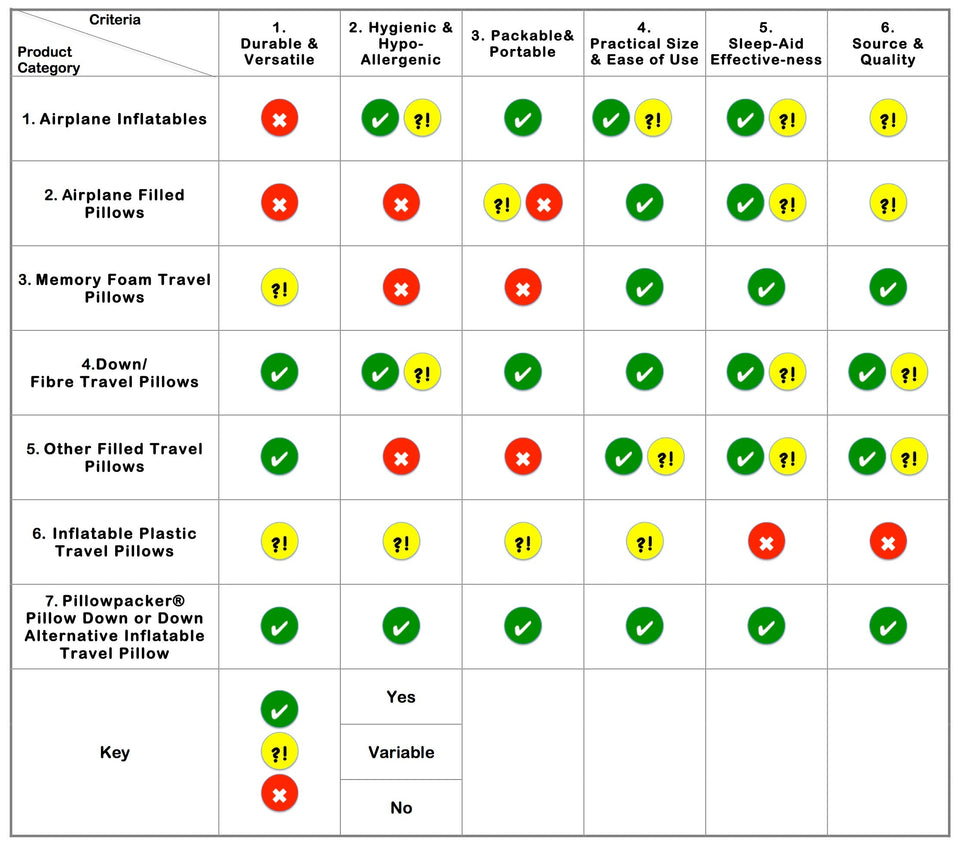
Choose the Right Pillow Type
Your wearing method only works if your pillow supports it. Not all travel pillows are equal.
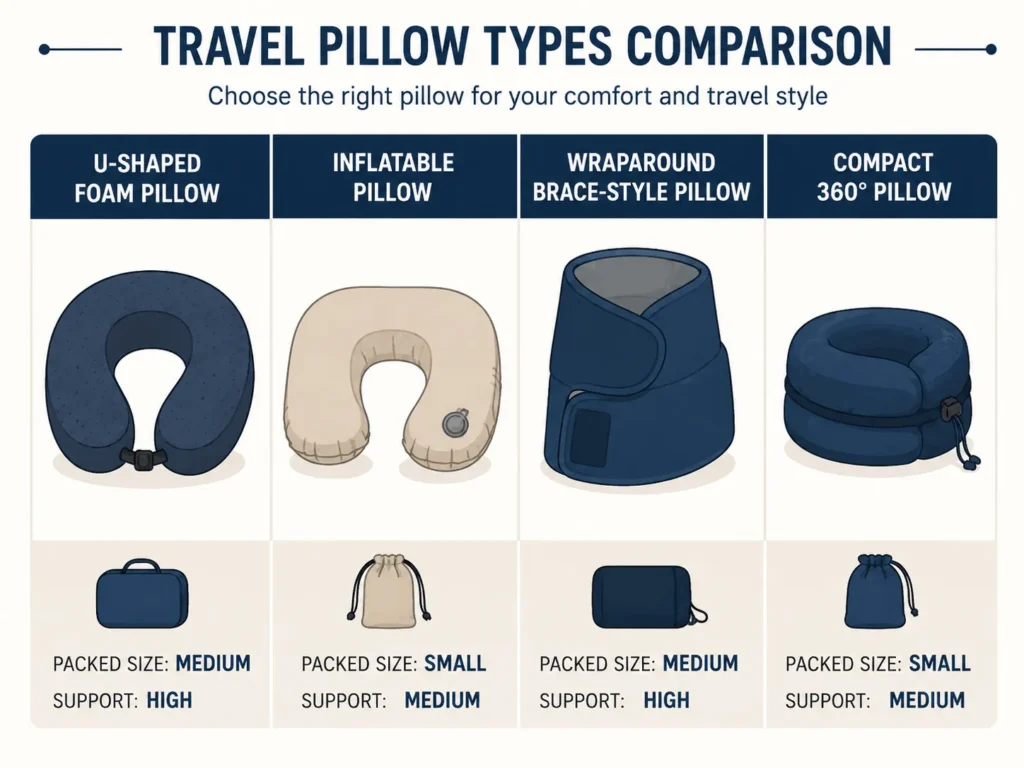
Inflatable Pillows
Lightweight and packable, making them ideal for tight luggage space.
Best for: Adjustable firmness. Add more air for reversed use, less for scarf style.
Pros: Fits in your pocket and is easy to clean.
Cons: Can feel plasticky, and slow leaks happen.
Tip: Inflate to 80–90% full. Too rigid feels uncomfortable.
Memory Foam Pillows
Molds to your neck and head for consistent support.
Best for: Long flights, neck pain sufferers, or those who hate air pillows.
Pros: Excellent pressure relief and maintains shape.
Cons: Bulky and takes time to expand after unpacking.
Fix: Pack it in a compression sack and unpack early.
360-Degree Wrap-Around Pillows
Fully encircles the neck with adjustable closures.
Best for: Restless sleepers, side leaners, or anyone using the reversed method.
Pros:
- Stays in place
- Works in any orientation
- Often has chin rests or hoods
Cons: Can feel too tight if not sized right.
Microbead Pillows
Filled with tiny beads that shift to your shape.
Best for: Custom molding but not structure.
Cons: Heavy, beads can shift suddenly, and support is poor long-term.
Verdict: Memory foam or wrap-around pillows offer the best support for most travelers.
Step-by-Step: How to Wear an Airplane Pillow
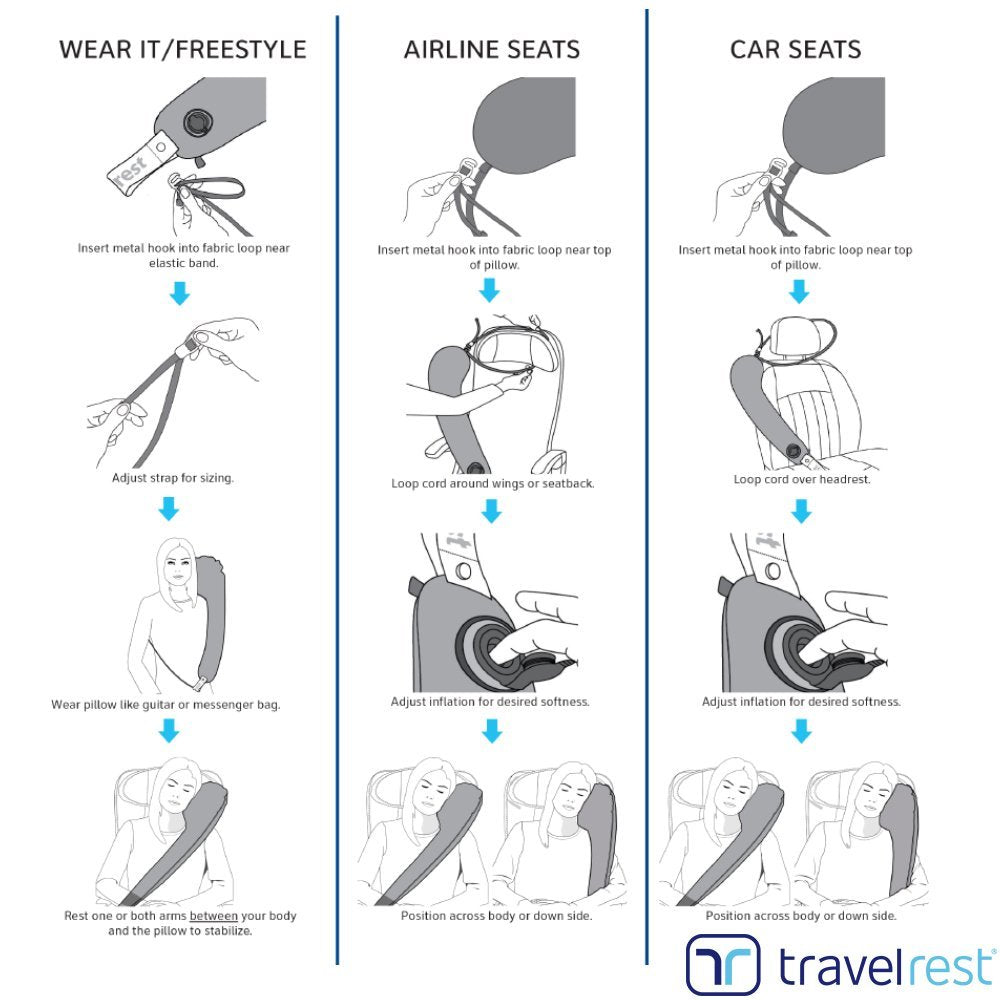
Follow this routine to get it right every time.
1. Prep the Pillow
- Clean it: Wipe down or use a fresh cover.
- Inflate (if needed): 80–90% full, firm but not rock-hard.
- Check the cover: Ensure it’s secure and smooth.
2. Position It Correctly
- For neck support (conventional): Gap in front, bulk at the back of neck.
- For chin support (reversed): Gap at the back, bulk under chin.
- For side support: Rotate bulk to the shoulder you’re leaning on.
3. Fasten Securely
Use snaps, toggles, or drawstrings to close.
Snug, not tight: You should be able to turn your head slightly, but the pillow shouldn’t slip.
4. Adjust Your Seat
- Recline slightly (if possible) to align your spine.
- If you can’t recline, place a rolled jacket behind your lower back.
- Keep feet flat on the floor, shoulder-width apart.
5. Check Alignment
- Ears should line up with shoulders.
- Chin should be slightly tucked, not tilted up or down.
- Head should feel “cradled,” not propped or strained.
6. Complete Your Sleep Setup
- Add an eye mask and noise-canceling headphones.
- Use a blanket to stay warm. Cold cabins disrupt sleep.
- Avoid screens 30 minutes before sleep.
Seat-Specific Pillow Strategies

Your seat changes how you should wear your pillow.
Window Seat
Best method: Over-the-shoulder or window lean combo.
Pillow pick: Wrap-around or memory foam with side bulk.
Pro tip: Angle your body slightly toward the window to distribute pressure.
Aisle Seat
Best method: Reversed (gap back) to prevent forward drop without leaning into the aisle.
Pillow pick: Inflatable or low-profile wrap.
Warning: Avoid side support, since you’ll block the walkway.
Middle Seat
Best method: Reversed position to keep your head centered.
Pillow pick: 360-degree support to avoid leaning on neighbors.
Survival tip: Use the lumbar position when awake to maximize space.
When to Remove or Reposition
Don’t wear your pillow all the time. Adjust based on activity.
Eating or Drinking
- Remove the pillow or switch to lumbar support.
- The reversed position blocks access to your mouth, so don’t try to eat with it on.
Watching a Movie
- Use scarf style or lumbar support.
- Keeps your neck warm without limiting head movement.
Walking in the Airport
- Never wear it around your neck.
- Loop it on your carry-on handle instead.
- Looks better, safer, and keeps it clean.
Care and Maintenance
A dirty or damaged pillow defeats the purpose.
Cleaning Guide
- Removable covers: Machine wash cold, air dry.
- Memory foam: Spot clean only, no soaking.
- Inflatable: Wipe with disinfectant wipes.
- Valves: Check for debris and clean with a dry toothbrush.
Storage Tips
- Deflate fully before packing (inflatable).
- Roll, don’t crush (foam).
- Use a storage sack to prevent dust and bacteria.
When to Replace
- Foam won’t bounce back.
- Inflatable leaks air quickly.
- Cover is stained or torn.
- Pillow smells despite cleaning.
Pro move: Use a disposable travel pillowcase for extra hygiene.
Common Mistakes and Fixes
Avoid these errors to get real comfort.
Wearing It Backward by Accident
Mistake: You meant to use front support but ended up with the gap in back, so your head drops forward.
Fix: Be intentional. Gap front means neck support. Gap back means chin support.
Too Loose
Mistake: Pillow slips, head bobs, no support.
Fix: Tighten the closure or add air.
Too Tight
Mistake: Choking sensation, neck pain, pressure points.
Fix: Loosen slightly. It should support, not strangle.
Ignoring Seat Posture
Mistake: Sitting upright with a pillow still causes strain.
Fix: Recline or add lumbar support.
Using a Damaged Pillow
Mistake: Flat spots or rips give uneven support.
Fix: Repair or replace.
Who Should Use Which Method?
Match your needs to the right setup.
| If You… | Use This | Pillow Type |
|---|---|---|
| Sleep deeply and nod off | Reversed (gap back) | Memory foam or wrap-around |
| Lean on the window | Over-the-shoulder | 360-degree support |
| Have neck pain | Conventional (gap front) | Memory foam |
| Clench your jaw | Reversed | Soft memory foam |
| Have back pain | Lumbar position | Inflatable or foam |
| Pack light | Reversible style | Inflatable |
| Sit in middle seat | Reversed | Wrap-around |
Frequently Asked Questions About Airplane Pillows
Which way should you wear an airplane pillow?
The best way to wear an airplane pillow depends on your goal. For general posture, wear it with the gap in front and bulk at the back of your neck. For actual sleep, flip it so the gap is at the back and the bulk supports your chin, which prevents head bobbing.
Is it better to wear a travel pillow forward or backward?
For most travelers, backward (gap at the back) is better for sleep because it stops the chin from dropping forward. Forward (gap in front) is better for sitting upright and maintaining neck posture while awake.
How do you sleep on a plane with a neck pillow?
Inflate or prep your pillow, position it with the gap at the back of your neck, fasten it snugly, recline slightly, and add an eye mask and earplugs. Check that your ears align with your shoulders before drifting off.
Can you eat while wearing a travel pillow?
It depends on the position. The reversed method blocks your mouth, so remove it or switch to lumbar support during meals. The scarf style or front-wrap position allows easier eating.
What type of airplane pillow is best for neck pain?
Memory foam pillows worn in the conventional position (gap in front) generally provide the best support for neck pain. Consult a doctor if you have herniated discs or cervical conditions before switching positions.
Should you wear your travel pillow in the airport?
No. Wearing it around your neck in the airport looks awkward, obstructs your vision, and can be a safety hazard. Loop it onto your carry-on handle instead.
Final Tips for Better Travel Sleep
The best way to wear an airplane pillow isn’t one-size-fits-all. It’s about matching your body, seat, and sleep style to the right technique. The reversed method (gap at the back) is often the game-changer for uninterrupted sleep, but it’s not the only option. Whether you wrap it, flip it, or move it to your lower back, the goal is the same: wake up refreshed, not wrecked.
Before your next flight, spend a few minutes at home testing both orientations. Pack a backup like a hoodie or rolled sweater in case your pillow fails mid-trip. Stretch your neck and shoulders before boarding, stay hydrated without overdoing it, and combine your pillow with an eye mask and earplugs for maximum effect. Try different styles, listen to your body, and make your next flight the most comfortable one yet.