How to Feed Baby with Boppy Pillow: Easy Guide
Feeding your newborn should be a moment of connection, not back pain and frustration. The Boppy pillow has become a go-to solution for parents looking to make breastfeeding and bottle-feeding more comfortable and effective. Whether you are recovering from a C-section, managing reflux, or sharing feeding duties with a partner, learning how to feed with Boppy pillow correctly can transform your experience.
In this guide, you will learn step-by-step how to use the Boppy for every feeding scenario, avoid common mistakes, choose the right model for your needs, and keep both you and your baby safe and supported without compromising comfort or bond.
Choose the Right Boppy Model for Your Needs

Match Your Feeding Needs
Not all Boppy pillows are the same. Picking the right one ensures optimal comfort and function.
The Boppy Complete Nursing Pillow ($60) offers the best overall value with firmer fill and larger surface area, making it ideal for combo feeding and plus-size parents. The Boppy Uplift ($50) is specifically designed for bottle-fed babies, featuring a contoured shape that elevates the head to reduce spit-ups and support digestion. The Anywhere Travel Pillow ($30) works well for feeding on the go but provides less support for heavier infants. The Bare Naked model ($35) comes without a cover, offering a budget-friendly option that is easy to clean. For eco-conscious families, the Organic Cover version provides GOTS-certified cotton for sensitive skin.
Pro Tip: Keep a spare washable cover or protective liner on hand. Spit-up, drool, and blowouts are frequent, and quick cleanup keeps your Boppy hygienic and ready.
When to Upgrade or Replace
Use your Boppy from birth until your baby can sit unassisted, typically 6 to 12 months. Discontinue use if the insert becomes flattened or lumpy, seams split or fabric frays, or it no longer holds shape under your baby’s weight.
Set Up the Boppy Safely for Feeding
Position the Pillow Correctly
Place the Boppy across your lap in a U-shape, centered over your thighs. Ensure there are no gaps between your body and the pillow. The opening should face forward, allowing your baby’s head to rest near your chest. You should be sitting upright with back support, avoiding slouching.
Visual Cue: The top of the Boppy should align with your lower ribcage, lifting baby to nipple height without you bending forward.
Avoid Common Setup Mistakes
Do not use the Boppy on soft surfaces like unstructured beds or couches, as the pillow may shift and create safety risks. Never leave your baby unattended on the Boppy, even for a second. Do not use the Boppy for sleep, as the CPSC and AAP warn against using nursing pillows as sleep devices due to suffocation risk.
Warning: The Boppy is not a sleep aid. Always transfer your baby to a crib or bassinet after feeding.
Master the Cross-Cradle Hold for Newborns

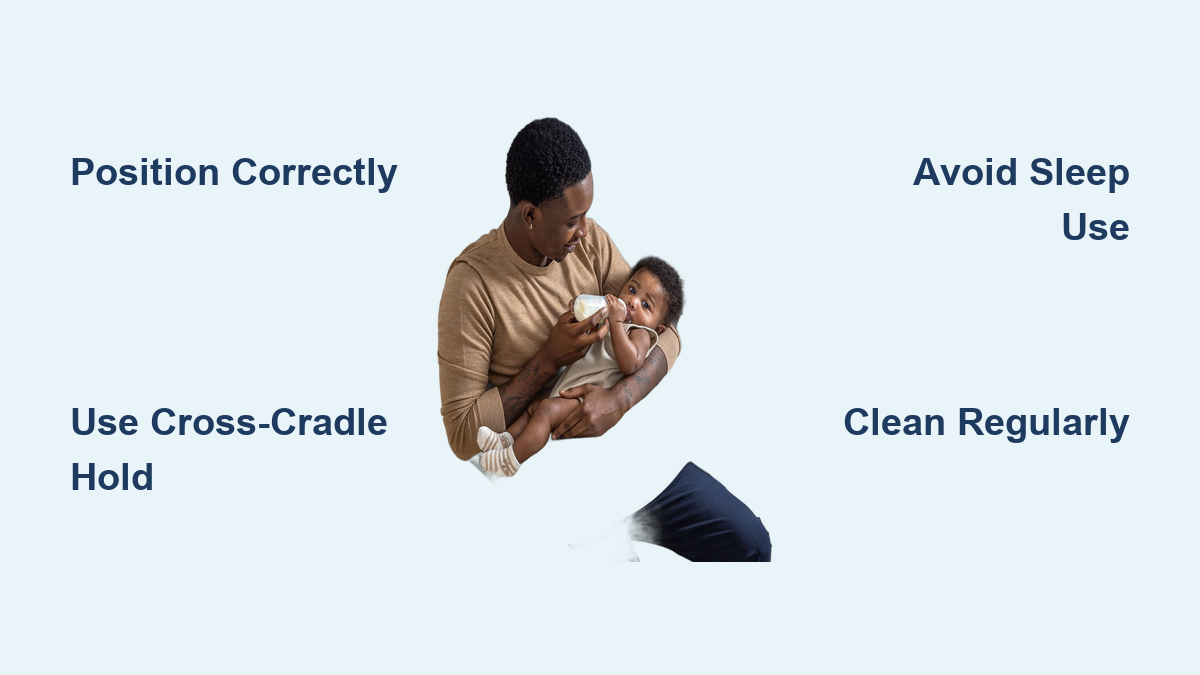
The cross-cradle hold is ideal for first-time parents and newborns with weak head control. This position maximizes your control over head positioning and helps correct shallow latches.
Steps:
- Place Boppy across your lap in U-shape.
- Position baby on the pillow with head in the curve.
- Support baby’s head and neck with the opposite hand (left hand for right breast).
- Let baby’s back rest along your forearm. The Boppy supports your arm and baby’s weight.
- Use your free hand to guide the breast and assist latch.
Benefits: This hold is recommended for premature or low-tone infants and provides maximum control over head positioning.
Latching Tip: Align baby’s nose with your nipple so they tilt their head back and open wide. Aim for deep latch with flanged lips.
Try the Football Hold After C-Section
The football hold is perfect for avoiding abdominal pressure post-surgery and provides a clear view of the latch.
Steps:
- Position Boppy vertically along your side (right side for right breast).
- Tuck baby under your arm like a football, with legs extending behind you.
- Support head with your hand while baby’s back rests along your forearm.
- Elevate baby so mouth meets nipple level.
- Keep baby’s body facing you with spine straight.
Benefits: This hold puts no pressure on your C-section incision site and enables tandem feeding with twins using two Boppys.
Pro Tip: Use this hold for engorgement or large breasts, as it gives better access and control.
Use Cradle Hold for Older Babies
The cradle hold works best once your baby has strong neck control, typically between 2 and 6 months.
Steps:
- Rest Boppy across your lap in U-shape.
- Nestle baby’s head into the crook of your elbow.
- Let the Boppy support your feeding arm and baby’s body.
- Maintain belly-to-belly contact.
- Use your free hand to shape the breast if needed.
Check Alignment: Your baby’s ear, shoulder, and hip should form a straight line.
Benefits: This cozy, natural position encourages bonding and requires less manual support as your baby grows.
Try Elevated Side-Lying for Night Feeds
The elevated side-lying position is a safe option for bottle-feeding or nighttime nursing that reduces caregiver fatigue.
Steps:
- Lie on your side with Boppy beside you.
- Place baby on back or side atop the Boppy with head slightly elevated.
- Align ear, shoulder, and hip vertically.
- Offer bottle or breast while facing your baby.
- Monitor milk flow and breathing closely.
Safety First: Never fall asleep with your baby on the Boppy. Transfer to a crib immediately after feeding.
Benefits: This position slows milk flow to prevent choking and helps manage reflux.
Laid-Back Breastfeeding with Boppy Support
Laid-back breastfeeding uses gravity and instinct for natural latching, reducing physical strain on the caregiver.
Steps:
- Recline at a 45-degree angle using bed or couch with pillows behind your back.
- Place Boppy across your chest or upper abdomen.
- Lay baby tummy-down on your chest.
- Allow baby to self-latch using the rooting reflex.
- Use the Boppy to stabilize and prevent slipping.
Expert Note: This hold works well for fussy or sensitive babies who resist direct latching and is effective for oversupply or fast letdown.
Koala Hold for Reflux and Special Needs
The Koala hold keeps your baby upright during feeding, making it ideal for babies with GERD, tongue-tie, or poor head control.
Steps:
- Sit upright with Boppy across your lap.
- Position baby sitting upright, straddling your thigh.
- Support back and shoulders with one hand.
- The Boppy supports baby’s legs and bottom.
- Bring baby to breast or bottle without bending.
Benefits: This position prevents milk from rushing back and promotes eye contact and alertness.
Feed Twins Using Double Football Hold

Save time and reduce strain by feeding twins simultaneously using the double football hold.
Steps:
- Use two Boppy pillows, one on each side.
- Position each baby in football hold under opposite arms.
- Align babies’ heads at breast level.
- Support each head with a hand while the Boppys bear the weight.
Pro Tip: Practice with dolls first. Coordination improves with repetition.
Benefits: This setup protects your C-section incision, enables shared caregiving, and reduces feeding session length.
Keep Your Boppy Clean and Well-Maintained
Wash Regularly for Hygiene
Spit-up, drool, and milk stains are inevitable with regular use.
Steps:
- Remove the cover and machine wash in cold water on gentle cycle.
- Air dry or tumble dry on low heat.
- Spot-clean the inner insert with a damp cloth and mild soap.
- Reassemble once fully dry.
Frequency: Wash the cover every 3 to 5 days, or more often if soiled.
Replace When Worn
Over time, even high-quality inserts degrade. Replace your Boppy if the pillow sags or loses shape, the cover is stained or torn, or your baby slips or sinks into the pillow.
Longevity Tip: Use a protective liner ($17) to extend the life of your Boppy and reduce washing frequency.
Avoid Common Boppy Feeding Mistakes
Poor Latch Due to Misalignment
If your baby is latching shallowly or causing pain, adjust the height so your baby’s nose is level with your nipple. Tilt baby upward slightly so the chin touches the breast first. Ensure your baby’s mouth opens wide before latching.
Fix: Reposition your baby using the Boppy as a stable base. Do not stretch or lean forward.
Caregiver Back Pain from Slouching
Even with a Boppy, poor posture causes strain. Sit in a supportive chair with feet flat. Keep your back straight, using a lumbar pillow if needed. Let the Boppy do the work rather than hunching over your baby.
Warning: If you are bending forward, the Boppy is not positioned high enough or you are slouching.
Over-Reliance on the Pillow
The Boppy is a tool, not a substitute for supervision. Always support your baby’s head and neck, especially in the early weeks. Never assume the pillow prevents rolling. Watch for signs of fatigue, choking, or airway blockage.
Golden Rule: Supervise every use. No exceptions.
Key Takeaways for Comfortable Boppy Feeding
The Boppy pillow is more than a feeding aid. It is a versatile support system that grows with your family. By using it correctly across breastfeeding, bottle-feeding, tummy time, and sitting practice, you protect your body, support your baby’s development, and create moments of calm in early parenthood.
Choose the right model based on your specific needs. The Boppy Complete Nursing Pillow works best for most families, while the Boppy Uplift is ideal for bottle-fed babies with reflux. Master the holds that work for your body and your baby. The cross-cradle hold provides maximum control for newborns, the football hold protects C-section incisions, and laid-back nursing reduces physical strain. Prioritize safety above all else. Never leave your baby unattended, do not use the pillow for sleep, and supervise every feeding session.
Frequently Asked Questions About How to Feed with Boppy Pillow
Can a baby sleep on a Boppy pillow?
No. The Boppy is not intended for sleep. The CPSC and AAP explicitly warn against using nursing pillows as sleep devices due to suffocation risk. Always transfer your baby to a crib or bassinet after feeding.
How long can you use a Boppy pillow?
The Boppy is designed for use from birth until your baby can sit unassisted, typically between 6 and 12 months. Discontinue use if the pillow loses shape or becomes damaged.
How do you clean a Boppy nursing pillow?
Remove the cover and machine wash it in cold water on a gentle cycle. Air dry or tumble dry on low. Spot-clean the inner insert with damp cloth and mild soap. Reassemble only when fully dry.
Which Boppy model is best for bottle-feeding?
The Boppy Uplift is specifically designed for bottle-fed babies. Its contoured shape elevates the head above the stomach to reduce spit-ups and support digestion.
Can you use the Boppy for twins?
Yes. Use two Boppy pillows in the double football hold, positioning one baby on each side. This allows simultaneous feeding and protects the C-section incision.