How to Place Pillows During Pregnancy
Getting quality sleep during pregnancy becomes increasingly challenging as your body changes. The growing belly, hormonal shifts, and physical discomforts like back pain, heartburn, and leg cramps can make rest elusive. But one simple, powerful tool can transform your sleep: proper pillow placement.
How to put pillow during pregnancy is not just about comfort. It is a science-backed strategy to protect your health and your baby’s. Research shows that sleeping on your back in the third trimester increases stillbirth risk by 2.6 times, while side sleeping, especially left-side, supports optimal blood flow to the placenta. Pillows are essential for maintaining this safe, healthy position throughout the night.
This guide breaks down exactly where and how to place pillows during each trimester, which types work best, and how to solve common pregnancy sleep issues from hip pain to acid reflux using smart positioning.
Sleep On Side: The SOS Rule

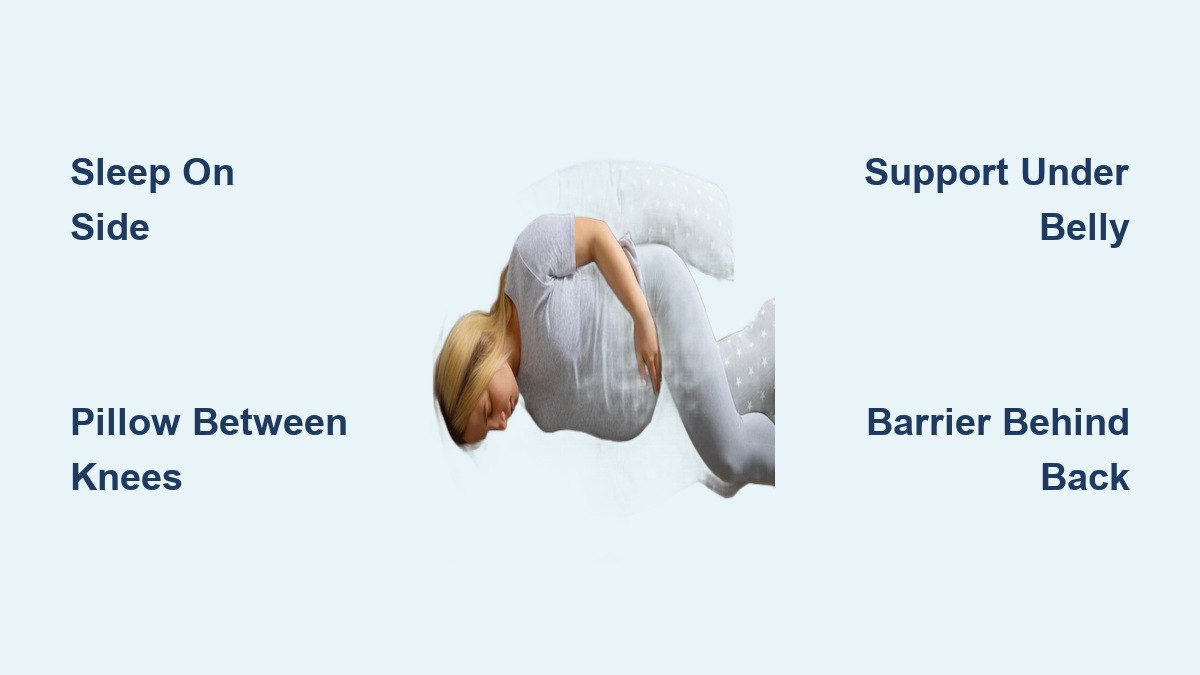
The golden rule of pregnancy sleep is SOS: Sleep On Side. Once your belly begins to grow (typically by 13–20 weeks), side sleeping becomes non-negotiable for safety and comfort.
Why Left Side Is Best
While both left and right side sleeping are safe, the left side is preferred because it maximizes blood flow to the placenta, enhances kidney function to flush out waste and reduce swelling, and minimizes pressure on the liver. One study found that left-side sleeping in late pregnancy was linked to a 50% lower stillbirth risk compared to right-side or back sleeping, though larger trials are ongoing.
Right Side for Heartburn Relief
If you struggle with acid reflux, try sleeping on your right side. This position may help stomach contents empty more quickly, reducing nighttime heartburn.
Bottom line: Avoid your back. Whichever side feels most comfortable is the right one. Just make sure you start each sleep session on your side.
Pillow Placement for Spinal Alignment

Proper pillow use keeps your spine neutral, prevents pain, and stops you from rolling onto your back. Here is how to position pillows by body zone.
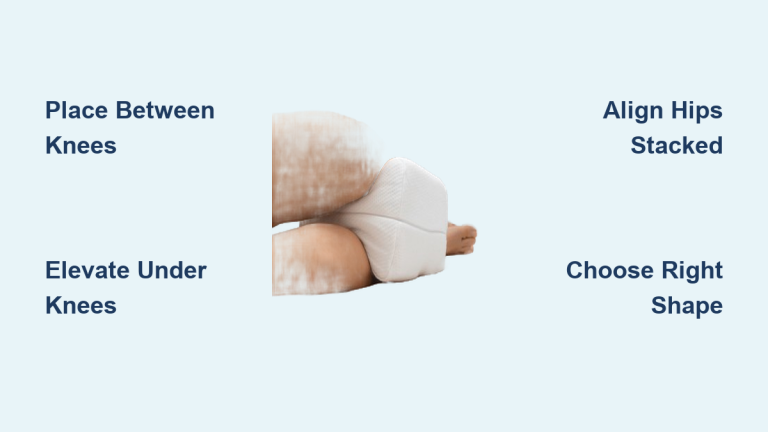
Between Knees and Thighs
Purpose: Align hips and prevent lower back strain.
When side sleeping, your top leg pulls the pelvis forward, twisting the spine. A pillow between the knees keeps hips stacked, reduces pressure on the sacroiliac joint, and prevents sciatica and hip pain.
How to do it:
– Use a long body pillow or firm standard pillow
– Place it between knees and extend down to ankles
– Ensure your top leg stays parallel to the bottom leg
Pro tip: If you have Symphysis Pubis Dysfunction (SPD), keep legs together when turning in bed to avoid pelvic pain.
Under the Belly
Purpose: Relieve lower back pull and support the growing uterus.
As your bump expands, it drags on abdominal muscles and strains the lumbar spine. A pillow under the belly lifts the uterus slightly, neutralizes spinal tension, and prevents “pulling” sensations.
How to do it:
– Use a wedge pillow, rolled towel, or curved body pillow
– Tuck it under the lower abdomen while side sleeping
– Adjust as your belly grows so support follows the curve
Alternative: C-shaped or U-shaped pillows often have built-in belly cradles.
Behind the Back
Purpose: Prevent rolling onto your back during sleep.
Even if you fall asleep on your side, you might roll onto your back accidentally. A pillow behind your back acts as a physical barrier, makes back sleeping uncomfortable, and encourages return to side position.
How to do it:
– Place a firm pillow or wedge vertically along your spine
– Use a U-shaped pillow to hug your back
– For partial recline, prop behind shoulders to ease breathing
Bonus: This position can relieve shoulder strain from arm weight.
Under Head and Neck
Purpose: Maintain cervical alignment and reduce strain.
Pregnancy hormones loosen ligaments, making neck support crucial.
How to do it:
– Use a medium-firm pillow that supports the natural curve
– Your ear should align with your shoulder when lying on your side
– Add a rolled washcloth under the neck for extra support
For heartburn:
– Elevate head and shoulders with a wedge pillow
– Avoid stacking too many regular pillows, as they can worsen neck strain
Under Arms and Shoulders
Purpose: Prevent shoulder and upper back pain.
The top arm can collapse inward, straining the shoulder joint.
How to do it:
– Hug a pillow in front of your chest
– Rest your arm on a pillow placed between you and your belly
– This opens the chest and reduces tension
Best for: Those with shoulder pain or carpal tunnel symptoms.
Best Pregnancy Pillows by Type
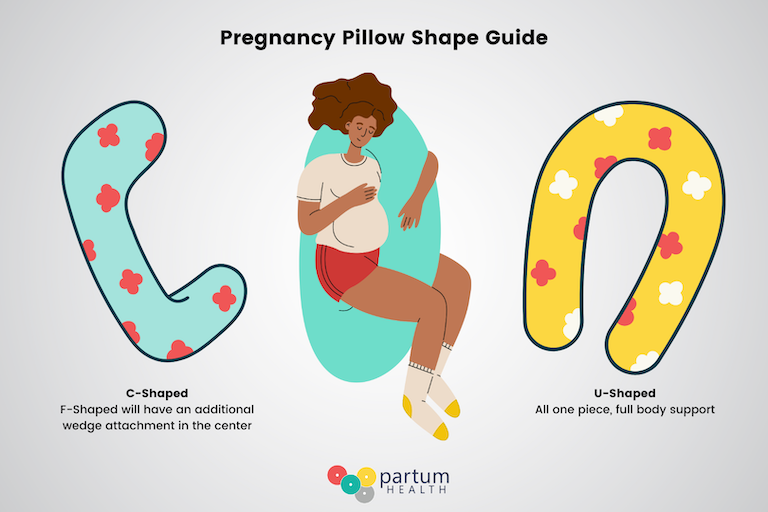
Not all pillows are created equal. Choose based on your sleep style, space, and trimester.
Full-Body (I-Shaped) Pillows
Best for: Customizable support and small beds.
- 48+ inches long
- Can be used between legs, under belly, or behind back
- Easy to adjust and repurpose postpartum
Tip: Use one for legs and another behind your back if you need full support.
U-Shaped Pillows
Best for: Maximum 360° support.
- Wraps around your body like a horseshoe
- Supports head, belly, legs, and back simultaneously
- No need to rearrange when switching sides
Downside: Takes up a lot of bed space and may not work for couples.
C-Shaped Pillows
Best for: Full support with less bulk.
- Open-ended design saves space
- Can be hugged or used to cradle back
- Fits most bed sizes
Versatile: Rotate it to support front or back depending on your side.
Wedge Pillows
Best for: Targeted relief and travel.
- Triangular shape fits under belly, back, or head
- Compact and machine-washable
- Ideal for couples with limited space
Use multiple: One under belly, one behind back, one under head for complete support.
Noodle or Flexible Pillows
Best for: Custom shaping as your body changes.
- Filled with shredded foam for moldability
- Bend into C-shape or double up for height
- Adapts to shifting pain points
Great for: Travel or changing trimesters.
Trimester-by-Trimester Pillow Guide

Your pillow needs evolve as pregnancy progresses.
First Trimester (Weeks 1–12)
Sleep status: Nausea and fatigue dominate, but physical restrictions are minimal.
Pillow use:
– Back and stomach sleeping are still safe
– Begin side-sleeping habits early
– Place a pillow between knees if side sleeping
– Use a wedge behind your back when sitting
Pro tip: Curve a flexible pillow around your abdomen if morning sickness causes sensitivity.
Second Trimester (Weeks 13–27)
Sleep status: “Golden period” for energy, but belly begins to grow.
Pillow use:
– Stop back sleeping by 13–20 weeks
– Start using a pillow between knees nightly
– Add belly support (wedge or body pillow) by 16–20 weeks
– Place pillow behind back to train your body
– Elevate upper body if heartburn begins
Warning: The risk of IVC compression starts now. Do not ignore early signs like dizziness when lying flat.
Third Trimester (Weeks 28–40+)
Sleep status: Highest discomfort and stillbirth risk from back sleeping.
Pillow use:
– Always go to sleep on your side
– Build a “nest” with U-shaped or C-shaped pillows
– Ensure leg support extends to ankles for pelvic stability
– Prop upper body with wedges if short of breath
– Use pillows to assist turning over safely
Critical: Even naps should start on your side. Position matters for every sleep session.
Fix Common Pregnancy Sleep Problems

Use targeted pillow placement to relieve specific complaints.
Lower Back Pain
Solution: Pillow between knees + under belly
Why it works: Aligns spine and prevents uterus from pulling on lumbar muscles.
Hip Pain
Solution: Thick pillow between knees and ankles
Why it works: Stops top hip from dropping and compressing the joint.
Heartburn or Acid Reflux
Solution: Wedge under head/shoulders or sleep on right side
Why it works: Gravity keeps acid down; right side may speed gastric emptying.
Shortness of Breath
Solution: Propped upper body with wedge or pillows
Why it works: Elevates diaphragm, allowing lungs to expand.
Pelvic Girdle Pain (SPD/PGP)
Solution: Long pillow from knee to ankle
Why it works: Keeps pelvis stable and prevents asymmetric movement.
Shoulder or Arm Pain
Solution: Pillow hugged in front + support behind back
Why it works: Offloads arm weight and prevents shoulder roll.
Leg Cramps or Swelling
Solution: Pillow under feet/ankles
Why it works: Promotes blood return and reduces edema.
Troubleshooting: Waking Up on Your Back
It Is Normal, Do Not Panic
Most people shift positions during sleep. The key is your starting position. Research shows that going to sleep on your back, not waking up on it, is linked to higher stillbirth risk.
If you wake up on your back:
1. Stay calm
2. Gently roll onto your side
3. Use pillows to prevent it next time
Prevent Rolling Over
- Pillow barrier: Place a firm pillow or wedge behind your back
- Hair trick: Tie long hair in a low bun to make back sleeping uncomfortable
- Sleep on the edge: Start on the left side of the bed to discourage rolling left
Transitioning from Back or Stomach Sleeping
Breaking the Habit
If you are used to back or stomach sleeping:
– Practice during naps to build muscle memory
– Start on your side with full pillow support
– Use a “wall” of pillows behind you
– Accept some movement. The goal is to begin and return to side sleeping
Note: Stomach sleeping becomes impossible by 16–18 weeks due to belly size and breast tenderness.
Stay Cool and Comfortable
Pregnancy raises body temperature, and large pillows can trap heat.
Beat the Heat
- Choose breathable fabrics (cotton, bamboo)
- Avoid synthetic fills that retain warmth
- Use a long body pillow instead of a U-shape for better airflow
- Keep bedroom at 65–68°F (18–20°C)
Pro tip: Washable, removable covers make hygiene easier during night sweats.
Postpartum: Pillow Use Beyond Pregnancy
Your pregnancy pillow is not done after delivery.
Recovery Support
- Cushion C-section incision when coughing or moving
- Support sore hips and back during healing
Breastfeeding Aid
- U-shaped and C-shaped pillows lift baby to feeding height
- Reduce strain on arms, neck, and back
- Ideal for side-lying nursing
Baby Support (Later Use)
- Once baby sits independently, use pillow to prop them up (supervised)
- Great for tummy time or sitting
Warning: Never use a pregnancy pillow for infant co-sleeping. It poses suffocation risks. Always follow safe infant sleep guidelines.
Sleep Hygiene for Better Rest
Pillows are just one part of the equation. Pair them with strong sleep habits.
Routine & Environment
- Same bedtime and wake time every day
- Bed = sleep only. No phones, work, or TV
- Cool, dark, quiet room. Use blackout shades and white noise
Diet & Hydration
- Drink water during day, but limit 2 hours before bed
- Avoid caffeine after 3 PM
- No large meals 3 hours before bed. Opt for small snacks like crackers
Movement & Mindset
- 30 minutes of daily exercise (finish 4+ hours before bed)
- Stretch gently before sleep, focusing on hips and back
- Relax with warm bath, massage, or breathing exercises
- Ask your provider about magnesium or prenatal vitamins for restless legs
When to See a Doctor
While sleep issues are common, some symptoms need medical attention:
- Frequent dizziness, nausea, or shortness of breath when lying down
- Severe back, hip, or pelvic pain that does not improve with pillows
- Loud snoring or gasping (signs of sleep apnea)
- Sudden swelling in hands or face (possible preeclampsia)
- Insomnia affecting daily function
Your provider can:
– Diagnose sleep disorders
– Recommend therapeutic pillows
– Refer to physiotherapy for SPD/PGP
– Suggest safe sleep aids if needed
Frequently Asked Questions About Pregnancy Pillow Placement
When Should I Start Using a Pregnancy Pillow?
You can start using a pregnancy pillow anytime, but most experts recommend introducing one by 13–20 weeks when side sleeping becomes essential. Starting early helps you build the habit before discomfort peaks.
Is It Safe to Sleep on My Right Side During Pregnancy?
Yes. Both left and right side sleeping are safe throughout pregnancy. The left side is often recommended for optimal blood flow, but the right side may actually help reduce heartburn. The most important rule is to avoid sleeping on your back.
What If I Wake Up on My Back During Pregnancy?
Do not panic. Waking up on your back is common because people shift during sleep. Simply roll back onto your side. Research focuses on the position you fall asleep in, so always start each sleep session on your side and use pillows behind your back to discourage rolling.
Can I Use a Regular Pillow Instead of a Pregnancy Pillow?
Yes, you can stack regular pillows to achieve similar support. Place one between your knees, another under your belly, and one behind your back. However, dedicated pregnancy pillows are designed to stay in place all night and provide more consistent support.
How Many Pillows Do I Really Need?
Most pregnant people need at least 3–4 pillows: one for between the knees, one under the belly, one behind the back, and one for the head. A full-body or U-shaped pillow can replace multiple pillows for convenience.
Are Pregnancy Pillows Safe to Use After Delivery?
Yes, they are excellent for postpartum recovery and breastfeeding. U-shaped and C-shaped pillows lift baby to feeding height and reduce arm and back strain. Just never use them for infant co-sleeping due to suffocation risk.
Key Takeaways: How to Put Pillow During Pregnancy
- Stop back sleeping by 13–20 weeks to reduce stillbirth risk
- Sleep On Side (SOS) for every sleep session, including naps
- Left side is best, but right side is safe and may help heartburn
- Essential pillow zones: between knees, under belly, behind back, under head
- Best pillow types: U/C-shape for full support, wedge for targeted relief, full-body for versatility
- Start early and build side-sleeping habits in the first trimester
- Wake up on your back? Just roll back to your side. No panic needed
- Cool room, breathable fabrics, and good sleep hygiene boost results
By mastering how to put pillow during pregnancy, you are not just chasing comfort. You are protecting your health and your baby’s. With the right setup, you can sleep safer, deeper, and more peacefully through every trimester. Start tonight by placing a pillow between your knees and one behind your back, and build your perfect sleep nest from there.