
How to Choose a Cervical Pillow: Guide & Tips
Waking up with neck stiffness, headaches, or shoulder tension? Your pillow might be the culprit. A poorly supportive pillow disrupts the natural curve of your cervical spine, leading to chronic pain and poor sleep quality. The right cervical pillow acts as a spinal alignment tool, maintaining a neutral head position, reducing muscle strain, and preventing long-term damage. This guide walks you through clinically backed methods to find the pillow that truly supports your neck.
With so many options available, choosing the best cervical pillow depends on your sleep position, body type, medical needs, and even your mattress type. This comprehensive guide cuts through the noise with expert recommendations and a step-by-step approach to finding your perfect match.
Match Pillow to Sleep Position
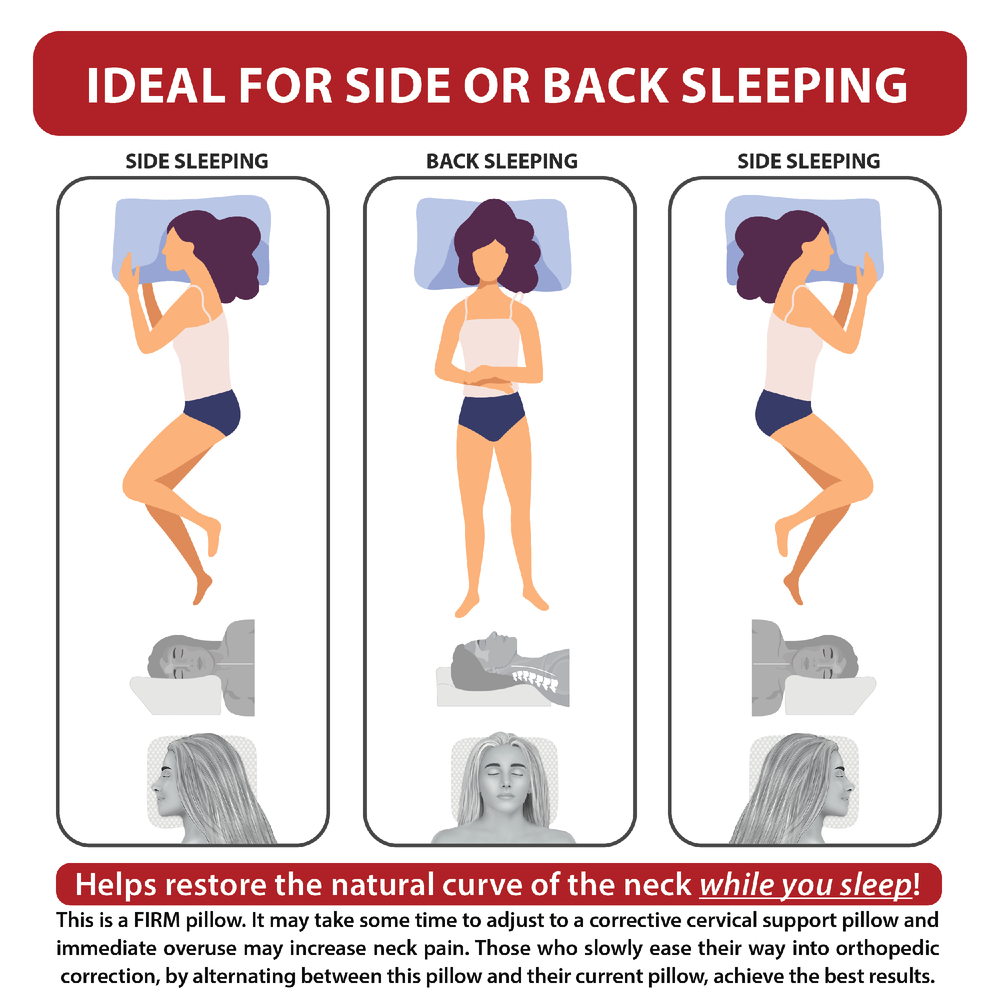
Your sleeping posture is the single most important factor in selecting a cervical pillow. Each position creates unique alignment demands that your pillow must address.
Side Sleepers Need Height and Firmness
Side sleepers require a thicker pillow to bridge the gap between the shoulder and ear. Without sufficient loft, the head tilts downward, straining the neck muscles and misaligning the spine.
• Loft: Aim for 4–6 inches (10–15 cm)
• Firmness: Medium-firm to firm to resist shoulder compression
• Best designs: Contoured foam, shredded memory foam, or latex with elevated neck support
• Pro tip: Pair with a knee pillow to keep hips and spine aligned
Clinical Insight: Over half of chiropractors say sleeping without a pillow is the worst choice for side sleepers, leading to chronic stiffness and delayed recovery.
Back Sleepers: Aim for 10 cm Optimal Height
Back sleepers need moderate support that cradles the neck’s natural curve without lifting the head too high.
• Ideal loft: 10 cm (approximately 4 inches), proven in studies to reduce neck muscle activity
• Avoid: Pillows that push the chin toward the chest (causes forward head posture)
• Best materials: Contoured memory foam, water-based, or adjustable shredded foam
• Bonus support: Place a small pillow under the knees to reduce lower back strain
Stomach Sleepers: Use Minimal or No Pillow
Stomach sleeping forces the neck into extreme rotation, often over 60 degrees, placing high stress on joints and discs.
• Recommended loft: Under 2–3 inches, or no pillow at all
• Best options: Butterfly (Japanese-style) pillows, thin foam pads
• Expert advice: Most physiotherapists recommend transitioning away from this position
• Transition aid: Use a body pillow to encourage side or back sleeping
“Sleeping on the stomach almost always leads to neck problems.” — Chiropractor consensus
Combination Sleepers: Prioritize Adaptability
If you switch positions during the night, your pillow must perform well in multiple postures.
• Ideal loft: 3–5 inches (7.5–12.5 cm)
• Best fill: Shredded memory foam for customizable firmness and height
• Top picks: Adjustable pillows like MyPillow or Sleep Number 360
• Test method: Try the pillow in both side and back positions before committing
Select the Right Loft and Firmness
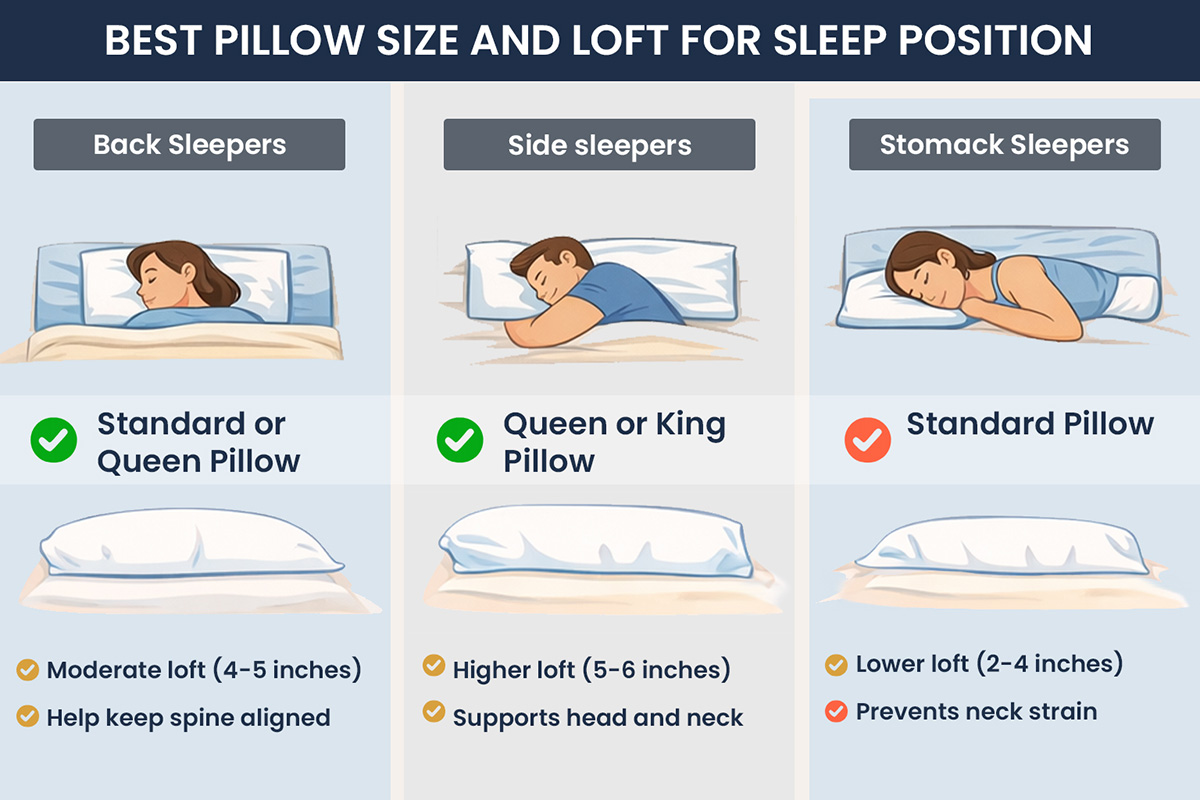
Loft, the compressed height of the pillow, is critical for spinal alignment. Too high or too low creates strain that accumulates over hours of sleep.
How to Measure Your Ideal Pillow Height
- Lie on your side on your mattress.
- Measure from the outside of your shoulder to the top of your ear.
- Choose a pillow that matches this distance when compressed.
Biomechanical Fact: Pillows around 10 cm produce the lowest muscle strain. Heights below 5 cm or above 14 cm increase discomfort significantly.
Visual Alignment Test
Have someone take a side-view photo of you lying down:
• Correct: A straight line from ear to shoulder
• Too high: Chin tucked to chest (neck flexed)
• Too low: Head tilted back (neck extended)
Loft Guide by Body Type
| Body Type | Recommended Loft |
|---|---|
| Petite frame, narrow shoulders | Low (under 3 inches) |
| Average build | Medium (3–5 inches) |
| Broad shoulders, larger frame | High (5+ inches) |
Compare Pillow Materials and Support
The fill material determines durability, comfort, temperature regulation, and the type of support your neck receives.
Memory Foam: Consistent Contouring
• Solid memory foam: Excellent support, retains shape, ideal for back and side sleepers
• Downside: Can retain heat unless gel-infused or open-cell
• Lifespan: 3–5 years
Shredded Memory Foam: Adjustable Comfort
• Customizable loft: Add or remove fill to match your needs
• More breathable than solid foam
• Best for: Combination sleepers and those adjusting to a new pillow
Latex: Cool and Responsive
• Natural breathability: Ideal for hot sleepers
• Firm, bouncy support: Maintains shape longer than foam
• Eco-friendly option: Organic latex available
• Lifespan: 4–6 years
Buckwheat Hulls: Firm and Breathable
• Moldable support: Fill can be adjusted manually
• Excellent airflow: Stays cool all night
• Durable: Lasts 5+ years
• Drawback: Rustling noise and heavier weight
Water-Based Pillows: Clinically Proven
• Adjustable support: Fill bladder with water to customize firmness
• Dynamic response: Supports head and neck in any position
• Top brands: Mediflow, ChiroFlow
• Frequently recommended: 16 chiropractors cited this type
Feather/Down: Soft but Less Supportive
• Moldable feel: Good for shaping manually
• Not ideal for neck pain: Lacks structural support, compresses quickly
• Best for: Occasional use or stomach sleepers needing minimal lift
Choose an Ergonomic Design

Standard pillows fail to support the cervical curve. Ergonomic designs actively work to maintain proper spinal alignment.
Contoured Cervical Pillows
• Dual-level design: Lower head zone with raised neck support
• Purpose: Preserves cervical lordosis and reduces disc pressure
• Best for: Back and side sleepers with chronic neck pain
• Top models: Therapeutica, Core Products, Bodyline
50% of chiropractors rank contoured pillows as the most effective for alignment correction.
Butterfly (Japanese-Style) Pillows
• Ultra-low profile: Less than 2 inches high
• U-shaped or butterfly shape: Supports head while minimizing neck lift
• Perfect for: Stomach sleepers and travel use
• User review: “My physio recommended Putnams. It helped my stiff neck and fits in my suitcase.”
Cervical Roll Inserts
• Targets neck only: Can be used with a separate head pillow
• Ideal for: Arthritis, spondylosis, and degenerative disc disease
• Portable: Fits in car seats or office chairs
Consider Your Health and Body Needs
A one-size-fits-all pillow does not work. Your anatomy and medical history significantly influence the best choice.
Shoulder Width Determines Loft
• Broad shoulders require a higher pillow
• Petite frame needs a lower pillow
• Never guess: Measure your shoulder-to-ear distance on your mattress
Age Affects Pillow Choice
| Age | Best Pillow Type |
|---|---|
| 16–40 | Contoured or butterfly for neck extension |
| 40–65 | Adjustable fill for changing posture |
| 65+ | Softer, thicker pillows to avoid hyperextension |
Medical Conditions and Pillow Solutions
Cervical Spondylosis or Disc Disease: Use cervical roll or contoured memory foam to maintain neutral alignment without pressure.
Arthritis or Osteoporosis: Use soft, even support (synthetic down or low-resistance foam). Avoid overly firm pillows that strain joints.
Acid Reflux or Hiatal Hernia: Use an 8–10 inch wedge pillow under the torso, paired with a thin cervical pillow for head support.
Allergies: Choose hypoallergenic materials (latex, synthetic fibers) and ensure a removable, washable cover.
Match Pillow to Mattress Type
Your mattress and pillow work as a team to support your spine.
Soft Mattress Considerations
• Shoulders sink in, reducing the head gap
• Use a lower-loft pillow than expected
Firm Mattress Considerations
• Body sits higher, increasing head-to-mattress distance
• Need a higher-loft pillow for proper alignment
Warning: Neck pain after a new mattress may be due to pillow mismatch, not the mattress itself.
Top-Rated Brands by Professionals
Chiropractors and physiotherapists recommend these brands for proven results.
| Brand | Why It Is Recommended |
|---|---|
| Mediflow / ChiroFlow | Water-based, adjustable, 16 chiropractor mentions |
| Pillowise | Contoured, breathable, 13 mentions |
| Therapeutica | Dual-contour design, 9 mentions |
| Core / D-core | Firm cervical support, 7 mentions |
| Tempur-Pedic | Premium memory foam, excellent durability |
| Brentwood Home Zuma | Organic latex, cooling, eco-friendly |
Smart Pick: Try a budget version of your preferred type before investing in high-end models.
Test, Adjust, and Replace
Even the best pillow needs time to work and eventual replacement.
Break-In Period: 2–3 Weeks
• Normal: Feels strange the first few nights
• Success signs: Morning stiffness decreases within 3–5 days, pain improves by day 10
• If pain worsens: Reassess loft, firmness, or consult a professional
“The first night was weird. By night three, less stiffness. By week two, I could not go back.” — Verified user
When to Replace Your Pillow
• General rule: Every 18–24 months
• Check with the fold test: Fold in half—if it does not spring back, replace it
• Replace immediately if: Lumpy or uneven, causes morning pain or headaches, shows wear, stains, or odor
Cleaning and Care Tips
• Shake and air out weekly
• Wash pillowcase every week
• Use a protective cover to block oils and allergens
• Foam cores: Spot clean only, never soak
• Air dry completely to prevent mold
Boost Results with Daily Habits
A pillow alone is not enough. Pair it with healthy habits for maximum benefit.
Improve Daytime Posture
• Keep screens at eye level
• Sit with shoulders back, head over spine
• Take breaks every 30 minutes
Do Bedtime Neck Stretches
- Child’s Pose: Stretches upper back and neck
- Cat-Cow: Improves spinal mobility
- Supine Twist: Gently rotates spine
Morning Mobility Routine
- Seated Forward Bend: Loosens spine and hamstrings
- Modified Cobra: Strengthens back, opens chest
“Pairing stretches with proper sleep reduces neck and back pain.” — Brendan McGreevy, DPT
Know When to See a Professional
Do not tough it out if pain persists.
Seek Help If You Have
• Neck pain lasting more than a week after pillow change
• Arm numbness, tingling, or radiating pain
• Balance issues or coordination problems
• Headaches every morning
• History of whiplash, arthritis, or disc disease
Recommended Actions
• Get diagnosed by a doctor or chiropractor
• Try physical therapy if stretching and pillows do not help
• Consult a physio before buying specialty pillows
“Those with arthritis, osteoporosis, or disc disease may benefit from a proper pillow.” — Dr. Paul Mackarey
Final Checklist: Choose the Right Cervical Pillow
- Identify sleep position (side, back, stomach, combo)
- Measure shoulder-to-ear distance
- Pick loft: Side (4–6 inches), Back (3–5 inches), Stomach (under 3 inches)
- Choose material: Memory foam (support), shredded (adjustable), latex (cool), water (clinical)
- Try contoured design if you have neck pain
- Match to mattress firmness
- Test for 2–3 weeks—give your body time to adjust
- Replace every 1–2 years
- Use knee or body pillow for full alignment
- Combine with posture and stretching
- See a professional if pain continues
Frequently Asked Questions About Choosing a Cervical Pillow
How do I know if my cervical pillow is too high or too low?
If your chin tucks toward your chest, the pillow is too high. If your head tilts backward, it is too low. A side-view photo while lying down helps identify the issue. The correct position creates a straight line from ear to shoulder.
Can a cervical pillow help with existing neck pain?
Yes, clinical studies show that proper cervical pillows significantly reduce chronic neck pain and headaches. However, if pain persists beyond two weeks or worsens, consult a healthcare professional to rule out underlying conditions.
How often should I replace my cervical pillow?
Replace cervical pillows every 18–24 months. Memory foam and latex last 3–5 years, while feather and polyfill need replacement sooner. Check for lumps, loss of shape, or morning pain as signs it is time for a new one.
Are expensive cervical pillows worth the investment?
Professionals recommend trying budget versions of your preferred type first. Many effective options exist at moderate prices. Premium models offer better durability and cooling features, but the right pillow for your sleep position matters more than the price tag.
Which cervical pillow do chiropractors recommend most?
Water-based pillows like Mediflow and ChiroFlow receive the most recommendations (16 mentions from chiropractors). Contoured designs from Therapeutica and Pillowise are also frequently cited for their proven alignment support.
Can I use a cervical pillow if I sleep on my stomach?
Stomach sleepers should use minimal loft (under 3 inches) or no pillow. Butterfly-style pillows provide the best option for this position. Most healthcare professionals recommend transitioning away from stomach sleeping to prevent neck problems.
Key Takeaways for Finding Your Perfect Cervical Pillow
Choosing the right cervical pillow comes down to matching three factors: your sleep position, your body measurements, and any specific health needs. Side sleepers need 4–6 inches of loft, back sleepers benefit from approximately 10 cm, and stomach sleepers should use minimal elevation or none at all. Measure your shoulder-to-ear distance to find your ideal pillow height, and test any new pillow for at least two weeks before deciding if it works.
Your pillow is medical equipment, not just bedding. The right cervical pillow supports your spine, reduces pain, and improves sleep quality. Invest in one that works for your body, not just the marketing. Combine it with proper posture habits and stretching for lasting neck health, and consult a professional if pain persists despite making these changes.