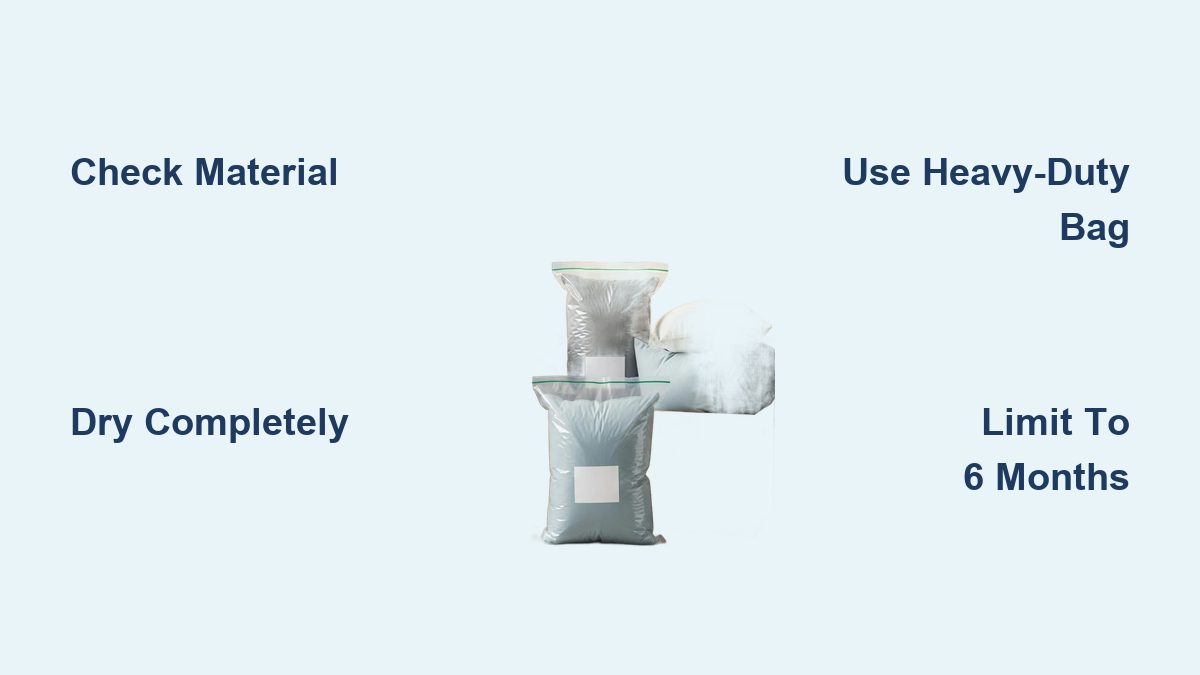
How to Vacuum Seal a Pillow: Quick Steps
Bulky pillows eat up closet space, whether you’re rotating seasonal bedding, prepping for a move, or just trying to tame an overflowing linen shelf. If you’re searching for how to vacuum seal a pillow the right way, the good news is that it’s a simple, highly effective storage solution when done correctly. Done wrong, however, and you risk permanent damage to your pillow or even mold growth inside the bag.
This guide covers everything you need to know, from checking material compatibility and choosing the right bag to restoring fluffiness after unsealing. You’ll also learn the common mistakes that ruin pillows and how long you can safely store them compressed.
Check Pillow Material Before You Begin

The single most important step in learning how to vacuum seal a pillow is confirming that the fill material can handle compression. Skip this step, and you could destroy an expensive pillow in minutes.
Pillows That Handle Compression Well
- Polyester fiberfill: Synthetic pillows bounce back quickly and hold their shape after compression.
- Down and feathers: These natural fills compress dramatically and recover well with proper fluffing.
- Cotton: Can be sealed, but only for short-term storage to avoid stressing the fibers.
Pillows You Should Never Vacuum Seal
- Memory foam: The cellular structure collapses under vacuum pressure, causing permanent loss of support.
- Latex: Similar to memory foam, latex breaks down irreversibly when compressed for extended periods.
How to Store Memory Foam or Latex Instead
If your pillow contains foam, use these alternative methods:
– Place it in a breathable cotton pillowcase or storage bag.
– Store inside a sealed plastic bin to block moisture and dust.
– Keep in a cool, dry, well-ventilated spot away from sunlight.
⚠️ Warning: Vacuum sealing memory foam or latex may void the manufacturer’s warranty and permanently ruin the pillow.
Choose the Right Vacuum Storage Bag

The bag you use directly affects how well your pillow compresses and how safely it stores.
Size and Strength Guidelines
- Pick a bag slightly larger than the pillow to avoid overstuffing.
- Choose heavy-duty, puncture-resistant bags with a dual-seal zipper.
- For multiple pillows, use jumbo bags with double valves for faster air removal.
Vacuum Options That Work
- Electric vacuum cleaner: Fastest and most powerful option for home use.
- Hand pump: Portable and great for travel or small apartments.
- Straw method: Insert a drinking straw into the valve and suck air manually (least effective, use only in emergencies).
✔️ Pro Tip: Reusable bags save money over time. Just inspect the seal before each use to confirm it’s airtight.
Prepare the Pillow Before Sealing

Skipping prep is the fastest path to mold, odors, and clumped filling. Take these steps seriously.
Clean According to Care Label Instructions
- Wash down or fiberfill pillows in the machine on a gentle cycle.
- Hand wash cotton pillows if the label recommends it.
- Use mild detergent only. Avoid bleach or fabric softeners that damage fibers.
Dry the Pillow Completely
- Tumble dry on low heat with dryer balls to prevent clumping.
- Air dry for 24 to 48 hours if machine drying isn’t recommended.
- Confirm the pillow is 100% dry before sealing. Any trapped moisture will cause mold.
Fluff and Loosen the Fill
- Shake the pillow vigorously for 30 seconds.
- Knead it by hand to redistribute stuffing evenly.
- This step prevents lumps and ensures uniform compression.
Place and Seal the Pillow in the Bag
Now you’re ready to pack. Follow this sequence carefully to avoid damaging the pillow or the bag.
Insert the Pillow Gently
- Lay the bag flat and open it fully.
- Place the pillow inside without forcing or sharp folding.
- Leave 2 to 3 inches of space around the edges so air can escape evenly.
Smooth and Zip the Bag
- Smooth out wrinkles in the bag material to eliminate air pockets.
- Zip the closure slowly, pressing out air as you go.
- Double-check the seal for any gaps. Even a small opening will break the vacuum.
Remove Air Gradually
- Attach the vacuum hose to the valve.
- Start suction on low and watch the compression progress.
- Stop once the pillow is flat but not strained. Over-vacuuming stresses seams and can damage synthetic fibers.
⏱️ Time Estimate: Full compression takes 1 to 3 minutes with an electric vacuum.
Store Sealed Pillows in the Right Conditions
A perfect seal can still fail if storage conditions are wrong.
Best Storage Locations
- Ideal: Cool, dry, dark closet shelves or under-bed bins.
- Avoid: Basements, attics, and garages where humidity and temperature fluctuate.
- Sunlight warning: UV rays degrade plastic bags and may discolor pillow covers.
Position and Protect the Bags
- Lay bags flat or stack no more than three high.
- Never place heavy objects on top.
- Use cardboard dividers between stacks to prevent punctures.
Label and Monitor Regularly
- Write the contents and date on each bag with a permanent marker.
- Press the bag every 1 to 2 months to confirm it stays firm.
- Rotate bags occasionally to prevent permanent creasing.
Limit Storage Time to Six Months
Vacuum sealing is not meant for permanent storage. Going past the limit risks permanent damage.
Why the Six-Month Rule Matters
- Extended compression weakens fibers and reduces loft.
- Even down and fiberfill lose resilience beyond this window.
- Risk of permanent deformation increases significantly over time.
📅 Set a reminder: Mark your calendar to unseal and air out pillows every six months.
Restore Pillow Loft After Unsealing
Your pillow will look flat when you first open the bag. Restoration is straightforward with the right techniques.
Shake and Knead by Hand
- Remove the pillow from the bag and shake it vigorously for 30 seconds.
- Punch and knead it to break up clumps.
- Flip and repeat on all sides for even recovery.
Use the Dryer Method
- Place the pillow in the dryer with 2 to 3 clean tennis balls or wool dryer balls.
- Set to low heat for 10 to 15 minutes.
- Stop and fluff every 5 minutes to ensure even expansion.
🔥 Caution: High heat melts synthetic fibers and damages pillow covers. Always use low heat.
Air and Sun the Pillow
- Place it in a sunny, breezy spot for 2 to 4 hours.
- Sunlight kills bacteria and removes stale odors.
- UV exposure helps fibers expand naturally.
Refresh with Steam
- Pass a handheld fabric steamer gently over the surface.
- Steam relaxes compressed fibers and freshens the fabric.
- Let the pillow air-dry completely before use.
💡 Pro Tip: For down pillows, combine all methods. Shake, dry with balls, then sun for the best results.
Avoid These Common Mistakes
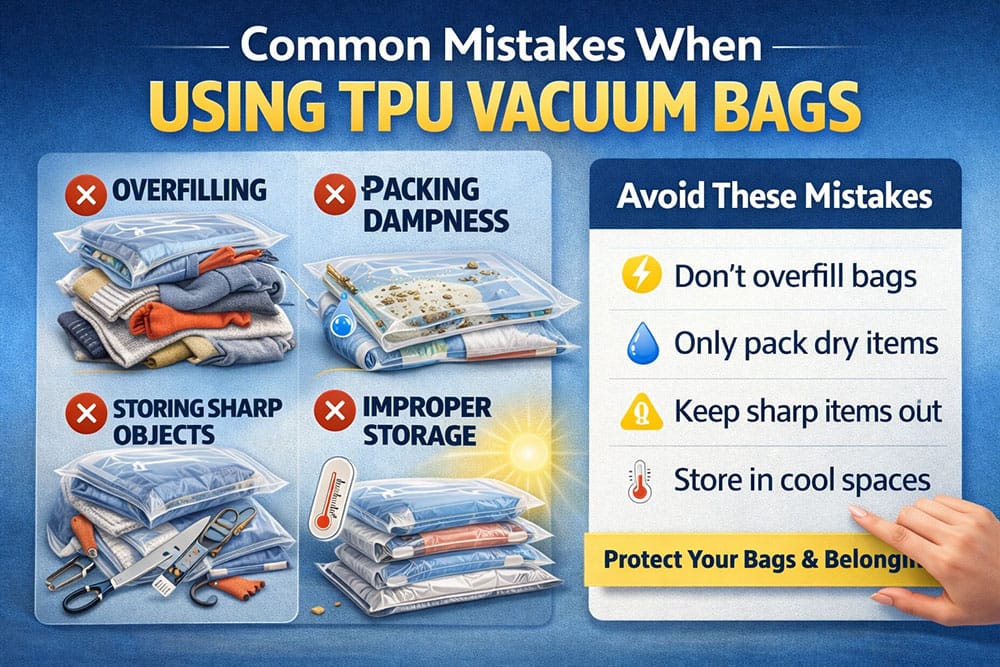
Small errors can ruin your pillow or your entire storage setup.
❌ Sealing a Damp Pillow
Trapped moisture causes mold, mildew, and foul smells. Always verify the pillow is bone dry.
❌ Overfilling the Bag
This stresses the zipper and creates uneven compression. Use one pillow per bag unless the bag is specifically designed for multiples.
❌ Storing Near Sharp Objects
Jewelry, zippers, or rough surfaces can puncture the bag. Store away from anything sharp.
❌ Storing Too Long
Beyond six months, recovery becomes incomplete and fibers may never regain full loft.
Know the Benefits and Limits
Setting realistic expectations helps you get the most out of vacuum sealing.
What Vacuum Sealing Does Well
- Saves space: Compresses pillows to a fraction of their original size.
- Protects hygiene: Blocks dust mites, allergens, and pet dander.
- Organizes storage: Flat, labeled bags stack neatly in any closet.
- Travel-friendly: Ideal for long trips where you have access to a vacuum at your destination.
What Vacuum Sealing Cannot Fix
- Won’t restore old, lumpy pillows. Only freshly cleaned ones recover well.
- Cannot make memory foam or latex safe for compression.
- Doesn’t eliminate existing odors or stains if you skip cleaning first.
Frequently Asked Questions About Vacuum Sealing Pillows
Can you vacuum seal any type of pillow?
No. Only polyester fiberfill, down, feathers, and cotton can be safely vacuum sealed. Memory foam and latex should never be compressed because their cellular structures break down permanently under pressure.
How long can a pillow stay vacuum sealed?
A maximum of six months. Beyond that, fibers weaken and the pillow may not fully regain its original loft and support, even with proper fluffing techniques.
Will vacuum sealing damage my pillow?
It depends on the material. Pillows made from fiberfill, down, or cotton handle compression well. Memory foam and latex pillows suffer permanent structural damage and should be stored using breathable bags instead.
How do you fluff a pillow after vacuum sealing?
Shake it vigorously, knead it by hand, then place it in the dryer on low heat with 2 to 3 tennis balls for 10 to 15 minutes. Air and sun exposure for a few hours also helps restore loft and freshen the fabric.
Can you vacuum seal pillows without a vacuum cleaner?
Yes. You can use a hand pump or insert a drinking straw into the valve to suck air out manually. These methods are slower and less effective than an electric vacuum, but they work in a pinch.
Is it safe to vacuum seal pillows for long-term storage?
Yes, as long as you follow the rules. Use the right bag, ensure the pillow is completely dry, store in a cool dry place, and unseal within six months to prevent fiber damage and mold growth.
Final Thoughts on Vacuum Sealing Pillows the Right Way
Vacuum sealing is one of the smartest ways to save space and protect your bedding, but only when you follow the right process. The three most important rules are simple: always check material compatibility first, make sure the pillow is completely dry before sealing, and never store sealed for longer than six months.
Your next step is to gather your supplies, identify which pillows in your home are safe to compress, and start with one bag to test the process. Once you see how much space you save and how well your pillows recover, you’ll likely want to vacuum seal every seasonal pillow you own.