
How to Sleep With J Shaped Pregnancy Pillow
Finding a comfortable sleep position during pregnancy can feel like a nightly battle. By 20 weeks, many expectant mothers notice new hip pain, lower back strain, and the unsettling tendency to roll onto their back during sleep. After 28 weeks, back-sleeping becomes risky for optimal blood flow, making side-sleeping essential. A J-shaped pregnancy pillow offers a practical solution, supporting your head, bump, hips, and knees while fitting comfortably in shared or smaller beds.
Unlike bulky U-shaped pillows that dominate the mattress, the J-shape supports one side of your body at a time. This makes it easier to flip, reposition, and share your bed with a partner. This guide covers everything you need to know about how to sleep with a J-shaped pregnancy pillow, including setup steps, proven positions, common mistakes, and tips for getting lasting value beyond pregnancy.
Achieve Neutral Spinal Alignment

Your spine has three natural curves: cervical (neck), thoracic (upper back), and lumbar (lower back). Pregnancy weight gain and shifting posture place extra stress on these curves. The J-shaped pillow helps maintain neutral spinal alignment, which prevents strain and keeps your entire body properly positioned.
Why Alignment Matters
Misalignment happens when your top leg pulls your pelvis forward or your belly sags toward the mattress. This causes your lower back to arch unnaturally, leading to:
– Chronic lower back pain
– Hip and pelvic girdle discomfort
– Sciatica flare-ups
– Morning stiffness
By supporting your head, torso, and legs simultaneously, the J-shaped pillow keeps your spine in a straight line from ear to shoulder to hip. This reduces pressure on joints and muscles while improving circulation.
Key Support Zones
The J-shape is engineered to support four critical areas:
– Head and neck: Prevents neck strain with integrated head support
– Lower back and spine: Fills the gap between your back and the mattress
– Belly: Cradles your growing bump to reduce abdominal pull
– Hips and knees: Keeps legs aligned to prevent pelvic rotation
Proper alignment does more than ease pain. It reduces swelling, improves blood flow, and helps you stay safely on your side throughout the night.
Set Up the J-Shaped Pillow Correctly
Getting the most from your pillow starts with correct placement. Follow these steps to ensure every part of your body receives support.
Position the Pillow on the Bed
Place the J-shaped pillow lengthwise along your side of the bed. Orient it so the curved top of the “J” is where your head will rest. The long arm should extend down the length of your body, either in front of or behind you depending on your preferred configuration.
Visual cue: The pillow should resemble a backwards “J” when viewed from above, with the rounded end at the top and the long shaft pointing toward your feet.
Rest Your Head on the Curve
Gently place your head on the curved upper portion of the pillow. This acts as your headrest and keeps your neck aligned with your spine. Avoid letting your head tilt too far forward or backward. Your ears should line up with your shoulders.
Pro tip: If you prefer more neck support, tuck a small rolled towel under the curve or choose a model with extra cervical padding.
Configure the Long Arm for Support
Decide whether you want front or back support. You can switch between these nightly based on comfort.
Front Support: Cradle Your Bump
Wrap the long arm of the pillow in front of your body, curving it around your belly. Hug the top end with your arms if comfortable. This configuration lifts the weight of your bump off your hips, reduces strain on your lower back, and provides a secure, hugging sensation. It works especially well in the second and third trimester.
Back Support: Prevent Rolling
Place the long arm behind your back, running from your shoulders down to your tailbone. This creates a physical barrier that makes it harder to roll onto your back during sleep. This setup is excellent if you wake up on your back, have lower back pain, or need extra lumbar support.
Warning: Always aim to sleep on your left side after 28 weeks. It improves circulation to the heart, uterus, and kidneys.
Slide Knees Into the Lower Curve
Bend your knees slightly and slide the lower curve of the J between your knees and thighs. The pillow should extend from your knees down toward your ankles if long enough. This step keeps your hips parallel to the mattress, prevents your top leg from pulling your pelvis forward, and minimizes pressure on your hip joints and sciatic nerve.
Common mistake: Placing the pillow only under the knees instead of between them. This does not prevent pelvic rotation and reduces effectiveness.
Try These 4 Proven Sleeping Positions
The J-shaped pillow is versatile. Here are the most effective ways to use it based on your specific needs.
Full Side-Sleep Embrace
Best for: Hip pain, belly support, general comfort
- Lie on your left side
- Place head on the curved top
- Wrap the long arm around your front, hugging your bump
- Insert lower curve between knees
This position provides full-body alignment, prevents forward rolling, and encourages left-side sleeping. It is the gold standard position recommended by obstetricians for third-trimester sleep.
Back-Sleeping Barrier
Best for: Those who roll onto their back
- Lie on your side
- Place the long arm behind your spine
- Rest head on top curve
- Keep lower curve between knees
The pillow physically blocks back-rolling, supports your lumbar curve, and is ideal for back pain sufferers. Setup takes less than two minutes, making it great for quick repositioning during the night.
Leg Elevation for Swelling
Best for: Edema, leg cramps, circulation issues
- Lie on your side
- Position the lower curve so it supports from knees to ankles
- Elevate legs slightly (1–2 inches above heart level)
- Use top curve for head or hug
This setup reduces foot and ankle swelling, relieves lower back pressure, and promotes venous return. It is especially helpful in the third trimester and postpartum when fluid retention peaks.
Semi-Reclined Reading Position
Best for: Heartburn, late-night reading, feeding prep
- Sit up in bed with back against the headboard
- Place the long arm behind your lower back
- Curve the top around your neck or shoulders
- Use lower curve to support thighs or let it rest
This position reduces acid reflux, supports upright posture, and doubles as a nursing prep prop. For higher elevation, stack the J-pillow or pair it with a wedge pillow.
Avoid These Common Mistakes
Even with the right pillow, poor technique can reduce its benefits. Watch out for these pitfalls.
Using the Wrong Orientation
Placing the J upside down (straight end at the top) removes head support and misaligns your neck. Always ensure the bulbous curve is at the top.
Skipping Knee Support
Many users only use the head and belly support but ignore the lower curve. Without knee separation, your hips rotate and your lower back arches, defeating the purpose entirely.
Overheating Due to Fabric Choice
Some J-pillows use dense memory foam or non-breathable covers that trap heat. If you are prone to night sweats:
– Choose bamboo-derived viscose or cotton-blend covers
– Opt for gel-infused or shredded foam fill
– Keep room temperature between 65–70°F
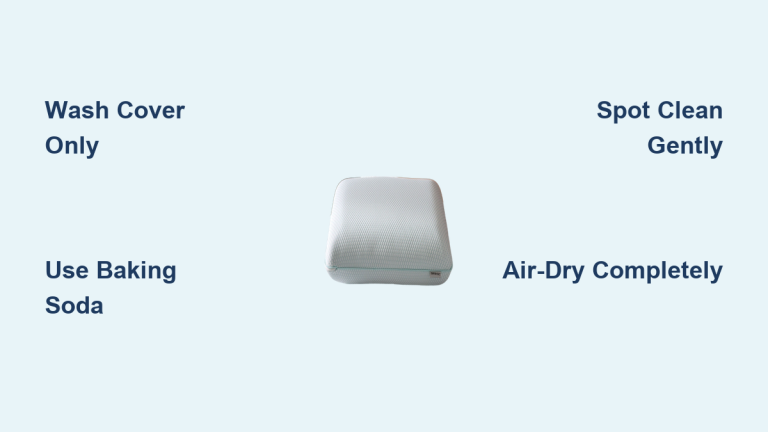
Ignoring Pillow Maintenance
Sweat, lotions, and spills accumulate quickly during pregnancy. Neglecting cleaning leads to odor, bacteria, and allergens.
Maintenance schedule:
– Wash cover: Weekly
– Spot clean core: Bi-weekly
– Air out pillow: Daily (fluff and rotate)
Maximize Comfort with Adjustments
The J-shaped pillow is designed for flexibility. Do not hesitate to tweak it throughout the night.
Tuck for Extra Bump Lift
If your belly feels heavy, tuck the front curve under your bump for a lifting effect. This redistributes weight and eases round ligament pain.
Shift for Better Back Support
If lower back pain flares, slide the long arm higher up your spine or press it more firmly into your back. You can also bend your knees more to deepen the pelvic tilt.
Use Only the Leg Section
On hot nights, detach the lower curve and use it just between your knees. Pair with a regular pillow for your head to stay cool but aligned.
Pro tip: Keep a second J-pillow on the couch for daytime naps or feeding sessions.
Compare J-Shaped to Other Pregnancy Pillows
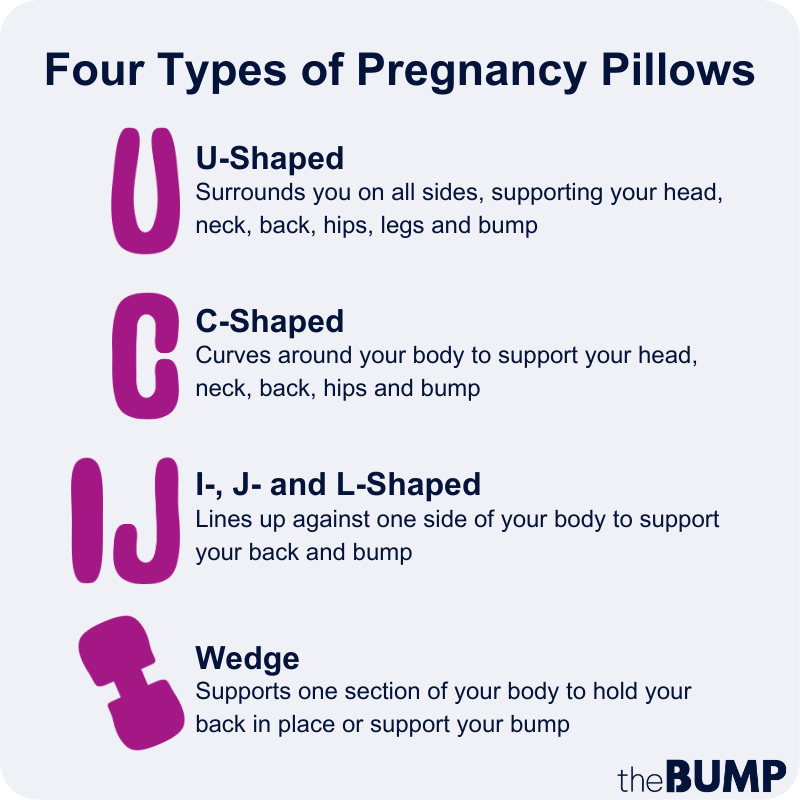
Not all body pillows deliver the same experience. Here is how the J-shape stacks up against alternatives.
| Feature | J-Shaped | U-Shaped | C-Shaped | I-Shaped |
|---|---|---|---|---|
| Space Needed | Low (ideal for couples) | High (dominates bed) | Medium | Very low |
| Support Coverage | One side (head to knees) | Full body | Front or back | Single side |
| Ease of Movement | High (easy to flip) | Low (bulky) | Medium | High |
| Best For | Shared beds, side sleepers | Frequent turners | Versatile positioning | Minimalists |
The J-shaped pillow offers the sweet spot between support and space efficiency, making it perfect if you share a bed or dislike feeling trapped.
Extend Use Beyond Pregnancy
Your J-shaped pillow is not just a nine-month investment. It continues to provide value long after delivery.
Postpartum Recovery Support
After delivery, your body needs time to heal. Use the pillow to support your back while breastfeeding, prop up your arms to reduce shoulder strain, and maintain side-sleeping comfort if you had a C-section.
Safety note: Never place the pillow in the crib or bed-share with your baby. Suffocation risk is serious.
Nursing and Feeding Helper
Wrap the pillow around your back while sitting in bed. It supports your spine and allows you to feed comfortably without slouching.
Long-Term Side-Sleeper Aid
Even years later, the J-pillow helps alleviate chronic back or hip pain, improve sleep for desk workers with tight hips, and support leg elevation for better circulation. Many users keep one in the guest room or on the couch for reading, napping, or recovery from surgery.
Choose a High-Quality J-Shaped Pillow
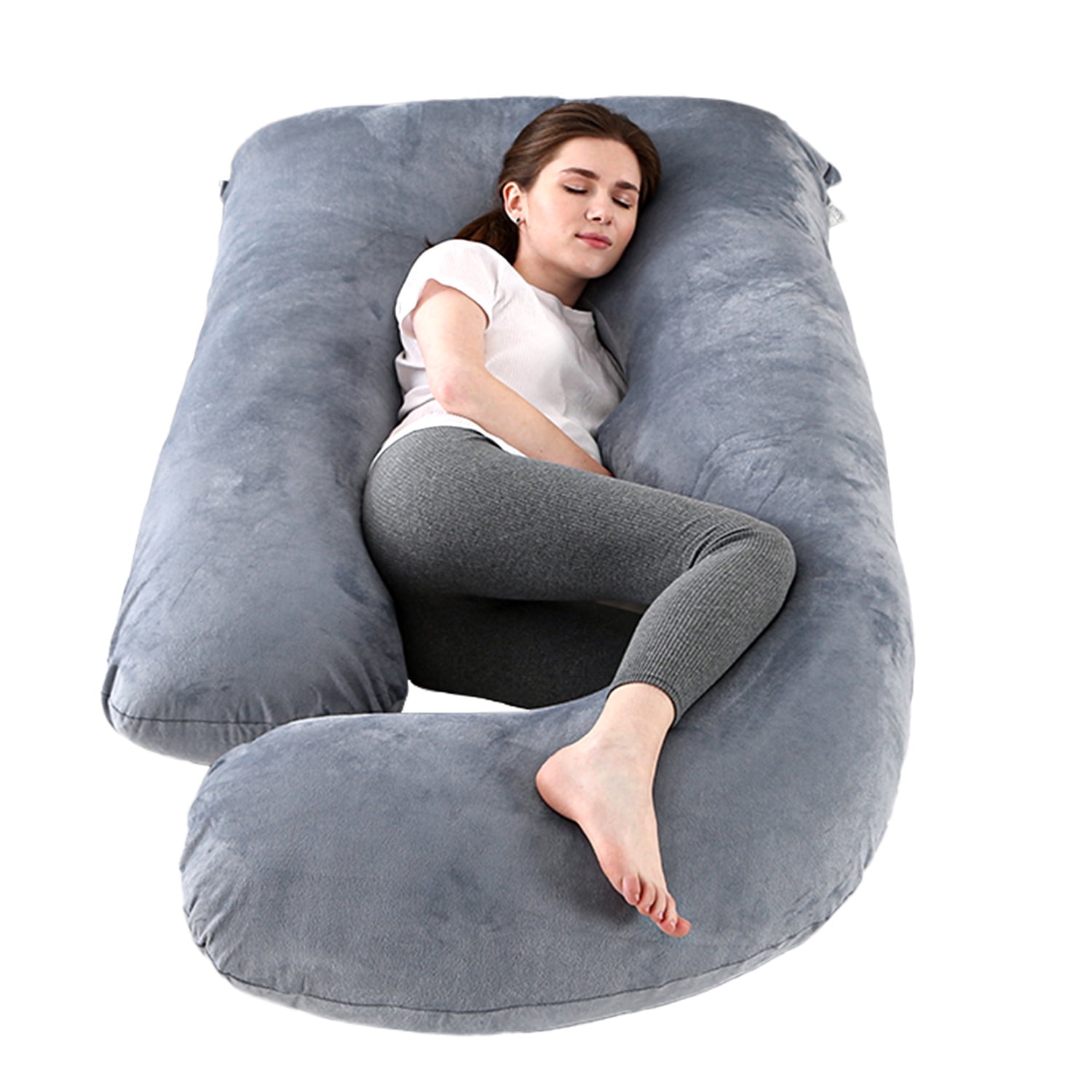
Not all J-pillows deliver equal comfort. Look for these features when shopping.
Key Features to Prioritize
- Removable, washable cover: Essential for hygiene
- Breathable fabric: Bamboo, cotton, or moisture-wicking blends
- Dense, resilient fill: Microfiber, memory foam, or shredded foam that resists flattening
- Zipper closure: Prevents cover slippage
- 50–60 inch length: Ensures full-body support
Price vs. Value
J-shaped pillows range from $30 to $80. Higher prices usually mean better materials (organic cotton, cooling gel), longer durability, and warranty coverage (30 days to 1 year).
Smart buy: Spend $50–$70 for a pillow that lasts through pregnancy and beyond.
Top-Rated Models
- Leachco Boppy Nurturing Pillow (J-Shape): Compact, easy to clean, great for feeding
- Pharmedoc Full Body Pregnancy Pillow (J-Style): Cooling cover, supportive memory foam
- Love Scoop J-Shaped Pillow: Lightweight, hypoallergenic, ideal for travel
Frequently Asked Questions About J-Shaped Pregnancy Pillows
When should I start using a J-shaped pregnancy pillow?
Most experts recommend starting around 20 weeks, when pregnancy discomfort typically increases and side-sleeping becomes more important. Introducing the pillow early helps you acclimate before discomfort peaks.
Can I sleep on my right side with a J-shaped pillow?
Yes, you can sleep on either side. However, left-side sleeping is recommended after 28 weeks because it improves blood flow to the placenta, heart, uterus, and kidneys. Switch sides as needed for comfort, but prioritize your left side when possible.
Is a J-shaped pillow better than a U-shaped pillow?
It depends on your needs. J-shaped pillows are more compact, easier to reposition, and ideal for shared beds. U-shaped pillows offer full-body encirclement and prevent rolling in any direction but are bulkier and harder to move. Side sleepers who share a bed often prefer the J-shape.
How do I clean my J-shaped pregnancy pillow?
Remove the outer cover via the zipper and machine wash it weekly in cold or warm water on a gentle cycle. Tumble dry on low. Spot clean the inner core bi-weekly with mild detergent and air dry thoroughly to prevent mold.
Can I use a J-shaped pillow after giving birth?
Absolutely. The pillow supports postpartum recovery, acts as a back prop during breastfeeding, and helps maintain comfortable side-sleeping positions. Just never place it in the crib or use it for bed-sharing with your baby due to suffocation risks.
Will a J-shaped pillow help with hip pain?
Yes. By keeping your knees separated and your pelvis level, the J-shaped pillow prevents the top leg from pulling your pelvis forward. This reduces strain on hip joints and the sciatic nerve, providing significant relief from pregnancy-related hip pain.
Key Takeaways for Sleeping Comfortably with a J-Shaped Pregnancy Pillow
Learning how to sleep with a J-shaped pregnancy pillow can transform your rest during one of the most physically demanding times of life. The pillow works by aligning your spine, cradling your bump, and preventing back-rolling, all of which reduce pain and improve sleep quality.
Start using it around 20 weeks, experiment with front and back configurations, and always place the lower curve between your knees for maximum hip support. Maintain it properly with weekly cover washes and daily fluffing to keep it hygienic and supportive.
Your next step: Choose a high-quality J-shaped pillow with breathable fabric and a washable cover, then spend a few nights experimenting with different positions. Within a week, you will likely notice less pain, fewer wake-ups, and more restorative sleep throughout your pregnancy and beyond.