How to Place Pillow for Neck Pain
Waking up with a stiff, aching neck is a frustrating experience that often points to one overlooked culprit: improper pillow placement. The way you position your pillow directly affects spinal alignment, muscle tension, and how well your body recovers overnight. Research shows that poor sleeping posture can increase neck pain severity by up to 2 times, especially for side and stomach sleepers. The good news is that simple, science-backed adjustments to how you place your pillow can reduce pain by 25–55% within 4–12 weeks.
The key is not just which pillow you use, but how you use it. Whether you sleep on your back, side, or stomach, correct pillow placement supports your cervical spine’s natural curve, keeps your head level with your spine, and prevents strain on muscles and joints. This guide will walk you through exactly how to place your pillow for neck pain based on your sleeping position, along with the ideal pillow types and pre-sleep habits that work together to break the pain cycle.
Back Sleeping: Align Head and Neck

Back sleeping is widely considered the most spine-friendly position and is linked to a 30% lower risk of neck pain. When done correctly, it keeps your head, neck, and spine in a neutral line, minimizing strain and promoting healing.
Support the Neck Curve
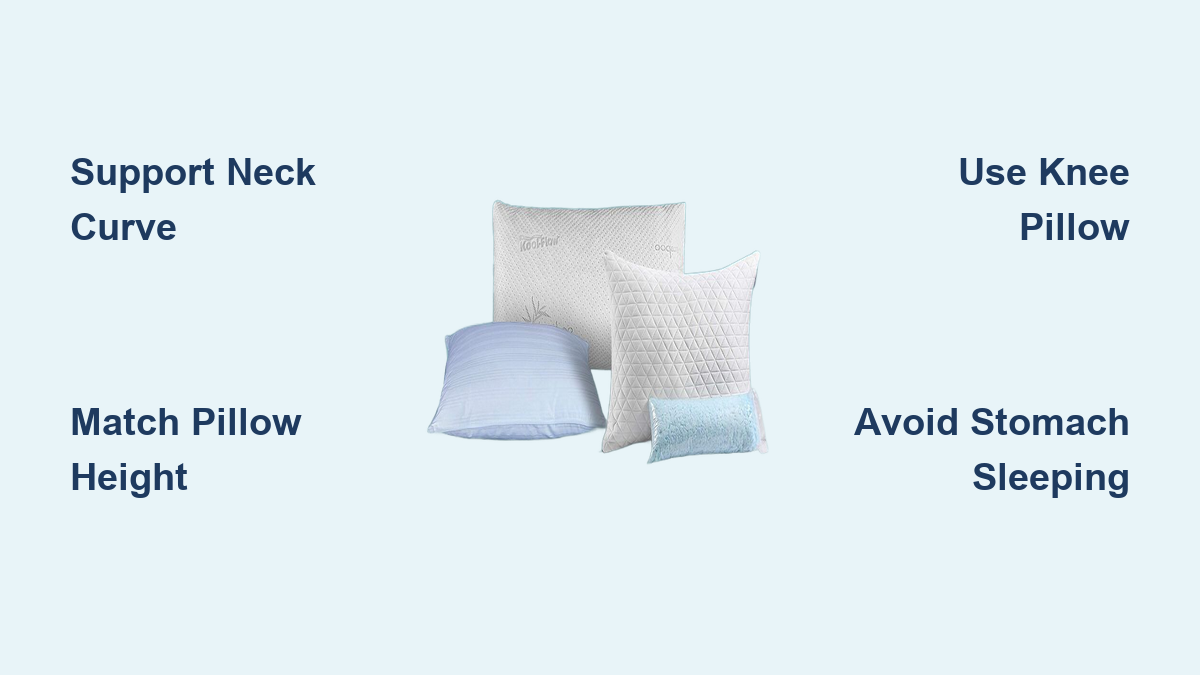
The biggest mistake back sleepers make is using a pillow that is too thick or too flat. A pillow that lifts your head too high tucks your chin toward your chest, straining the back of the neck. One that is too low flattens your neck’s natural curve. The fix is to place the thickest part of the pillow under your neck, not your head. This fills the hollow behind your neck and maintains cervical lordosis. Your head should rest slightly lower so your chin stays parallel to the floor.
Choose the Right Pillow Type
Look for pillows designed for back sleeping:
- Contoured cervical pillows with a dip in the center for the head and a raised edge for neck support
- Memory foam pillows that mold to your shape and offer consistent support
- Dual-layer pillows combining a firm base for the neck with a softer top for the head
Avoid fluffy down or polyfill pillows that collapse overnight and lose support.
Add Knee Support
Even with perfect pillow placement, your lower back can arch if unsupported. Place a small pillow or rolled towel under your knees. This slight bend in the legs reduces spinal tension and improves overall alignment, making it easier for your neck to stay relaxed.
Side Sleeping: Match Ear to Shoulder
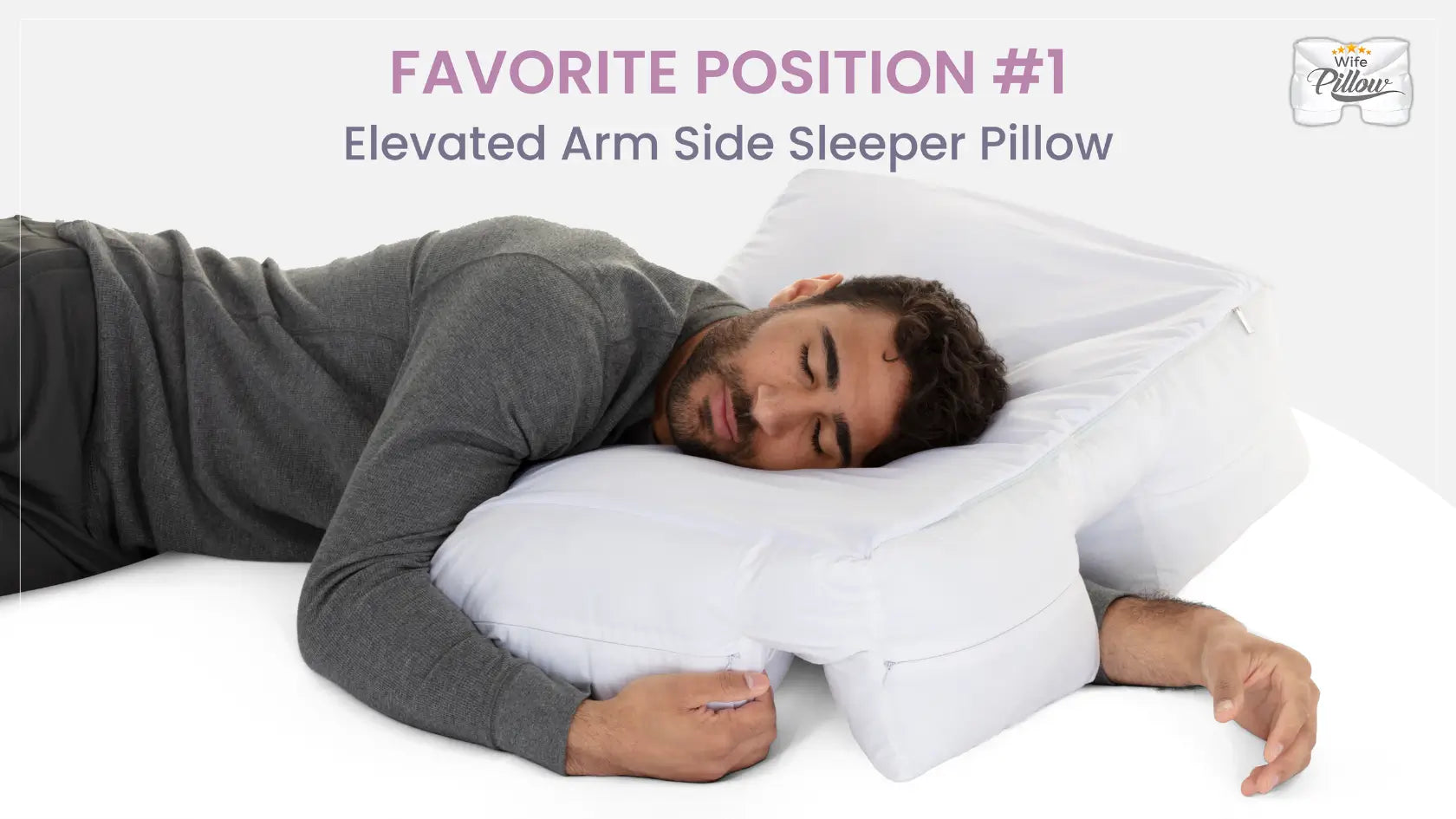
Side sleeping is common but often causes neck pain due to improper pillow height. If your head tilts up or down, your neck bends sideways, straining muscles and joints all night. The solution is a pillow that keeps your spine straight from ear to hip.
Measure Your Ideal Pillow Height
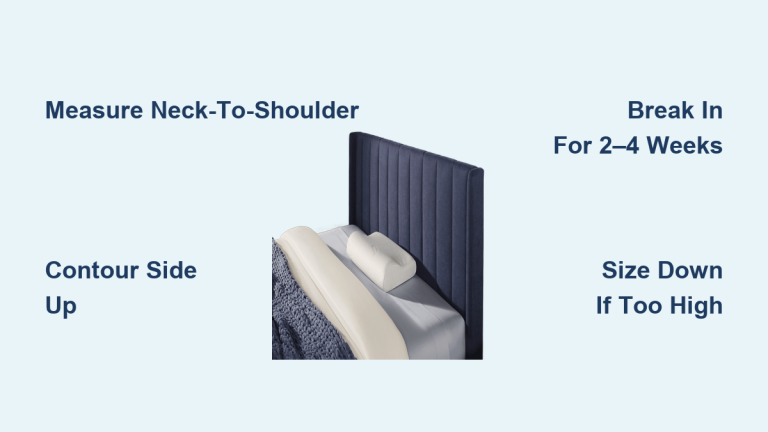
Your pillow should fill the gap between your ear and the outside of your shoulder. Most adults need a 4–6 inch loft. To test, lie on your side. If your head angles toward the ceiling, the pillow is too thin. If it drops toward the mattress, it is too thick. Adjustable pillows with shredded foam or latex let you add or remove fill until alignment is perfect.
Prioritize Neck Over Head Support
Many side sleepers focus on cushioning the head, but the neck needs more lift. Use a pillow that is firmer or thicker under the neck than under the head. Some contoured pillows are shaped for this. If using a standard pillow, fold a small towel and tuck it under the lower edge to boost neck support.
Use a Pillow Between the Knees
Without leg support, your top hip pulls your spine out of alignment, which can twist your neck. Place a firm pillow between your knees to keep your pelvis neutral. This reduces rotational stress and helps your neck stay in line with your spine.
Avoid Arm-on-Head Positioning
Resting your hand or arm on your head while side sleeping increases pressure on the neck muscles. Instead, keep arms down by your sides or slightly forward. If needed, place a small pillow under your top arm to prevent shoulder strain.
Stomach Sleeping: Minimize Neck Rotation
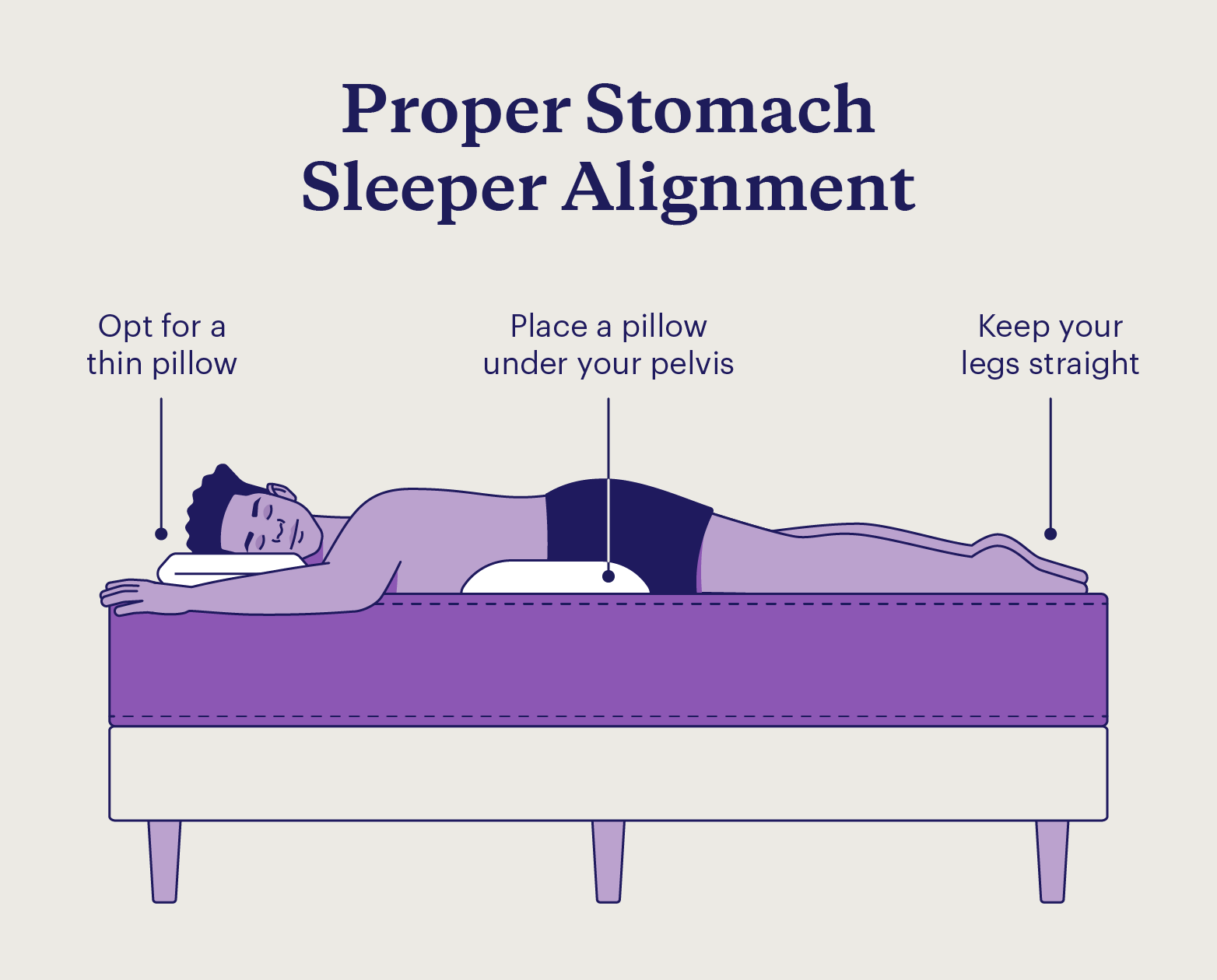
Stomach sleeping is the worst position for neck pain. It forces your head to rotate 40–60 degrees all night to breathe, compressing nerves and straining muscles. If you cannot quit the position overnight, smart pillow placement can reduce the damage.
Use No Pillow or a Very Thin One
The best move is to sleep with no pillow under your head. This keeps your neck as flat as possible. If that feels uncomfortable, use a pillow under 2–3 inches thick, such as a travel pillow or a folded towel. The goal is to minimize the angle of neck rotation.
Place a Pillow Under the Stomach
Lying flat on your stomach arches your lower back and pulls your neck forward. Place a thin pillow under your hips and lower abdomen. This slight lift reduces spinal curvature and helps align your neck with your torso.
Transition to Side or Back Sleeping
Long-term relief means changing positions. Start by sleeping on your side with a full-body pillow to prevent rolling. You can also place a rolled towel or small cushion behind your back to block rolling onto your stomach. Consistent effort can retrain your sleep habits over time.
Upright Sleeping: Support Neck and Lower Back
Some people, especially during pregnancy or with certain spinal conditions, sleep better in a reclined position. But without support, the head can drop forward or to the side, straining the neck.
Use a Travel-Style Neck Pillow
A U-shaped travel pillow can prevent head drooping. Place it around your neck with the open side at the front. Make sure it is snug but not tight. If the back of the pillow pushes your head forward, it is too thick, so opt for a slimmer version.
Add Lumbar Support
Sitting upright often creates a gap between your lower back and the chair. Use a small pillow or lumbar roll to fill it. This maintains your spine’s natural curve and reduces strain that can travel up to the neck.
Avoid Falling Asleep in Chairs
While recliners can help short-term, they are not designed for full-night spinal support. If you rely on upright sleeping, consider an adjustable bed that mimics the position with better alignment.
Choose the Right Pillow for Neck Pain
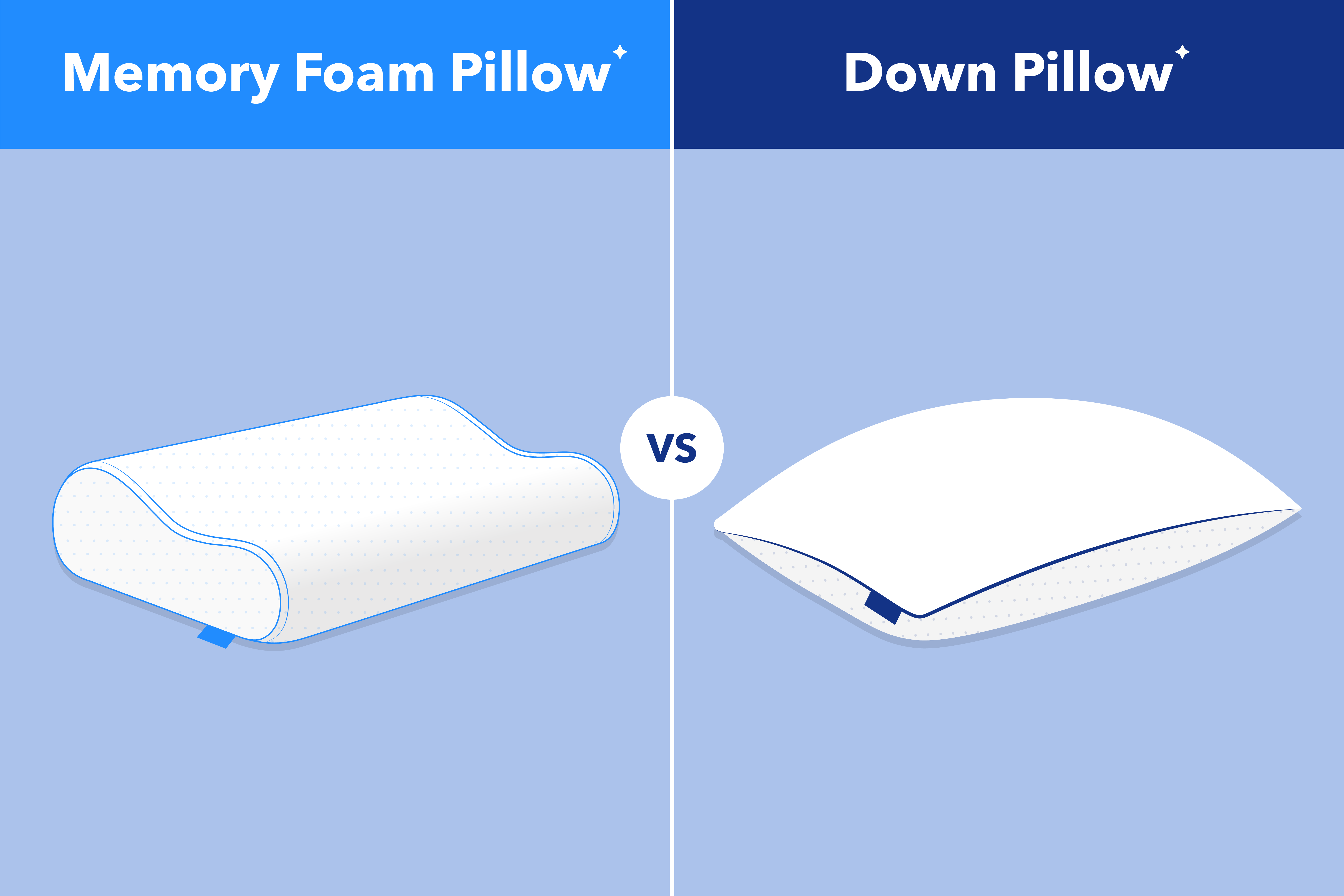
No matter your sleep position, the right pillow makes all the difference. Not all pillows are created equal, so focus on support, cooling, and adjustability for pain relief.
Match Material to Your Needs
- Memory foam conforms to your shape, supports the neck curve, and reduces pressure. Best for back and side sleepers.
- Shredded latex or foam offers adjustable loft so you can customize height and firmness. Ideal for combination sleepers.
- Feather or down is moldable, but collapses quickly. Good for short-term use.
- Polyfill is affordable but often too soft for proper neck support.
Look for Key Features
- Adjustability lets you fine-tune height as your needs change
- Loft of 3–5 inches works for back sleepers, while 4–6 inches suits side sleepers
- Contouring supports the cervical curve instead of flattening it
- Cooling features like gel-infused foam or breathable covers prevent overheating
Top-Rated Pillows for Neck Pain
Based on recent testing:
- Silk & Snow offers adjustable shredded foam and a breathable cover for best overall performance
- Saatva Latex provides firm support ideal for shoulder and neck pain
- Brooklinen Marlow stays cool-to-touch for hot sleepers
- TEMPUR-Symphony features a dual-sided design for back and side sleepers
Replace pillows every 1–2 years, especially feather ones, which lose shape fast.
Pre-Sleep Habits to Reduce Neck Pain
Pillow placement works best when combined with daily habits that reduce tension and prepare your body for rest.
Stretch Before Bed
Do 5–10 minutes of gentle neck stretches:
- Chin tucks: pull your chin straight back like making a double chin. Hold 5 seconds, repeat 10 times.
- Ear to shoulder: tilt your head gently to one side. Hold 20–30 seconds per side.
- Neck rotations: slowly turn your head left and right. Stop at the edge of comfort.
These movements can reduce overnight muscle tension by 25–40%.
Apply Heat
Use a heating pad or warm towel on your neck and upper back for 15–20 minutes before bed. Heat increases blood flow, relaxes tight muscles, and can reduce pain by up to 35%.
Fix Evening Posture
Avoid “text neck” before bed by not hunching over your phone or laptop. Prop devices at eye level. Spend 5 minutes lying flat or sitting tall to decompress your spine.
Keep a Consistent Sleep Schedule
Going to bed and waking at the same time every day helps your body prepare for rest. This improves muscle relaxation and healing during sleep.
When to See a Doctor
Most neck pain improves with proper pillow placement and sleep habits. But if you still have pain after 2–4 weeks of consistent changes, it may be time to seek help.
Warning Signs to Watch For
- Pain lasting more than 6 weeks
- Numbness, tingling, or weakness in arms or hands
- Inability to turn your head without sharp pain
- Pain after an injury such as a fall or car accident
- Balance problems or headaches with neck pain
These could signal conditions like a herniated disc, nerve compression, or arthritis requiring professional diagnosis and treatment.
Who to Consult
- A physical therapist can assess your posture, recommend exercises, and guide pillow use
- A chiropractor or orthopedist can address structural issues or joint dysfunction
- A sleep specialist can help if you suspect sleep apnea or other disorders affecting sleep position
Pregnant women and people with sleep apnea should sleep on their side, never on their back, even if back sleeping is better for neck alignment.
Frequently Asked Questions About Pillow Placement for Neck Pain
What is the best pillow position for neck pain while sleeping on your back?
Place the thickest part of the pillow under your neck to fill the hollow at the base of your skull. Your head should rest slightly lower so your chin stays parallel to the floor. A loft of 3–5 inches typically works best for back sleepers.
How thick should a pillow be for side sleepers with neck pain?
Most adults need a pillow loft of 4–6 inches when sleeping on their side. The pillow should completely fill the gap between your ear and the outer edge of your shoulder so your spine stays straight from head to tailbone.
Can stomach sleeping cause neck pain?
Yes, stomach sleeping is the worst position for neck pain because it forces your head to rotate 40–60 degrees for hours. This compresses nerves and strains muscles. If you cannot switch positions, use no pillow or a very thin one under your head and place a small pillow under your stomach to reduce spinal arching.
How long does it take for a new pillow to relieve neck pain?
Most people notice improvement within 4–12 weeks of consistent use with proper placement. Some feel better within days, while others need time for muscles to adjust to the new alignment. If pain persists beyond 6 weeks, consult a healthcare professional.
When should I replace my pillow if I have neck pain?
Replace feather pillows every year and other pillow types every 1–2 years. Signs you need a new pillow include waking with neck aches despite correct positioning, visible lumps, or a pillow that does not spring back when folded in half.
Is a memory foam pillow good for neck pain?
Memory foam pillows are excellent for neck pain because they conform to your head and neck shape, filling empty spaces and supporting the cervical curve. Look for memory foam with cooling features if you tend to overheat at night.
Key Takeaways for Placing Your Pillow to Relieve Neck Pain

Proper pillow placement is a personalized strategy based on your body and sleep habits. Back sleepers should focus on supporting the neck curve with a 3–5 inch loft, while side sleepers need 4–6 inches to keep the spine straight from ear to hip. Stomach sleepers should minimize neck rotation by using no pillow or a very thin one and should work toward transitioning to a healthier position.
Beyond placement, choosing the right pillow material matters. Memory foam and latex offer the best support for most people, while adjustable fills allow you to fine-tune height. Pair your pillow with simple pre-sleep habits like gentle stretching, heat therapy, and good evening posture to maximize results.
Start tonight by assessing your current sleeping position and adjusting your pillow accordingly. Stick with the changes for at least four weeks, and if pain persists, consult a physical therapist or doctor. Your best night’s sleep and a pain-free morning start with how you place your pillow tonight.