How Wedge Pillows Work: A Simple Guide
If you struggle with snoring, nighttime heartburn, or waking up with a stiff neck, your sleep position could be the hidden cause. A wedge pillow offers a simple, drug-free solution by using gravity and angled support to address these problems at their source. Unlike regular pillows that flatten and shift, a wedge pillow maintains a steady incline throughout the night. This elevation keeps your airways open, prevents stomach acid from creeping upward, and supports your spine’s natural curve. Learning how a wedge pillow works can help you decide whether this tool fits your sleep and health needs.
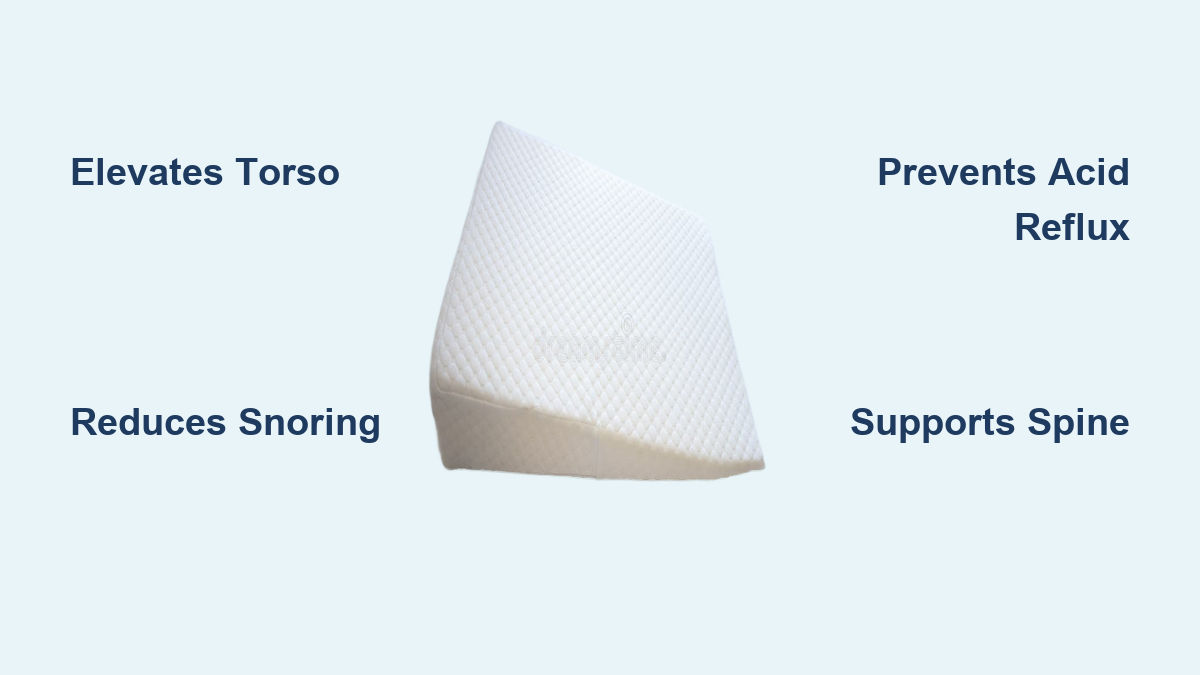
The science behind wedge pillows comes down to body geometry and material engineering. Most quality wedges use high-density foam, memory foam, or organic latex to hold their triangular shape night after night. By lifting your head, shoulders, and torso as one connected unit, the pillow stops airway collapse and acid reflux simultaneously. When chosen and positioned correctly, this orthopedic aid delivers real therapeutic benefits without medication or complex equipment.
The Gravity-Based Mechanism Behind Wedge Pillows

Wedge pillows function by changing how your body interacts with gravity during sleep. When you lie flat, soft tissues in your throat collapse backward, stomach acid flows freely upward, and your spine loses its natural alignment. The wedge counters each of these problems through strategic elevation.
Prevents Airway Collapse During Sleep
Lying flat allows gravity to pull your tongue and soft palate toward the back of your throat. This narrows your airway and triggers snoring or obstructive sleep apnea episodes. A wedge pillow elevates your upper torso, which shifts these tissues forward and keeps your breathing passage open. Clinical research shows that even a modest 7.5-degree incline can significantly reduce sleep apnea severity while preserving normal sleep cycles.
Stops Nighttime Acid Reflux
For people with GERD, flat sleeping lets stomach acid escape into the esophagus and cause painful heartburn. A wedge pillow lifts your entire upper body so your esophagus stays above your stomach. This creates a natural gravity barrier that blocks acid migration. Stacking regular pillows only raises your head, which can bend your neck at an awkward angle and worsen reflux symptoms.
Supports Natural Spine Curvature
Sleeping on a flat surface often distorts the spine’s natural “S” shape, increasing pressure on vertebrae and muscles. A wedge pillow follows your body’s contour and distributes weight evenly along the slope. This reduces strain on your neck and lower back, helping muscles relax and easing chronic pain over time.
Targeted Relief for Common Health Conditions

Wedge pillows address specific health issues based on how you position them and which angle you choose.
Reduces Snoring and Mild Sleep Apnea
Elevating your upper body helps keep airways clear throughout the night.
– Best Angle: 30 to 45 degrees (usually an 8 to 10 inch wedge)
– Sleep Position: Most effective for back sleepers
– Pro Tip: Side sleepers with apnea should make sure the wedge doesn’t push them onto their back, which can worsen symptoms
– Limitation: Not a replacement for CPAP therapy in moderate to severe sleep apnea
Manages GERD and Heartburn
Nighttime acid reflux disrupts sleep for millions of adults. A wedge pillow offers mechanical prevention by keeping acid in your stomach.
– Recommended Height: 10 to 12 inch wedge for significant reflux
– Why It Works: Elevates the esophagus above the stomach, blocking acid flow
– Avoid This Mistake: Using standard pillows under your head alone, since they compress and fail to lift your torso
Eases Back and Neck Pain
Poor spinal alignment during sleep causes morning stiffness and chronic discomfort.
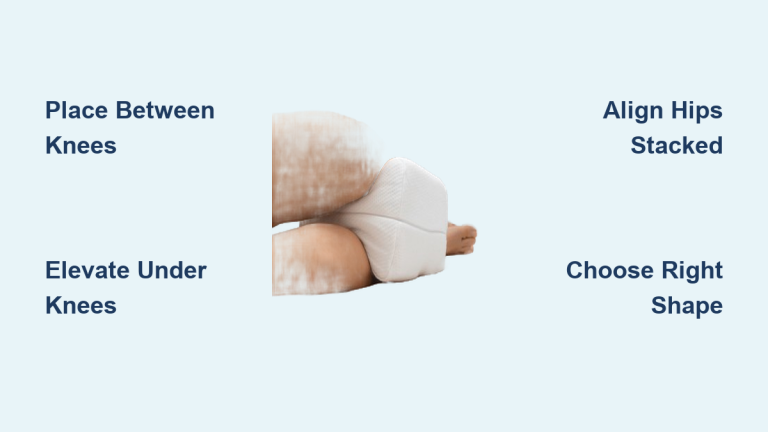
– For Back Pain: Place a wedge under your knees while lying on your back to reduce lower back pressure
– For Neck Pain: Full upper-body support prevents awkward head tilting and maintains your natural neck curve
– Material Choice: Memory foam conforms to your shape; latex offers cooler, more responsive support
Aids Post-Surgical Recovery
Doctors frequently recommend wedge pillows after surgery to support healing.
– Shoulder Surgery: Keeps you reclined and prevents rolling onto the healing side
– Abdominal Surgery: Reduces tension on incisions by avoiding flat lying
– Leg Injuries: Elevating legs above heart level improves circulation and reduces swelling
Choosing the Right Wedge Pillow for Your Needs

Selecting the correct wedge depends on your condition, sleep style, and body size. The right choice ensures both comfort and effectiveness.
Match Wedge Height to Your Condition
| Wedge Height | Incline Angle | Ideal For |
|---|---|---|
| 7 inches | 20 to 30 degrees | Side sleeping, pregnancy support, mild reflux, under-knee relief |
| 8 to 10 inches | 30 to 35 degrees | Moderate sleep apnea, standard GERD, general back and neck pain |
| 10 to 12 inches | 35 to 45 degrees | Severe acid reflux, upright reclining, post-surgery recovery |
Expert Note: Start with a 7 or 8 inch wedge if you’re new to inclined sleeping. A gentler slope makes the adjustment easier.
Consider Width and Body Coverage
- Standard Width: 24 inches fits most adults comfortably
- Full Upper Body Support: Extends from head to upper back, which is essential for GERD and apnea
- Body-Length Wedges: Offer hip-to-head support for maximum stability
Prioritize Safe and Durable Materials
Not all foams perform equally. Choose materials that last and remain safe for nightly use.
– High-Density Foam: Resists compression and maintains its shape over time
– Memory Foam: Contours to your body; gel-infused versions reduce heat retention
– Organic Latex: Plant-based, naturally cooling, and highly durable (look for GOLS certification)
Proper Placement for Maximum Therapeutic Benefit

Using a wedge pillow incorrectly reduces its benefits or causes new discomfort. Follow these placement guidelines for the best results.
For Back Sleepers
- Place the wedge base firmly against your headboard to prevent sliding
- Lie so your head, neck, shoulders, and upper back are fully supported
- Add a wedge under your knees if you have lower back pain
- Best For: GERD, snoring, and spinal alignment
For Side Sleepers
- Use a 7 inch wedge to avoid excessive tilting
- Keep your shoulders on the incline to maintain spine neutrality
- Pair with a body pillow to prevent forward rolling
- Caution: Monitor your position and make sure the wedge doesn’t push you onto your back if you have apnea
For Leg Elevation
- Position the wedge with the thin end pointing toward your hips
- Rest your calves or feet on the incline
- Promotes blood flow and reduces leg swelling
For Sitting Upright
- Place the wedge vertically against your headboard
- Sit with your full back supported
- Great for reading, watching TV, or using a laptop
- A 10 inch wedge works best for ergonomic posture
Overcoming Common Adjustment Challenges
Most users adapt to a wedge pillow within 1 to 2 weeks. Address common issues early for a smoother transition.
Sliding Down the Incline
Sliding is a frequent complaint but easy to manage.
– Push the wedge firmly against your headboard
– Place a soft towel or grippy sheet under your body
– Choose memory foam, which conforms and reduces slippage
– Start with a gentler 30 degree slope before progressing
Getting Through the Adjustment Period
- Begin with partial-night use or daytime naps
- Expect mild discomfort for the first 3 to 5 nights
- Gradually increase usage until you sleep full nights
- Reassurance: The sliding sensation fades as your body adapts
Why Wedge Pillows Outperform Common Alternatives

Compared to other sleep solutions, wedge pillows offer superior stability and targeted relief.
Wedge vs. Stacked Pillows
- Stacked pillows: Shift, flatten, and elevate only your head
- Wedge pillow: Stays stable, lifts your full torso, and maintains alignment
- Key Risk: Stacking pillows kinks your neck and esophagus, worsening reflux and breathing problems
Wedge vs. Adjustable Beds
- Adjustable beds: Cost over $1,000, involve complex mechanics, and lack portability
- Wedge pillow: Costs $50 to $200, travels easily, and requires no maintenance
- Pro Tip: A high-quality wedge delivers most of the benefit at a fraction of the cost
Safety Guidelines and When to Consult a Doctor
While generally safe, wedge pillows aren’t right for everyone.
Know the Limitations
- Not a CPAP replacement for moderate to severe sleep apnea
- May worsen apnea in side sleepers if it forces back sleeping
- Improper use can kink airways, so always elevate your whole upper body, not just your head
Consult Your Physician If You Have:
- Diagnosed sleep apnea with an AHI above 15
- Recent spinal or abdominal surgery
- Severe respiratory conditions like COPD or asthma
- Pregnancy with complications
Extend the Lifespan of Your Wedge Pillow
Proper maintenance keeps your wedge effective for years.
Cleaning Guidelines
- Foam Core: Spot clean only with a damp cloth and mild soap, then air dry completely
- Removable Cover: Wash in cold water on a gentle cycle and air dry or tumble dry on low heat
- Protective Layer: Use a waterproof, breathable protector to guard against sweat and spills
Signs It’s Time to Replace Your Wedge
- Visible sagging or permanent indentations in the foam
- Loss of the original incline angle
- Persistent off-gassing smell (common in low-quality foams)
- More than 5 years of regular use
Frequently Asked Questions About Wedge Pillows
How long does it take to get used to sleeping on a wedge pillow?
Most people adjust within 1 to 2 weeks of consistent use. Starting with daytime naps or partial-night use helps your body adapt gradually. Mild discomfort during the first few nights is normal and typically resolves on its own.
Can a wedge pillow completely cure sleep apnea?
No. A wedge pillow can reduce symptoms of mild sleep apnea and snoring by keeping airways open, but it is not a cure. People with moderate to severe sleep apnea (AHI above 15) should continue using CPAP or other prescribed treatments and consult their doctor before relying on a wedge alone.
What wedge height works best for acid reflux?
A 10 to 12 inch wedge (creating a 35 to 45 degree incline) is most effective for significant GERD symptoms. This steeper elevation ensures your esophagus stays above your stomach throughout the night. Milder reflux may respond well to an 8 inch wedge.
Are wedge pillows safe for side sleepers?
Yes, but side sleepers should choose a lower wedge (around 7 inches) to avoid excessive tilting. Pairing the wedge with a body pillow helps maintain spine neutrality. Side sleepers with sleep apnea should monitor their position to ensure the wedge doesn’t push them onto their back.
How do I stop sliding down my wedge pillow?
Push the wedge firmly against your headboard, place a towel or non-slip sheet under your body, and consider memory foam for better grip. Starting with a gentler 30 degree slope also makes sliding less likely while you adjust.
What materials should I look for in a quality wedge pillow?
Look for high-density foam, gel-infused memory foam, or GOLS-certified organic latex. These materials maintain their shape and support over time. Covers made from GOTS-certified organic cotton offer breathability, while OEKO-TEX certification ensures the product is free from harmful chemicals.
Key Takeaways for Choosing and Using a Wedge Pillow
A wedge pillow works by using gravity and ergonomic design to address several sleep-related health issues at once. The right wedge can reduce snoring, prevent acid reflux, ease back and neck pain, and support post-surgical recovery, all without medication. Match the wedge height to your specific condition, choose certified safe materials, and allow 1 to 2 weeks for your body to adjust. If you have diagnosed sleep apnea or recent surgery, talk to your doctor before making the switch. With proper selection and placement, a wedge pillow can transform your sleep quality and overall well-being.