
How to Clean a Feather Pillow
Your feather pillow once felt cloud-soft and luxurious, but now it smells a little off, looks yellowed, or has lost its fluff. You might assume tossing it in the washer is the obvious fix. The truth is more complicated. Feather pillows can be cleaned, but washing strips natural oils from the fill, making feathers brittle, and incomplete drying creates mold deep inside the core. Most experts agree that cleaning should be reserved for emergencies only, such as spills, illness, or pet accidents.
This guide covers safer alternatives first, then walks you through machine washing, hand washing, and dry cleaning when a full clean becomes unavoidable. The priority throughout is proper drying, since that step makes or breaks the entire process. Done right, your pillow can last 7 to 10 years. Done wrong, it becomes a lumpy, moldy mess.
Check the Care Label Before Doing Anything
Before you add water, detergent, or effort, read the tag sewn into your pillow. Some feather pillows are labeled “Dry Clean Only” or specify hand washing only. Ignoring these warnings can damage the fabric, ruin the fill, or void the warranty.
What the Label Tells You
- “Dry Clean Only” or “Do Not Wash” means skip the washer and sink entirely
- “Machine Washable” means you can proceed with a gentle cycle and low-heat drying
- No label at all means treat the pillow as delicate and avoid water unless absolutely necessary
If your pillow is vintage, hand-stitched, or expensive, lean toward dry cleaning regardless of what the label says.
Inspect for Damage Before Washing
Even when the label permits washing, your pillow needs to be in good physical shape. Run your fingers along every seam and look for loose threads, tiny tears, or thin spots in the fabric. Any opening will let feathers escape during agitation.
Quick Pre-Wash Checklist
- Stitch up small tears by hand before washing
- Confirm the pillow feels evenly filled with no major lumps
- Skip the wash if the casing feels fragile or threadbare
If the pillow is older than 5 years, has visible wear, or feels delicate, hand washing is safer than machine washing.
Choose the Right Detergent for Feathers
Feathers depend on natural oils to stay flexible and repel moisture. Standard laundry detergent strips those oils, causing feathers to snap, lose loft, and develop sharp quills that poke through the fabric.
Safe Detergent Options
- Mild, low-sudsing liquid detergent such as Woolite or Seventh Generation Free & Clear
- Specialty down and feather washes like My Green Fills or Nikwax Down Wash
Products to Avoid
- Bleach damages fibers and weakens fabric
- Fabric softener coats feathers and reduces breathability
- Powder detergent may not dissolve fully and leaves residue
For sweat or oil-based yellowing, pre-soak the pillow for one hour in cool water mixed with one cup of baking soda and one cup of white vinegar before washing.
Machine Wash Only When the Pillow Can Handle It

Machine washing works best for newer, sturdy pillows that are explicitly labeled machine washable. Older or fragile pillows should be hand washed or dry cleaned instead.
Why a Front-Loader Matters
Top-loading machines with a central agitator are too rough. The spinning post can tear seams and compress feathers unevenly. A front-loading washer is gentler and produces better results.
Step-by-Step Machine Washing
- Remove the pillowcase and protector
- Place two pillows in the drum, or one pillow with two to three clean bath towels for balance
- Set water temperature to warm or cold, never above 40°C (104°F)
- Select the Gentle or Delicate cycle
- Add a small amount of mild liquid detergent
- Program an extra rinse cycle to flush out all soap
Residual detergent causes clumping and odors, so the double rinse is not optional.
Hand Wash Older or Delicate Pillows
Hand washing is the safer route for pillows that are old, fragile, or not labeled machine washable. It takes more time but puts far less stress on the fill.
How to Hand Wash Properly
- Fill a clean bathtub, sink, or plastic tub with lukewarm water
- Add a capful of mild liquid detergent and mix gently
- Submerge the pillow fully and press down repeatedly to work soapy water through the fill
- Drain and refill with clean lukewarm water
- Repeat squeezing until the water runs clear and no suds remain, usually 3 to 4 rinses
- Press the pillow against the side of the tub to drain, then wrap in a clean towel to absorb extra moisture
Never wring, twist, or scrub the pillow. These motions break feather quills and damage the casing.
Consider Dry Cleaning for High-Value Pillows

Dry cleaning is worth the $10 to $25 cost per pillow when you own a luxury pillow, lack a reliable dryer, or want zero risk of water damage.
Finding the Right Cleaner
Not every dry cleaner handles feather bedding well. Before dropping off your pillow, ask:
– Do you have experience cleaning down and feather pillows?
– What solvent do you use, and is it gentle on natural fills?
– Can you air-fluff the pillow after cleaning?
A knowledgeable cleaner can refresh your pillow without the mold risk that comes with water-based methods.
Dry the Pillow Completely or Risk Mold
Drying is where most feather pillow cleaning attempts fail. A pillow can feel dry on the outside while staying damp at the core, creating perfect conditions for mold within hours.
Tumble Dry on Low Heat Only
1. Move the pillow to the dryer immediately after washing
2. Set the dryer to Low Heat or Air Dry
3. Add two to three clean tennis balls or wool dryer balls to break up clumps
4. Run for 2 to 3 hours, or through 2 to 3 full cycles
5. Stop every 30 to 60 minutes to pull apart clumps by hand
Never let a damp pillow sit in the dryer between cycles. Mildew grows fast in trapped moisture.
How to Confirm the Pillow Is Truly Dry
- Squeeze the center: it should feel warm and completely dry, not cool or damp
- Smell it: any musty odor means mold has started
- Wait 10 minutes after the final cycle, then check the dryer drum for condensation
When in doubt, run another cycle. You cannot over-dry a feather pillow, but under-drying will destroy it.
Air Dry Only as a Last Resort
Air drying is risky and only works in dry climates with strong airflow. If you must try it:
– Lay the pillow flat on a drying rack in a well-ventilated room
– Flip it every 2 to 4 hours
– Keep it out of direct sunlight, since UV rays damage feathers
In humid environments, skip this method entirely. The mold risk is too high.
Restore Loft After Drying

Once the pillow is fully dry, fluff it vigorously to redistribute the feathers. Punch it with your fists, shake it repeatedly, and roll it tightly before unrolling. If any clumps remain, break them apart by hand before putting the pillow back on the bed.
Prevent Future Cleaning Emergencies
The best way to avoid risky washing is to keep the pillow clean in the first place.
Use a Zippered Pillow Protector
A waterproof, zippered protector is the single most effective tool you can buy. It blocks sweat, body oils, moisture from damp hair, dust mites, and allergens. Wash the protector weekly along with your sheets.
Build Better Sleep Habits
- Dry your hair completely before bed
- Apply lotions and serums in the morning, not at night
- Wash pillowcases every 1 to 2 weeks
Handle Odors Without Washing
Not every smell requires a full wash.
For a New Pillow Smell
Contact the manufacturer. It may be a defect, and washing could make it worse.
For a Musty Smell After Washing
This signals incomplete drying and possible mold. Re-wash and dry through 2 to 3 full cycles. If the smell lingers, the pillow needs to be replaced.
For Light Freshening
- Sprinkle baking soda on the surface, wait 30 minutes, then vacuum
- Place the pillow in a sealed bag and freeze for 24 hours to kill dust mites
- Air it out in indirect sunlight for 1 to 2 hours
Know When to Replace the Pillow
Even with perfect care, feather pillows wear out. Replace yours when:
– It stays flat no matter how much you fluff it
– You wake up with neck or shoulder pain
– It feels lumpy or uneven
– A musty smell returns after every cleaning
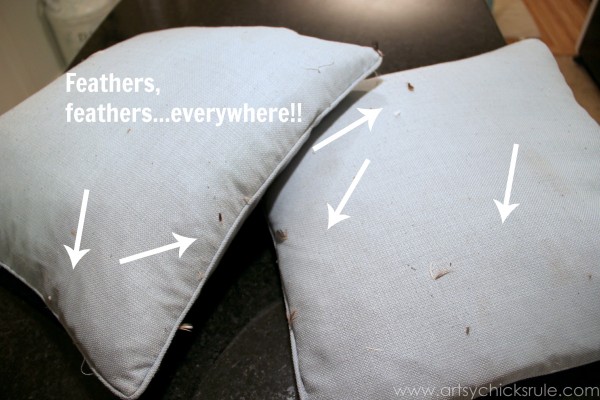
– Feathers poke through the fabric regularly
Most feather pillows last 7 to 10 years with proper care. Frequent washing can cut that lifespan in half.
Frequently Asked Questions About Cleaning Feather Pillows
Can you put a feather pillow in the washing machine?
Yes, but only if the care label allows it. Use a front-loading washer on a gentle cycle with warm or cold water, mild liquid detergent, and an extra rinse. Always wash two pillows at once or balance the load with towels.
How do you wash a feather pillow without ruining it?
Use a mild detergent designed for delicates or down, avoid hot water, and never wring or twist the pillow. Most importantly, dry it on low heat for 2 to 3 hours with tennis balls to prevent clumping.
Can you dry clean a feather pillow?
Yes. Dry cleaning is a safe option for high-end or delicate pillows because it avoids water exposure entirely. Choose a cleaner experienced with natural fills.
How long does it take for a feather pillow to dry after washing?
Expect 2 to 3 hours in a dryer on low heat, which usually means 2 to 3 full cycles. The surface may feel dry long before the core is actually dry, so always check the center before stopping.
How often should you wash a feather pillow?
Only in emergencies such as spills, illness, or pet accidents. Routine washing strips natural oils and shortens the pillow’s lifespan. Use a protector and freshen the pillow monthly instead.
Why does my feather pillow smell after washing?
A musty smell after washing means the pillow did not dry completely and mold has started to grow. Re-wash and run 2 to 3 full drying cycles. If the odor persists, replace the pillow.
Key Takeaways for Cleaning a Feather Pillow Safely
Treat washing as a last resort, not routine care. A zippered protector, daily fluffing, and monthly airing will keep your pillow fresh for years. When a true emergency forces a wash, use a front-loading machine, mild detergent, and an extra rinse, then commit to 2 to 3 hours of low-heat drying with tennis balls. Skipping the drying step is the fastest way to ruin a perfectly good pillow, so give the process the time it demands.
Pro Tip: Before you wash, ask yourself whether spot cleaning or a baking soda treatment could solve the problem instead. Every wash shortens your pillow’s life, so save the deep clean for situations that truly demand it.