How to Pack a Pillow in a Suitcase
You finally land at your hotel after a ten-hour flight, only to find one flat, lumpy pillow on the bed. Your neck aches just looking at it. This is exactly why learning how to pack a pillow in a suitcase matters. A familiar pillow can mean the difference between waking up refreshed and dragging through your first day of vacation in a fog.
This guide covers everything from vacuum-sealing memory foam to rolling DIY half-pillows and using inflatable backups. You’ll learn compression methods, hygiene protocols, and packing hacks that real travelers swear by. Whether you check a bag or fly carry-on only, you’ll find a strategy that fits your trip.
Choose the Right Travel Pillow
Your packing method depends entirely on which pillow you bring. Not all pillows compress equally, and the wrong choice can cost you space, weight, or sleep quality.
Full-Size Home Pillow: Comfort Over Compactness
If you can’t sleep without your exact pillow, bring it. Down and down-alternative pillows compress best, while memory foam resists shrinking but offers superior support. This option works best for checked luggage or road trips where space isn’t tight.
Tip: Only pack a full pillow if you’re willing to vacuum-seal it. Otherwise, it will dominate your suitcase.
Inflatable Pillow: Ultimate Space Saver
An inflatable pillow deflates to the size of a water bottle and weighs almost nothing. Perfect for backpacks or overhead bins, you simply inflate before bed and deflate into a side pocket when done.
Watch for: A hiss. Test for leaks before you fly. Some travelers carry a backup.
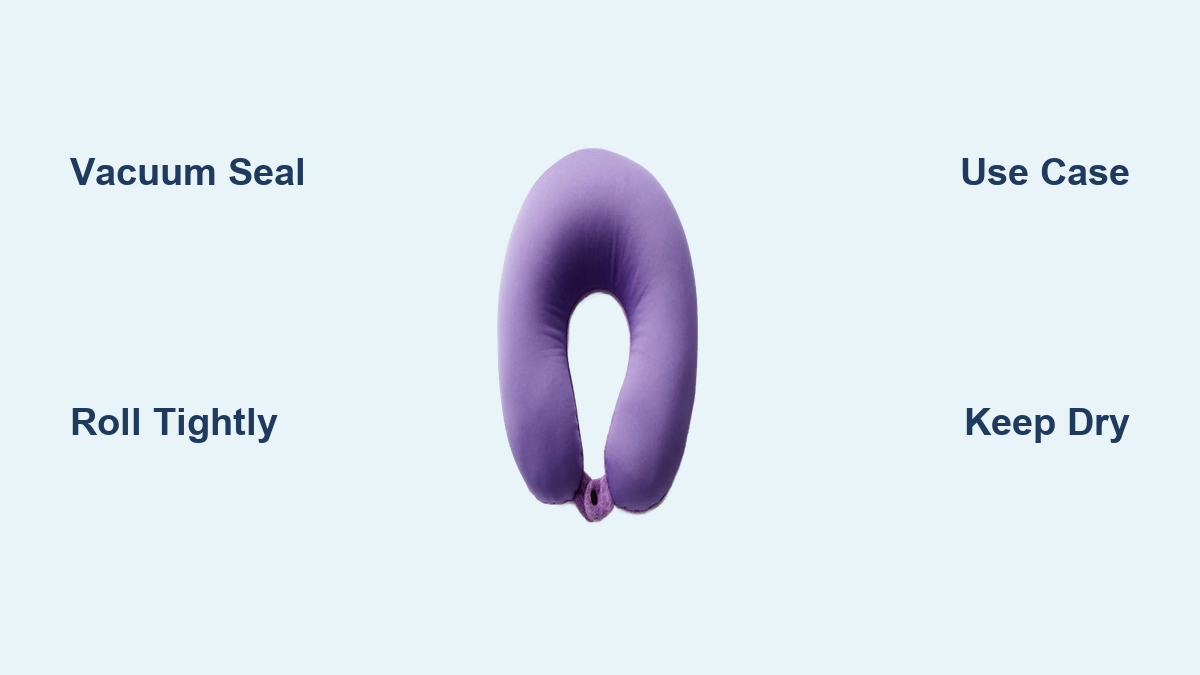
Memory Foam Travel Pillow: Neck Support King
Ideal for long flights, memory foam cradles your head in an ergonomic shape. It doesn’t compress as much as down but holds its form well. Use compression straps or roll it tightly to save space.
Best for: Side sleepers and those with neck pain. Avoid if carry-on space is critical.
Microbead Pillow: Soft and Flexible
Microbead pillows mold to your shape like sand. They are lightweight and packable but lose support over time, making them great for short trips.
Pro tip: Pair with a neck wrap for extra stability on planes.
DIY Half-Pillow: The Sleeper Hack
Cut a cheap pillow in half, remove some stuffing, and sew it shut. It flattens into a pancake that fits in a front suitcase pocket. Some travelers make two: one to use, one to leave behind.
Why it works: You get familiar comfort without full bulk. Great for red-eye flights.
Vacuum Seal for Maximum Compression

Vacuum sealing is the gold standard for packing bulky pillows in checked luggage. A full pillow can shrink to just a few inches thick.
Get the Right Vacuum Bag
Use a reusable travel vacuum bag with a one-way valve. No special pump is needed; just your suitcase’s weight or a manual roll works fine.
What to use: 28″ x 40″ size for queen pillows. Smaller bags work for standard sizes.
Step-by-Step Vacuum Packing
- Dry the pillow completely. Never seal a damp pillow because mold grows fast.
- Insert the pillow into the bag. Smooth out wrinkles.
- Seal the zipper, leaving one corner open for air to escape.
- Roll the bag tightly from foot to head, pressing out air. Or use a vacuum hose if available.
- Close the seal as soon as air is out.
- Place flat in suitcase. Use as a base layer or padding for fragile items.
Bonus: Use the same bag on the return trip to compress dirty clothes.
Post-Trip Pillow Recovery
Unseal the bag and let the pillow fluff for 24 hours. For down pillows, toss in the dryer on low with a tennis ball to restore loft.
Warning: Don’t store memory foam compressed long-term because it may lose shape permanently.
Roll and Secure Without a Vacuum

No vacuum bag? No problem. Rolling works well for memory foam or standard pillows.
Fold and Roll Technique
- Fold the pillow in half lengthwise.
- Roll it tightly from one end to the other.
- Secure with packing straps, elastic bands, or a belt.
- Tuck into suitcase corners. It acts as a buffer for shoes or electronics.
Time required: 2 minutes. Space saved: Up to 50%.
Why Rolling Works
The tight roll forces air out and holds its shape. It’s less compact than vacuum sealing but still effective, and you can do it anywhere.
Pro tip: Wrap the rolled pillow in a shirt or sweater to prevent unraveling and add soft padding.
Use a Travel Pillow Bag with Straps
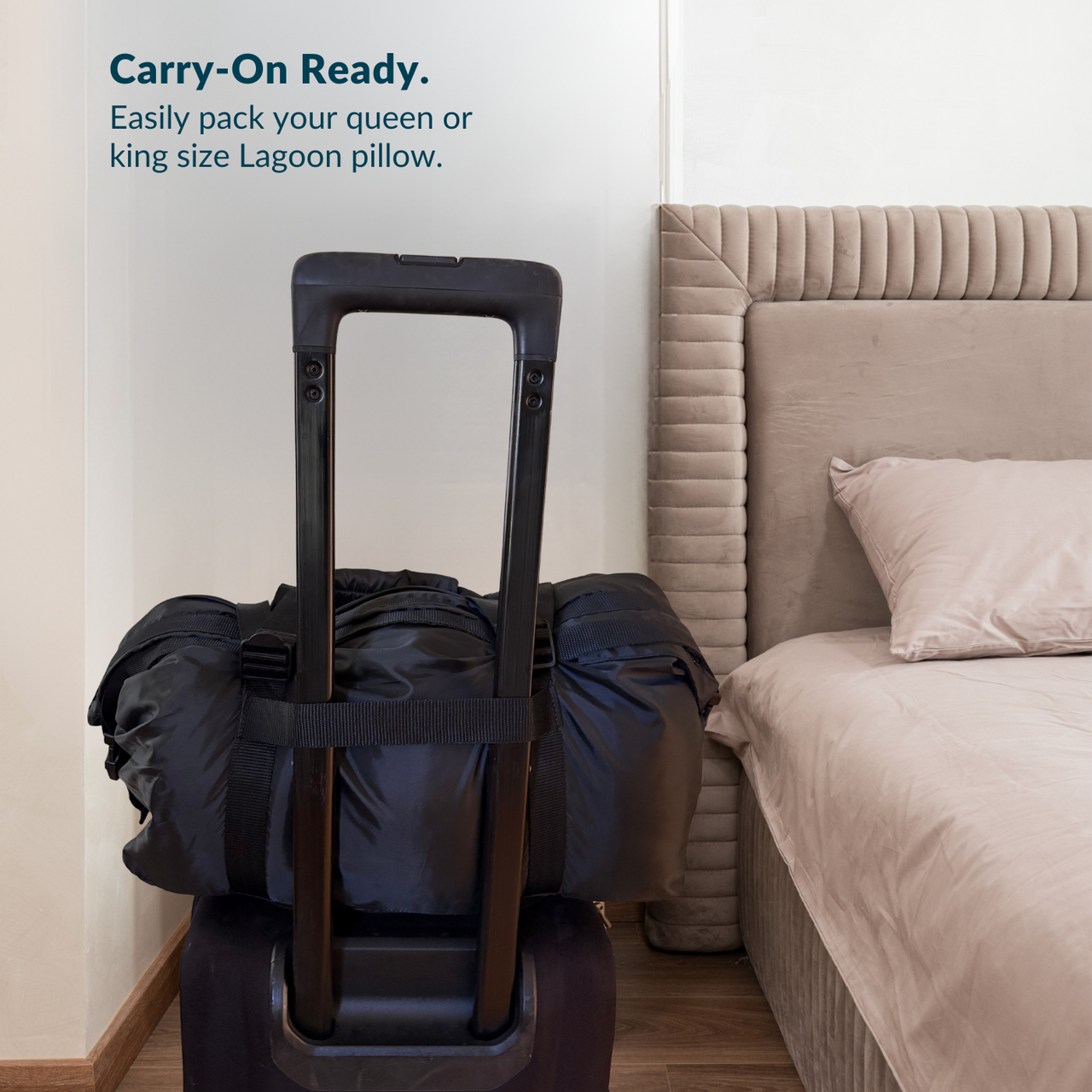
Specialty bags make packing easier and protect your pillow from dirt and moisture.
Features to Look For
- Compression straps to squeeze out air
- Durable, wipeable fabric
- Handles or clips to attach to luggage
- Internal pocket for storing the deflated pillow or a case
Packing With a Travel Bag
- Insert the pillow.
- Tighten the straps to compress.
- Zip shut.
- Place in suitcase or carry on.
Best for: Frequent travelers who want a reusable, organized solution.
Bonus: Some bags double as storage pouches at your destination.
Wrap in a Towel for Simplicity
An easy, no-cost method that doubles your towel usage.
How to Wrap a Pillow in a Towel
- Lay a towel flat on a bed or floor.
- Place the folded pillow in the center.
- Wrap the towel tightly around it, like a burrito.
- Secure with rubber bands or packing tape.
- Pack the bundle in your suitcase.
Why it works: The towel protects the pillow, keeps it clean, and serves as your beach or gym towel later.
Ideal for: Short trips or when you’re already packing a towel.
Protect Hygiene During Travel
A clean pillow is pointless if it picks up germs in transit or at your destination.
Always Use a Pillowcase
Never pack or use a bare pillow. A removable, washable case is your first defense.
Choose: Microfiber or bamboo because they are lightweight, quick-drying, and breathable.
Bring a Spare Case
Swap cases every few days. Store the used one in a ziplock bag.
Pro tip: Use a bright-colored case so you don’t leave it behind in a hotel.
Try Disposable Covers for Short Trips
Single-use, hygienic pillow protectors are thin and packable. Slip one on if you’re using a rental pillow or adding your case to a hotel one.
Best for: Overnight stays or high-risk allergy trips.
Clean Before and After
Wash the pillow and case before packing. Dry completely.
After your trip, wash everything immediately, even if it looks clean.
Never pack a damp pillow. Moisture breeds mildew and odor.
Store Pillows Smartly in Luggage
How and where you place the pillow affects space, protection, and access.
In Checked Luggage: Use as Packing Cushion
Place the compressed or rolled pillow at the bottom of the suitcase. It protects fragile items like glasses or electronics.
Pro move: Nest shoes inside the rolled pillow ends to save space and maintain shape.
In Carry-On: Keep It Accessible
If you plan to use it on the plane, store it in an outer pocket or attach it with a carabiner.
Airline tip: Compressed pillows under 18″ x 14″ usually fit in overhead bins. Check your airline’s carry-on size rules.
For Backpacks: Use Compression Sides
Slip an inflatable or rolled pillow into the side pockets of a hiking backpack. Some packs have dedicated sleeping bag compartments, which are perfect for bulkier options.
Avoid Common Packing Mistakes
Even experienced travelers make these errors. Don’t lose sleep over avoidable issues.
Don’t Pack a Damp Pillow
This is the number one cause of mildew and foul smells. Always ensure the pillow is bone-dry before sealing or packing.
Sign it’s dry: No cool spots, no musty smell, fabric feels crisp.
Don’t Use Plastic Bags for Storage
Plastic traps moisture. Use breathable cotton bags or mesh storage at home. For travel, vacuum bags are fine for short-term use.
Don’t Forget the Weight
A full memory foam pillow can weigh 3–5 lbs. That eats into your airline weight limit fast.
Solution: Switch to down or inflatable for carry-ons.
Don’t Leave Without a Case
A bare pillow collects dust, sweat, and germs. Always have a barrier, even if you’re using a hotel pillow with your case.
Optimize for Different Travel Scenarios

Your destination and trip type should guide your pillow strategy.
Flying: Maximize Carry-On Space
Use an inflatable or vacuum-sealed travel pillow. If bringing a full pillow, check it.
Hack: Bring a cheap $10 pillow for a red-eye and leave it on the plane. No return packing needed.
Road Trips: Prioritize Access
Keep your pillow in the car, not buried in luggage. Use it for naps, lumbar support, or as a seat cushion.
Pro tip: Store it behind the driver’s seat for easy reach.
Camping: Go Inflatable or Foam
Choose moisture-resistant and compact options. Inflatable pillows take up no space when deflated.
Best choice: A camping pillow with a soft fleece cover.
European Hotels: Expect Pillow Gaps
Many European beds come with one thin, hard pillow. Locals often prefer firm support, but travelers don’t.
Solutions:
– Bring a lightweight down pillow (10 oz) that squishes small.
– Use a blow-up camping pillow as a booster.
– Roll a fleece jacket to add height under the hotel pillow.
– Request extra pillows (some chains like Premier Inn have them; others don’t).
Traveler Hacks for Better Sleep

Real-world tips from frequent flyers and long-term travelers.
Color-Code Your Pillowcase
Use a bright red or patterned case. You’ll never leave it behind in a hotel.
Bonus: Label it with your name in permanent marker.
Combine with Sleep Aids
Pair your pillow with:
– A sleep mask (for bright hotel LEDs)
– Melatonin lotion or spray
– White noise app
Why it works: Familiar scent and texture trigger sleep cues.
Use It Beyond Bedtime
Your travel pillow is multi-functional:
– Lumbar support on long drives
– Armrest cushion on planes
– Seat pad for cold or hard benches
– Yoga prop for stretching
– Emergency flotation (if inflatable)
The “Leave-Behind” Strategy
Buy a cheap pillow at a discount store before a one-way flight. Use it, then abandon it. This saves return luggage space.
Cost: Around $10. Peace of mind: Priceless.
Frequently Asked Questions About Packing a Pillow in a Suitcase
Can you vacuum seal a memory foam pillow?
Yes, you can vacuum seal a memory foam pillow for short-term travel. However, avoid storing it compressed for extended periods because memory foam may permanently lose its shape. Let it fluff for 24 hours after unsealing.
What is the best way to pack a pillow without a vacuum bag?
The fold-and-roll method works best without a vacuum bag. Fold the pillow in half lengthwise, roll it tightly, and secure it with elastic bands or packing straps. Wrapping it in a towel adds extra compression and protection.
How do you keep a pillow clean while traveling?
Always use a washable pillowcase, and pack a spare in a ziplock bag. For short trips, disposable covers work well. Wash everything before and after your trip, and never pack a damp pillow.
Do airlines count a pillow as a carry-on item?
Most airlines do not count a pillow as a carry-on if it is compressed or stored inside your bag. However, oversized pillows may not fit overhead bin restrictions. Check your airline’s specific size rules before flying.
Is it worth bringing a pillow on a trip?
Yes, especially for long trips, red-eyes, or destinations with notoriously flat hotel pillows (like many European hotels). A familiar pillow improves sleep quality, supports your neck, and reduces exposure to unknown allergens.
Can you fit a full-size pillow in a carry-on?
Only if you compress it significantly using a vacuum bag or tight rolling technique. Otherwise, a full-size pillow works better in checked luggage. Inflatable or microbead travel pillows are better carry-on options.
Final Takeaways for Packing Your Pillow Like a Pro
Packing a pillow in a suitcase doesn’t have to be a hassle. With the right approach, you can sleep better, stay healthier, and avoid the dreaded “hotel pillow dread.”
Key takeaways:
– Use vacuum sealing for full pillows in checked bags.
– Choose inflatable or microbead for carry-ons.
– Always use a case and pack a spare.
– Keep it dry before packing.
– Roll or wrap if you don’t have a vacuum bag.
– Color-code to avoid leaving it behind.
Whether you’re a side sleeper needing perfect neck alignment or just someone who hates scratchy hotel linens, bringing your pillow is a game-changer. Pick your method based on your trip type, keep it clean, and sleep like you’re at home, no matter where you land.