
How to Choose a Pillow for Neck Pain Relief
Waking up with a stiff, sore neck is more than just uncomfortable. It is a sign your pillow is not doing its job. Millions of people suffer from preventable neck pain caused by poor sleep posture, and the culprit is often something as simple as an ill-fitting pillow. The right pillow for neck pain does not just feel soft. It actively supports the natural curve of your cervical spine, keeping your head, neck, and spine aligned throughout the night. Without that alignment, muscles strain, joints compress, and chronic discomfort sets in.
The good news? Relief starts with informed choices. Research shows that selecting a pillow based on your sleep position, body type, and material preferences can significantly reduce or even eliminate neck pain. Whether you are a side sleeper needing extra loft or a back sleeper craving gentle neck support, there is a solution tailored to your biomechanics. This guide cuts through the noise, using clinical insights and chiropractor recommendations to show you exactly how to pick a pillow that works for your pain, your posture, and your sleep quality.
Match Your Pillow to Your Sleep Position
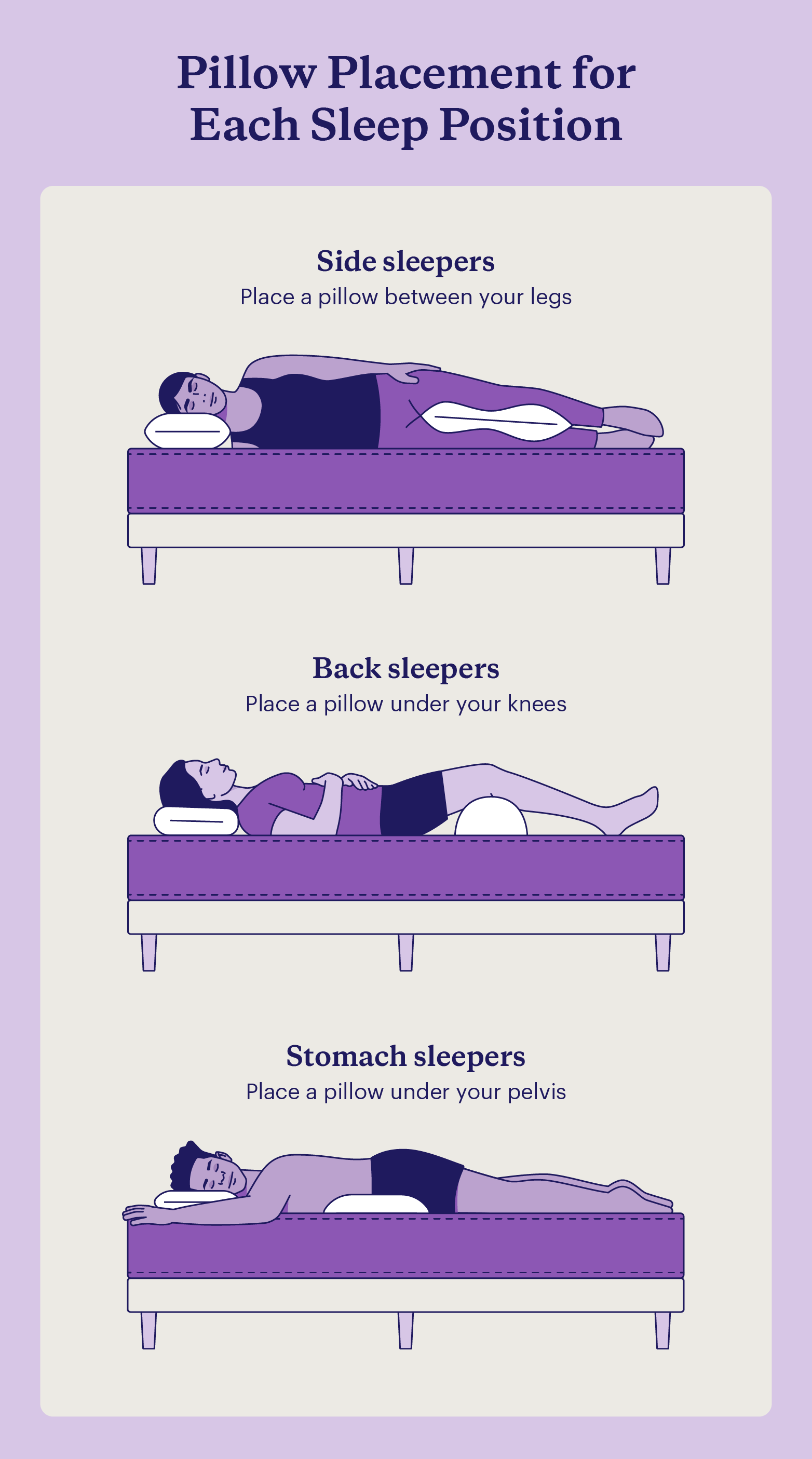
Your sleeping position determines how your neck is angled and how much support it needs. Choosing a pillow that aligns with your primary sleep style is the first and most critical step in preventing neck strain.
Side Sleepers: Fill the Gap Between Shoulder and Ear
Side sleepers need the highest loft to fill the space between the shoulder and head. Without enough height, the neck bends laterally, straining muscles and misaligning the spine.
• Ideal loft: 4 to 6 inches
• Key goal: Keep ears level with shoulders when lying down
• Best materials: High-loft memory foam, shredded foam, or latex
• Pro tip: Test by lying on your side. If your neck slopes down toward the mattress, your pillow is too flat
Contoured pillows with a scooped bottom help accommodate wide shoulders without compressing the neck. Pair your pillow with a small knee pillow to prevent pelvic tilt and maintain full spinal alignment.
Back Sleepers: Support the Natural Neck Curve
Back sleepers need moderate loft to support the cervical lordosis, the inward curve at the base of the neck, without pushing the head forward.
• Ideal loft: 3 to 5 inches
• Key goal: Maintain chin parallel to the floor. Avoid chin tucking or head tilting back
• Best materials: Medium-firm memory foam, latex, or contoured cervical pillows
• Warning: Overly thick pillows cause hyperextension. Flat ones let the head drop
A contoured pillow with a recessed center and raised neck roll provides targeted support exactly where it is needed. Place a small pillow under your knees to reduce lower back strain, which indirectly supports neck alignment by keeping the spine neutral.
Stomach Sleepers: Minimize Elevation
Stomach sleeping is the hardest on the neck, forcing the head into a rotated, extended position. Most chiropractors advise against it.
• Ideal loft: Under 2 to 3 inches or no pillow
• Key goal: Prevent the head from craning upward
• Best materials: Thin gel, soft fiberfill, or water-based pillows
• Expert advice: An overwhelming majority of chiropractors counsel patients to avoid stomach sleeping
If you cannot break the habit, use the thinnest pillow possible, like a cooling gel pad, or skip the head pillow entirely and place it under your pelvis to reduce spinal twist. Consider using a body pillow or wedge to gently transition to side or back sleeping over time.
Combination Sleepers: Choose Responsive Materials
If you shift positions nightly, your pillow must adapt quickly to maintain support.
• Ideal features: Dual-sided design, high resilience, adjustable fill
• Best materials: Shredded foam, latex, or flip-design memory foam
• Top pick: TEMPUR-Symphony, firm on one side, soft on the other, designed for position changers
Look for pillows that bounce back fast. Solid memory foam molds too slowly. Shredded or latex responds instantly to movement.
Choose the Right Material for Support and Comfort

The fill inside your pillow determines how it supports your neck, retains shape, and regulates temperature. Not all materials are equal. Some excel for pain relief, while others fall short.
Memory Foam: Best for Contouring and Pressure Relief
Memory foam molds to your head and neck, filling gaps and maintaining the cervical curve.
• Pros: Excellent support for chronic neck pain, reduces pressure points, ideal for post-injury recovery
• Cons: Can trap heat unless gel-infused, slow to respond
• Top models: Original Groove Pillow, Layla Kapok Pillow
Gel-infused or ventilated versions improve cooling. Avoid low-density foam because it flattens quickly. Memory foam has been shown to potentially help ease neck pain, especially compared to feather pillows.
Shredded Foam: Customizable Loft and Firmness
Shredded foam lets you add or remove fill to tailor height and feel.
• Pros: Fully adjustable, perfect for trial and error, breathable and supportive
• Cons: Fill can shift or require fluffing
• Top picks: Silk and Snow Pillow with OEKO-TEX certification and 100-night trial, Luxome LAYR with three firmness inserts
This pillow is highly customizable, allowing you to customize the loft and firmness. Testers found it helped ease tension on their neck, shoulders, and upper back.
Latex: Durable, Responsive, and Naturally Cooling
Latex offers firm support with quick recovery, ideal for those who want structure without stiffness.
• Pros: Long-lasting, naturally hypoallergenic and antimicrobial, better airflow than memory foam
• Cons: Less contouring, higher price point
• Top picks: Saatva Latex Pillow with lifetime warranty, Brooklyn Bedding Talalay Latex
Testers describe it as hotel-quality, supportive yet plush.
Water-Based Pillows: Scientifically Adjustable Support
Water-filled pillows let you fine-tune firmness by adding or removing water, ideal for precise postural correction.
• Pros: Clinically validated for neck alignment, customizable to individual anatomy
• Cons: Heavy, not ideal for travel, requires setup
• Top brand: ChiroFlow or Mediflow, 13.9 percent of chiropractors recommend it
This type is favored for discogenic pain, joint dysfunction, and postural strain.
Contoured Cervical Pillows: Enforce Proper Alignment
Pre-shaped with a dip for the head and raised neck support, these pillows guide your spine into neutral alignment.
• Pros: Ideal for posture correction, reduces morning stiffness
• Cons: Takes time to adjust, not ideal for combination sleepers
• Top brands: Pillowwise, Core, Therapeutica
Exactly half of chiropractors favor this style for patients with postural strain or discogenic complaints.
Avoid Feather, Down, and Polyfill for Neck Pain
Despite their soft feel, these materials offer poor support and degrade quickly.
• Feather and down: 32.7 percent of chiropractors say they are a bad fit for neck pain, sag over time
• Polyfill: 13.6 percent of DCs consider them inadequate, flattens within 6 to 12 months
The only thing worse than a bad pillow is no pillow at all, and your neck will usually remind you in the morning.
Prioritize Key Features for Neck Pain Relief
Beyond material and shape, specific design features make a pillow effective for neck pain relief.
Loft: Fill the Gap, Not the Neck
Loft, or height, is the most critical factor in spinal alignment.
• Rule of thumb: Fill the space between shoulder and ear
• Measurement tip: Lie down and measure shoulder-to-ear distance. This is your ideal height
• Biomechanical sweet spot: 10 centimeters, about 4 inches. Below 5 centimeters or above 14 centimeters increases muscle strain
Regardless of sleep position, define a neutral neck posture and then fill the gap.
Firmness: Aim for Medium-Firm
Too firm creates pressure. Too soft fails to support.
• Ideal: Medium-firm, supports without forcing
• Myth: Firmer is better. This is not true. A rigid pillow can lock the neck in a strained position
• Solution: Adjustable fill pillows let you fine-tune firmness
A medium-firm pillow tends to be the sweet spot that supports the neck without forcing it into a rigid position.
Adjustability: Personalize for Long-Term Relief
One size does not fit all. Adjustable pillows let you adapt to changes in position, body, or mattress.
• Types: Shredded foam, zippered gussets, multiple inserts, water-based systems
• Top example: Brooklinen Marlow uses two zippers to open mesh gussets, easiest adjustment system tested
Cooling: Stay Comfortable All Night
Overheating disrupts sleep and increases muscle tension.
• Top cooling picks: Brooklinen Marlow with 8-degree Fahrenheit temp rise, gel-infused memory foam, latex or Tencel covers
• Hot sleepers: Prioritize gel, ventilation, or natural fibers like wool or kapok
Top-Rated Pillows for Neck Pain

| Pillow | Best For | Material | Loft | Trial |
|---|---|---|---|---|
| Silk and Snow | Overall best | Shredded foam | Adjustable | 100 nights |
| Saatva Latex | Neck and shoulder pain | Shredded latex | Standard or high | Lifetime |
| Brooklinen Marlow | Cooling | Memory foam + fiber | Zip-adjustable | 365 days |
| Luxome LAYR | Adjustability | Gel foam inserts | 3 levels | Limited |
| TEMPUR-Symphony | Combination sleepers | Cooling memory foam | Flip design | 5 years |
Pro tip: Use a 100-night trial when available. Your body needs 3 to 7 nights to adapt.
Replace Pillows Every 1 to 2 Years
Even the best pillow loses support over time.
• When to replace: Does not spring back when folded, lumpy or flat, waking with stiffness or pain
• Lifespan by material: Feather and down last 6 to 12 months, polyfill 6 to 12 months, memory foam 2 to 3 years, latex 3 to 5 years
If a pillow does not spring back when folded in half, it might be time to replace it.
Add Complementary Strategies for Lasting Relief
A great pillow is just one part of the solution.
Daily Stretches for Neck Mobility
Before bed, try child is pose, cat-cow, and supine twist. Upon waking, try seated forward bend and modified cobra. Pairing these with proper sleep can significantly reduce neck pain.
Daytime Ergonomics
Keep screens at eye level. Take posture breaks every 30 minutes. Use lumbar support to prevent neck strain.
Mattress Check
Sagging or overly soft mattresses disrupt spinal alignment. Firmer beds may need higher-loft pillows. Softer ones need lower-loft pillows. Replace mattresses every 7 to 10 years.
Final Checklist: How to Pick the Right Pillow for Neck Pain
- Identify your sleep position
- Measure shoulder-to-ear distance
- Choose material like memory foam, latex, shredded foam, or water
- Select design like contoured, adjustable, or dual-sided
- Match to mattress firmness
- Check return policy with 30 to 100 night trial
- Test for 3 to 7 nights
- Add knee or body pillow for full alignment
- Replace every 1 to 2 years
- See a professional if pain persists beyond 2 weeks
Frequently Asked Questions About Picking a Pillow for Neck Pain
What is the best pillow shape for neck pain?
Back sleepers benefit from contoured pillows with a recessed head area and raised neck support. Side sleepers need high-loft rectangular or contoured pillows with side elevation. Combination sleepers should choose dual-sided flip designs.
Can memory foam help with neck pain?
Yes. Memory foam contours to the neck is natural curve, reducing pressure and improving alignment. Studies show it outperforms feather pillows for chronic neck pain.
How do I know if my pillow is too high or too low?
Too high means chin tucked toward chest when back sleeping or head angled upward when side sleeping. Too low means head falls back when back sleeping or neck drops toward mattress when side sleeping. Test by ensuring ears are level with shoulders.
Is a firmer pillow better for neck pain?
Not necessarily. Medium-firm is typically ideal. Too firm creates pressure points. Too soft fails to support the neck curve. Adjustability allows personalization to your specific needs.
How often should I replace my pillow?
Most chiropractors recommend replacing pillows every 1 to 2 years. Signs include the pillow not springing back when folded, becoming lumpy or uneven, or waking with stiffness or pain.
What pillow do chiropractors recommend most?
Contoured cervical pillows like Pillowwise, Therapeutica, and Core are recommended by 50 percent of chiropractors. Water-based pillows like ChiroFlow and Mediflow are recommended by 13.9 percent of chiropractors.
Key Takeaways for Picking a Pillow for Neck Pain
There is no universal best pillow, only the best one for you. But the principles are clear. Support the cervical curve by choosing the right loft for your sleep position. Maintain neutral alignment by filling the gap between your shoulder and ear without pushing your head up or down. Prioritize materials that last, like memory foam, latex, or shredded foam, and avoid feather and polyfill which degrade quickly.
The right pillow combined with daily stretches and proper ergonomics can dramatically reduce or eliminate neck pain. Use the 100-night trial period to test your choice in your real sleep environment. If pain persists beyond two weeks, consult a physical therapist or chiropractor for professional evaluation. With the right pillow and habits, waking up pain-free is within reach.