How to Refluff a Down Pillow
You wake up, reach for your down pillow, and it feels flat and lifeless. No matter how you shake it, the fill just sinks back down. If this sounds familiar, you’re not alone. Over time, even premium down pillows lose their loft from nightly compression, body moisture, and improper care. The good news? Refluffing a down pillow is simple and requires no special equipment. With proven techniques, you can restore its cloud-like softness in minutes.
This guide covers everything you need to know. You’ll learn why pillows go flat, master hand-fluffing methods, use a dryer for deeper restoration, refresh with sun and air, and maintain your pillow’s loft for years to come.
Why Down Pillows Lose Their Loft
Compression Creates Nesting
Every night, your head presses down on the pillow, compressing the delicate fill inside. Over time, this repeated pressure causes feathers and down clusters to pack tightly together in a process called nesting or spooning. The curved barbs of feathers align and lock, eliminating the air pockets that create loft. The result is a flat, unresponsive pillow that no longer supports your head.
Moisture Weighs Down the Fill
Your body releases sweat, oils, and humidity while you sleep. This moisture seeps into the pillow and saturates the down clusters. Wet fill cannot expand properly, and prolonged dampness causes permanent flattening. Even high-quality Hungarian goose down loses its bounce when moisture builds up inside.
Poor Storage Prevents Recovery
Storing a down pillow in plastic bags or humid spaces traps moisture and blocks airflow. Without ventilation, the fill deteriorates, clumps form, and the pillow struggles to regain shape. Always choose breathable storage and avoid basements, attics, or bathrooms.
Hand-Fluffing Methods That Restore Volume
Try the Accordion Technique
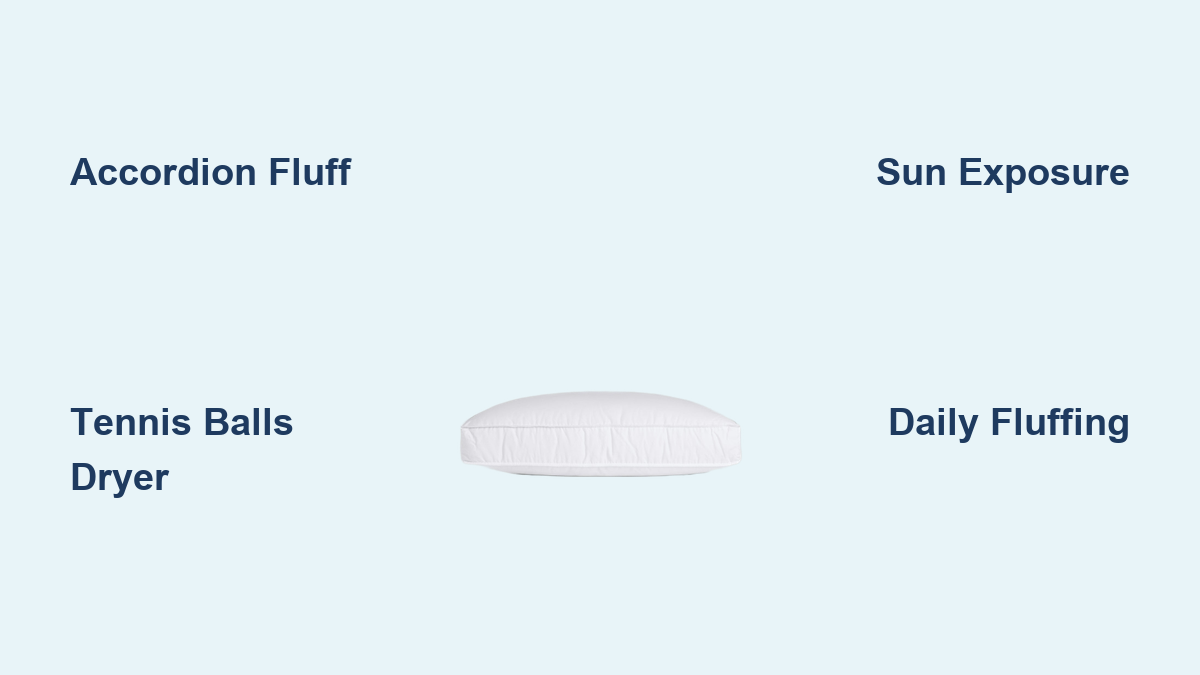
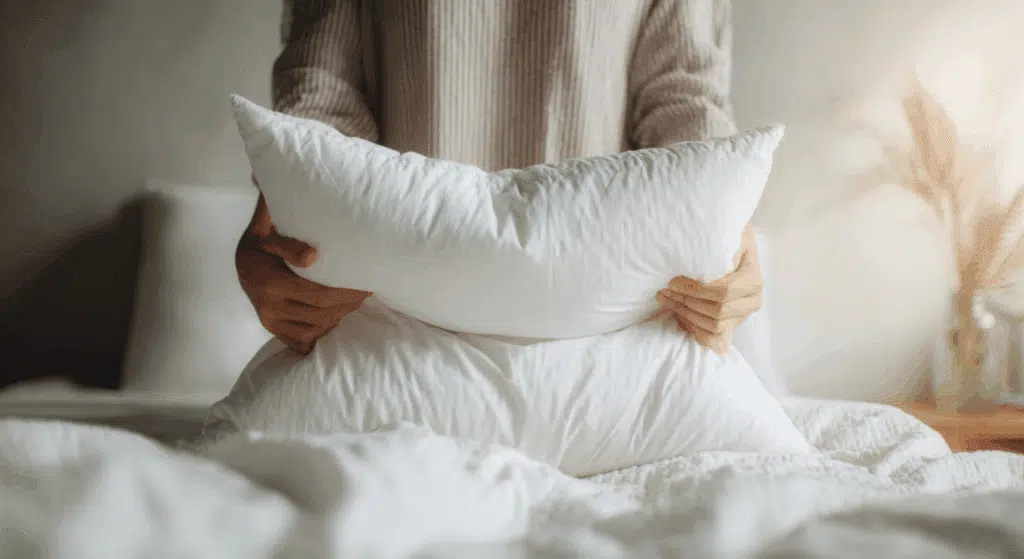
Grasp the pillow on opposite sides and squeeze inward, then pull outward, mimicking an accordion. Repeat this motion for 1 to 2 minutes. The repeated compression and expansion breaks apart nested feathers and forces air back into the core. This method alone resolves flatness in nearly every case.
Pro Tip: Start at the center where compression is worst, then work toward the edges.
Shake and Clap Diagonally
Hold two opposite corners and clap them together firmly, then pull apart. Rotate the pillow 90 degrees and repeat. Continue for 30 seconds to 1 minute to redistribute fill into flat corners and maximize airflow throughout the shell.
Warning: Avoid excessive force. Brisk but controlled movements work best.
Punch and Massage Stubborn Areas
For dense, compacted spots, use your fists to punch the center and edges. Follow with open-handed chops to smooth the surface. Then massage the fabric with your fingers to break up internal clumps. This professional technique delivers a crisp, hotel-style finish.
Adjust for Bolster Pillows
Cylindrical bolsters lack corners, so grip each end and twist gently while shaking. Compress and stretch lengthwise to move fill from the middle to the ends. Repeat until no soft or flat zones remain.
Use a Dryer for Deep Fluffing
Prepare the Pillow First
Ensure the pillow is completely dry before using a dryer. A damp pillow will trap moisture, risking mold and mildew. If you recently washed it, finish the drying cycle first.
Add Tennis Balls for Agitation
Place 2 to 3 clean tennis balls or wool dryer balls in the dryer with the pillow. As the machine tumbles, the balls bounce against the pillow, breaking up clumps and forcing air back into the clusters. This mechanical action mimics hand-kneading with consistent force.
Set Low Heat and Monitor Time
Use low or no heat to protect the delicate down. High heat can scorch fibers and damage the shell. Run the cycle for:
– 5 to 10 minutes for a quick refresh
– Up to 20 minutes for deep restoration
Stop halfway through to remove the pillow, shake it, and refluff by hand. This ensures even drying and prevents wet spots.
Let the Pillow Rest Afterward
Once the cycle ends, let the pillow sit for 5 to 10 minutes. This allows internal temperature to stabilize and gives the fill time to fully expand. Maximum loft develops during this cooldown phase.
Refresh With Sun and Fresh Air
:strip_icc()/bhg-pillows-outside-8630258-d3e4f91967df4eec9e8274949b85585b.jpg)
Sun-Dry for Loft and Hygiene
On a dry, sunny day, place your pillow outside in direct sunlight. Lay it on a clean surface, avoiding grass or dirt. The sun’s warmth evaporates trapped moisture, causing down clusters to expand naturally. UV rays also kill dust mites and bacteria, freshening the fill.
Best Practice: Flip the pillow every hour for even exposure.
Air Out Without Sunlight
No sun available? Place the pillow near an open window or fan for several hours. Fresh airflow lifts flattened fibers and removes odors. This method works well for routine maintenance after heavy use or sweating.
Wash Only When Absolutely Necessary
Follow Proper Washing Guidelines
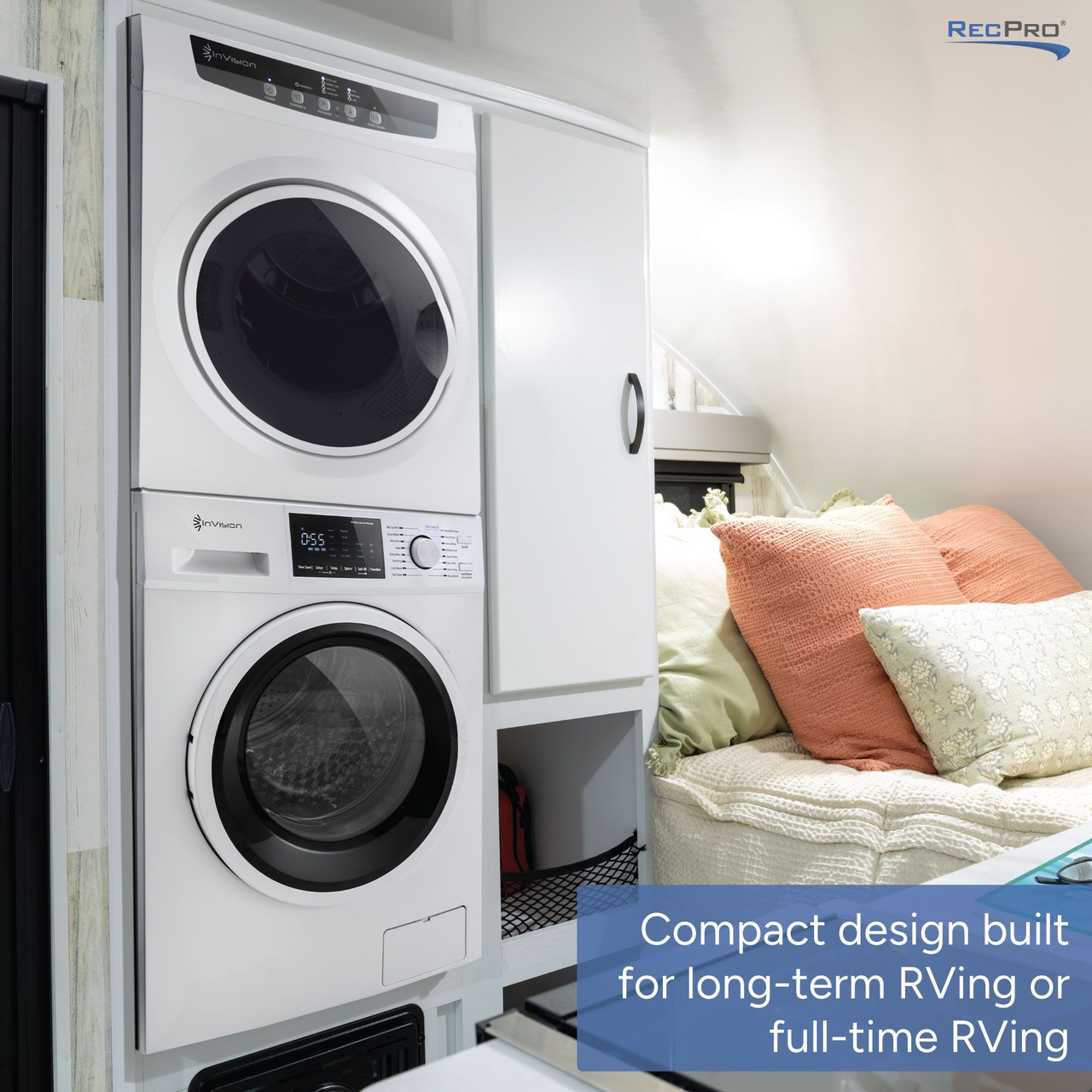
Wash your down pillow only 1 to 2 times per year. Overwashing strips natural oils and weakens fibers. When needed:
– Use a front-loading washer without a center agitator
– Choose warm water and a gentle cycle
– Use mild, down-safe detergent
– Rinse 1 to 2 extra times to remove all soap residue
Never use fabric softener or bleach. These products coat and damage down clusters.
Dry Thoroughly to Prevent Clumping
Incomplete drying is the leading cause of clumpy pillows. Dry in multiple cycles:
1. Run the dryer with tennis balls
2. Stop and shake vigorously by hand
3. Return to the dryer
4. Repeat until the inner fill is bone dry
Expect 3 to 4 cycles over several hours. The outer fabric may feel dry while the core stays wet, so keep going.
Spot Clean Minor Stains
For small spills, dab the area with a damp cloth and mild soap, then air dry completely. Avoid soaking the pillow, as waterlogged down takes forever to dry and can develop mildew.
Maintain Loft With Daily Habits
Fluff Every Morning
Spend 30 seconds each morning fluffing your pillow by hand. A quick shake or accordion squeeze prevents feathers from nesting and extends pillow life.
Rotate and Flip Weekly
Turn your pillow over and rotate it 180 degrees weekly. This ensures even wear and prevents one side from flattening permanently.
Use a Pillow Protector
A zippered, waterproof pillow protector blocks sweat, oils, and allergens. It reduces washing frequency and keeps the down cleaner longer. Wash the protector monthly to preserve your pillow.
Store Pillows Correctly
Choose Breathable Containers
When storing off-season pillows, use a cotton storage bag or pillowcase. Never use plastic, as it traps moisture and causes mildew. A linen closet or under-bed breathable bin works perfectly.
Keep in Cool, Dry Locations
Avoid attics, basements, or bathrooms where humidity ruins down. Store in a cool, dry, well-ventilated area to preserve loft and prevent odors.
Know When It’s Time to Replace

Flatness That Won’t Bounce Back
If your pillow stays compressed after aggressive fluffing, washing, and drying, the down may be dead. The clusters have broken down and lost resilience beyond recovery.
Persistent Lumps and Hard Spots
Clumps that won’t break apart after multiple dryer cycles signal degraded fill. This often follows improper washing or years of neglect.
Poor Support and Comfort
Even if it looks acceptable, if the pillow no longer supports your neck or feels lumpy, replacement is overdue. Most down pillows last 3 to 5 years with proper care.
Troubleshoot Common Problems
Pillow Arrived Flat from Shipping
Most down pillows are compressed for eco-friendly shipping. Unbox it and:
1. Shake vigorously
2. Use the accordion method
3. Let it rest for 24 to 48 hours
The pillow will expand fully. This is normal behavior.
Clumping After Washing
Caused by incomplete drying or no agitation. Return to the dryer with tennis balls, stop every 10 minutes to shake and break clumps by hand, and continue until completely dry inside.
Still Flat After All Efforts
Possible causes include age over 5 years, moisture damage, or low fill weight. Try one final low-heat dryer cycle with balls. If no improvement, replacement is likely needed.
Musty Odors After Storage
Trapped moisture causes musty smells. Air it out in direct sunlight for 4 to 6 hours. If odor persists, wash and dry thoroughly before storing again.
Set Realistic Expectations
Soft Pillows Will Stay Soft
Lightweight or soft-density down pillows are designed to be squishy. They will never achieve the high loft of firm models. Fluffing helps, but don’t expect a plush pillow to feel supportive.
Firm Pillows Hold Shape Better
High-density pillows with more fill achieve full, bouncy loft and maintain it longer. They respond better to fluffing and resist nesting.
Decorative vs. Sleeping Pillows Differ
Throw pillows need frequent fluffing for appearance. Sleeping pillows prioritize comfort, so some settling is normal. Focus on support, not just shape.
Frequently Asked Questions About Refluffing Down Pillows
How often should I refluff my down pillow?
Fluff your pillow by hand every morning for 30 seconds. Perform a deeper refluffing session using the dryer with tennis balls once a month or quarterly for best results.
Can I put my down pillow in the dryer?
Yes, but only if it is completely dry. Use low or no heat with 2 to 3 tennis balls for 5 to 20 minutes. High heat can damage the delicate down clusters and scorch the fabric.
Why does my new down pillow arrive flat?
Manufacturers compress pillows for eco-friendly shipping to reduce carbon footprint and costs. The fill is designed to expand once you shake, accordion-fluff, and let it rest for 24 to 48 hours.
How long do down pillows typically last?
With proper care, most down pillows last 3 to 5 years. Daily fluffing, using a protector, and washing only 1 to 2 times per year extends their lifespan significantly.
What causes clumps in a down pillow?
Clumps form from incomplete drying after washing, moisture buildup, or lack of agitation. Break them apart by returning the pillow to the dryer with tennis balls and shaking between cycles.
Is it worth refluffing an old down pillow?
If the pillow stays flat after aggressive fluffing, washing, and drying, the down has likely lost its resilience. At that point, replacement is the better option for proper neck support.
Key Takeaways for Restoring Your Down Pillow
A flat down pillow is not a lost cause. The accordion method breaks up nesting in 1 to 2 minutes without any tools. The dryer with tennis balls delivers deeper restoration when hand-fluffing falls short. Daily maintenance, including morning fluffing and weekly rotation, prevents future flattening and extends pillow life.
Start with the accordion technique tonight. If your pillow needs more volume, move to the dryer method with tennis balls. Protect your investment with a zippered pillow protector and consistent care, and your down pillow will stay soft, supportive, and springy for years to come.