How to Dry a Boppy Pillow
You’ve just washed your Boppy pillow and now it’s damp and misshapen, leaving you unsure how to dry a Boppy pillow without ruining its support. The good news: two manufacturer-endorsed methods protect the pillow’s shape, prevent clumping, and keep it safe for your baby. This guide covers machine drying with a shape aid and fan-assisted air drying, plus what to avoid and how to troubleshoot common issues.
Machine Dry With Shape Aid

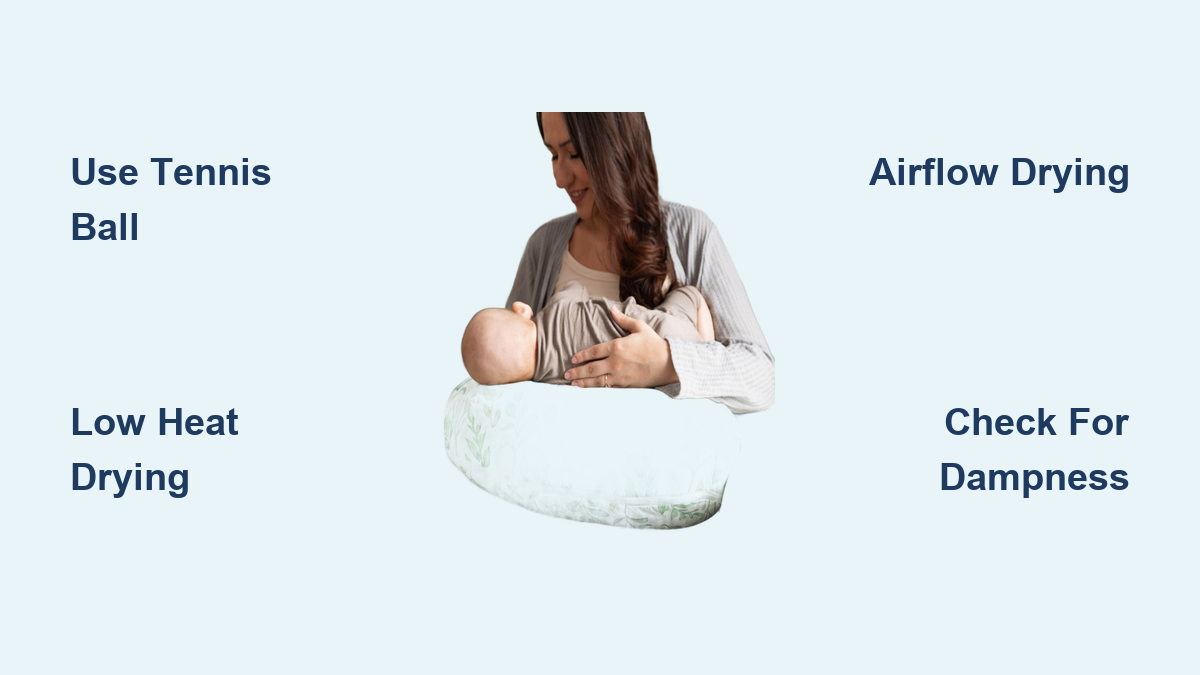
The fastest manufacturer-endorsed way to dry a Boppy pillow is in a tumble dryer with a shape-retention tool. This method breaks up wet clumps of polyester filling and keeps the pillow fluffy and supportive.
Use a Tennis Ball or Sneaker
Place a clean tennis ball or sneaker inside a pillowcase, then tie the pillowcase shut. Add it to the dryer alongside the wet Boppy. As the drum tumbles, the ball or shoe beats the filling, redistributing material evenly so the core dries smooth instead of lumpy.
Why it matters: Without this aid, the pillow often emerges stiff, uneven, and uncomfortable for feeding or tummy time.
Select Low Heat or Air Fluff
Run the dryer on air fluff (no heat) or low heat to protect the fabric and filling. High heat can damage fibers, cause shrinkage, or degrade the pillow over time. If your dryer has a moisture sensor, use it for automatic shutoff when dry.
Time estimate: Expect 1.5 to 3 hours total, depending on humidity and dryer efficiency. Check the pillow every 30 minutes after the first hour.
Check for Complete Dryness
Squeeze multiple sections of the pillow, especially the inner curve and thickest areas. If any dampness remains, run another 20 to 30 minute fluff cycle with the tennis ball. A fully dry Boppy should feel uniformly soft, springy, and room temperature throughout.
Warning: Never store or use a partially dried pillow. Trapped moisture encourages mold and mildew, which pose health risks to infants.
Air Dry With Fan Assistance
If you don’t have a dryer, want to reduce noise, or prefer an energy-saving option, air drying with fan support works well. Many caregivers use this method successfully, especially when washing pre-baby items with free-and-clear detergent.
Set Up for Maximum Airflow
Lay the Boppy flat on a drying rack or clean surface in a well-ventilated room. Position an electric fan to blow across the surface, not directly into the center hole. This promotes even evaporation without forcing moisture deeper into the core.
Best location: Near a window or dehumidifier, but out of direct sunlight. UV rays may fade fabric over time.
Rotate Every Few Hours
Turn the pillow every 3 to 4 hours to expose damp inner layers. Flip it so both top and bottom surfaces face upward during drying. For faster results, gently fluff and reshape the cushion by hand each time you rotate it.
Time estimate: Expect 12 to 24 hours for full drying in normal humidity. In humid climates, extend this to 36 hours.
Confirm Dryness Before Use
Press firmly on the thickest part of the pillow. No dark spots, coolness, or compression should remain. If in doubt, smell the fabric. Musty odors indicate lingering moisture. In such cases, resume fan drying or switch to machine drying with a tennis ball.
Never Do These Drying Mistakes
Avoiding damage starts with knowing what not to do. Certain practices can ruin your Boppy pillow, void the warranty, or create safety hazards.
No Ironing or Steaming
Never apply an iron, garment steamer, or hair dryer to speed up drying. Direct high heat can melt synthetic fibers, scorch fabric, or deform the shape. The manufacturer explicitly prohibits ironing both the cover and core.
Risk: Permanent damage to material integrity and potential release of harmful fumes from overheated polyester.
No Dry Cleaning
Chemical solvents used in dry cleaning are not approved for Boppy products. They may leave toxic residues or weaken stitching and fabric. Stick to home washing and drying only.
Exception: Boppy Healthcare line products have separate care instructions. Consult those if applicable.
No High Heat in Dryer
Even without a shape aid, high heat alone increases the risk of shrinking, hardening the filling, or creating hot spots that degrade the pillow over time. Always use low or no heat settings.
Consequence: Repeated high-heat drying leads to premature breakdown of the inner structure, reducing product lifespan.
Wash Cover vs. Core: Know the Difference
Many caregivers confuse whether to wash the entire Boppy or just the cover. Understanding this distinction affects how, and whether, you need to dry the core.
Wash Cover Only (Recommended for Routine Cleaning)
The removable cover can be washed separately after spills, drool, or light soiling. Simply unzip and toss it in the wash on a delicate cycle with mild detergent and cold to warm water. Air or machine dry the cover alone. No tennis ball needed.
Advantage: Preserves the inner core’s lifespan and avoids repeated wet-dry cycles that stress the filling.
Wash Full Pillow (For Deep Cleaning or New Use)
Wash the entire pillow, cover and core, only when necessary: before first use, after extended storage, or if the core is visibly soiled. Follow delicate cycle guidelines and always dry with a tennis ball or via the fan method.
Tip: Washing the full pillow less frequently helps maintain loft and support.
Safety Checks After Drying
Once dry, inspect the Boppy thoroughly before using it with your baby. Drying can sometimes expose hidden wear or cause unnoticed damage.
Inspect for Tears or Weak Seams
Run your hands along all seams, especially around the zipper and inner curve. Look for fraying, loose threads, or thinning fabric. A compromised cover could allow filling to escape, creating a choking hazard.
Warranty note: Boppy offers a one-year warranty against material and workmanship defects, but damage from improper care (like high heat or no shape aid) may void coverage.
Ensure Airway Safety
Never use the Boppy as a sleep aid, inclined sleeper, or unsupervised prop. After drying, reaffirm that you’ll only use it during awake activities like feeding or tummy time, with baby always under adult supervision.
Critical rules:
– Adult must be seated
– Baby’s head and neck must remain uncovered
– Straps (if present) must stay at or above the adult’s knees
Troubleshoot Common Drying Issues
Even with care, problems can arise. Here’s how to fix them quickly and safely.
Fix a Lumpy Pillow
If your Boppy comes out clumped, it likely dried without enough agitation. Don’t discard it. Revive it with these steps:
- Dampen slightly with a spray bottle (optional)
- Place in dryer with a tennis ball in a pillowcase
- Run air fluff cycle for 30 to 45 minutes
- Stop and fluff by hand every 10 to 15 minutes
Result: Most lumps break apart and redistribute evenly.
Speed Up Slow Air Drying
If air drying takes too long, try these adjustments:
– Add a second fan for cross-blowing
– Use a dehumidifier in the same room
– Gently squeeze out excess water post-wash (don’t wring)
– Rotate the pillow more frequently to expose damp sections
Avoid: Microwaving, oven-drying, or radiator placement. These create fire and safety hazards.
Decide Whether to Wash the Core
Uncertain if the inner pillow needs washing? Ask yourself:
– Is there visible staining or odor in the core?
– Was it used by a previous owner?
– Is it being prepared for a newborn?
If yes to any, wash and dry the full pillow. If not, stick to cover-only cleaning to extend product life.
Frequently Asked Questions About Drying a Boppy Pillow
Can I put a Boppy pillow in the dryer?
Yes, you can machine dry a Boppy pillow on low heat or air fluff. Add a clean tennis ball or sneaker inside a tied pillowcase to prevent clumping. This is the manufacturer-recommended method for restoring shape after washing.
How long does it take to dry a Boppy pillow?
Machine drying takes 1.5 to 3 hours with a shape aid. Fan-assisted air drying takes 12 to 24 hours in normal humidity, or up to 36 hours in humid climates. Always confirm complete dryness before use.
What happens if I dry a Boppy pillow on high heat?
High heat can shrink the fabric, harden the polyester filling, and degrade the pillow’s structure over time. Repeated high-heat drying may also void the warranty for shape and integrity issues.
Can I air dry a Boppy pillow without a fan?
Yes, but it will take significantly longer. Place it in a well-ventilated area and rotate every few hours. Without airflow, moisture lingers and increases the risk of mildew, so a fan is strongly recommended.
Why is my Boppy pillow lumpy after drying?
Lumpiness usually means the pillow dried without enough agitation. Place it back in the dryer with a tennis ball in a pillowcase and run an air fluff cycle, stopping to hand-fluff every 10 to 15 minutes.
Is it safe to use a Boppy pillow after washing and drying?
Yes, as long as it’s completely dry and you inspect it for tears or seam damage. Always follow safety rules: use only while seated, never as a sleep surface, and keep baby’s airway unobstructed.
Key Takeaways for Drying Your Boppy Pillow Safely
The safest, most effective way to dry a Boppy pillow is in a machine with a tennis ball or sneaker to prevent lumpiness, or via fan-assisted air drying for a quieter, energy-efficient alternative. Never use high heat, ironing, or dry cleaning, as these damage the fabric and filling. Always inspect the pillow post-drying for seam integrity and confirm complete dryness before use to prevent mold growth.
Your next step: Before your next wash, set up your drying station now. Place a clean tennis ball in a spare pillowcase near the dryer, or position a fan in your laundry area. Having everything ready makes the process faster and ensures your Boppy comes out fluffy, supportive, and safe for every feeding and tummy time session.