How to Clean Cherry Pit Heating Pad
You’ve just finished a cozy session with your cherry pit heating pad, soothing sore muscles or warming your bed on a cold night. Now comes the part most people overlook: cleaning it properly. Unlike synthetic microwavable pads, cherry pit heating pads require special care because the natural filling can mold, clump, or spoil if exposed to too much moisture. And since most aren’t machine-washable, using the wrong method can ruin both the fabric and the pits inside.
Learning how to clean cherry pit heating pad the right way doesn’t have to be complicated. With a few simple techniques, you can keep the exterior fresh, refresh the filling, and prevent musty odors from developing. This guide covers spot cleaning, deodorizing, deep cleaning removable covers, and proper storage so your pad stays safe and effective for years.
Spot Clean the Fabric Exterior
Most cherry pit heating pads only need surface cleaning because the filling stays sealed inside. Regular spot cleaning is the safest way to maintain the outer fabric without risking damage to the cherry pits.
Use Mild Soap and a Damp Cloth
Mix a small amount of mild detergent with cool water. Dip a soft cloth into the solution, then wring it out thoroughly so excess moisture doesn’t seep into the seams. Gently wipe the surface, focusing on stained or soiled areas. Avoid soaking the fabric at all costs.
After wiping, blot the area with a dry cloth to absorb leftover moisture. Let the pad air dry completely in a well-ventilated space, away from direct sunlight or heat sources. Never use a hairdryer or place the pad near a radiator, since high heat can crack the cherry pits or warp the fabric.
Never Submerge the Pad in Water
Soaking or machine washing your cherry pit heating pad can cause water to penetrate the seams and reach the filling. Once moisture gets inside, the cherry pits can mold or ferment, and the entire pad may need to be discarded.
Even hand washing is risky unless the manufacturer explicitly states it’s safe. Most cherry pit pads are designed for surface cleaning only. Always check the care label first, but when in doubt, stick to spot cleaning.
Refresh the Cherry Pit Filling
Over time, the cherry pits inside your pad can absorb odors, lose their natural scent, or become slightly damp. While you can’t wash the filling directly, you can refresh and dry it safely with a few simple tricks.
Air Out the Heating Pad
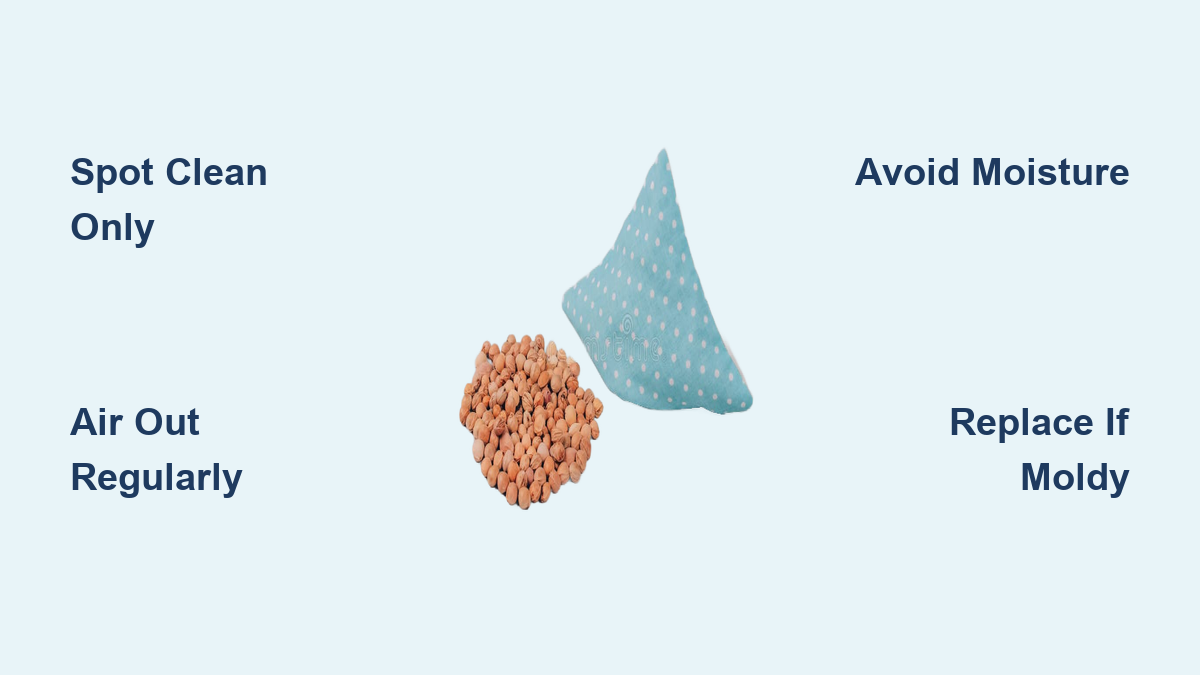
If your pad has a mild odor or feels slightly damp, unzip the outer cover if it’s removable, or place the entire pad in a dry, airy location for 24 to 48 hours. Brief sunlight exposure can help kill bacteria and reduce moisture, but limit it to one or two hours to prevent fabric fading or pit damage.
Avoid leaving the pad in direct sun for extended periods. UV rays can degrade the fabric over time and make the cherry pits brittle.
Restore Scent with Essential Oils
To bring back a pleasant aroma, add two or three drops of essential oil like lavender, eucalyptus, or chamomile to a clean cloth. Place the cloth with the pad inside a sealed container overnight so the scent absorbs gradually. Do not apply oils directly to the fabric or filling, since this can cause staining or spoilage.
This method keeps your heating pad smelling fresh without introducing moisture or risking mold growth.
Deep Clean Removable Covers
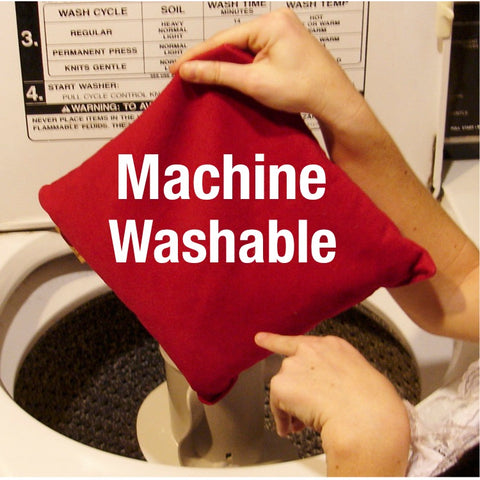
Some cherry pit heating pads come with removable, washable covers that make cleaning much easier. If yours has one, take advantage of it.
Machine Wash on a Gentle Cycle
Remove the cover and check the care label before washing. If machine washing is allowed, use cold water and a gentle cycle with mild detergent. Avoid bleach and fabric softeners, as they can damage the fabric and irritate sensitive skin.
Wash the cover separately to prevent snagging or pilling. After washing, air dry or tumble dry on the lowest heat setting. High heat can shrink the fabric or weaken the seams over time.
Hand Wash Delicate Covers
For delicate fabrics like silk or lace, hand wash the cover in cool water with a gentle cleanser. Swirl it gently for two to three minutes, then rinse thoroughly. Press out excess water without wringing, and lay flat to dry.
Never twist or stretch the cover, since this can distort its shape and damage the stitching.
Prevent Mold and Unpleasant Odors

The biggest risk with cherry pit heating pads is internal moisture leading to mold. Prevention is far easier than trying to fix the problem after it starts.
Store in a Dry, Ventilated Area
Always store your pad in a dry place with good airflow. Avoid damp basements, humid bathrooms, or sealed plastic bags that trap moisture. A breathable cotton storage bag works best.
If you live in a humid climate, consider placing a silica gel packet near the storage area to absorb excess moisture from the air.
Avoid Overheating During Use
Microwaving the pad for too long can cause the natural oils in cherry pits to break down, creating a rancid smell over time. Always follow the manufacturer’s heating instructions, which usually recommend one to two minutes on medium power.
Let the pad cool completely before storing it. Trapped heat can create condensation inside, which encourages mold growth and shortens the pad’s lifespan.
Know When to Replace Your Heating Pad
Even with proper care, cherry pit heating pads don’t last forever. Recognizing the warning signs helps you avoid health risks and keeps your wellness routine safe.
Warning Signs It’s Time for a New Pad
Replace your heating pad if you notice any of these issues:
- A musty or sour smell that won’t go away after airing out
- Visible mold or dark spots inside the fabric
- Clumping or uneven texture in the filling
- Fabric tears or broken seams
If moisture has reached the cherry pits, they can ferment or grow harmful fungi. No amount of airing out will fix this, and continuing to use the pad can pose health risks.
Consider a DIY Replacement
If you’re craft-inclined, you can make a new cherry pit pad using organic cherry pits and cotton fabric. Sew a small pouch, fill it with dried cherry pits, and test it on low microwave power first to ensure it heats evenly.
Make sure all seams are tightly stitched to prevent leaks. You can also add dried lavender or flaxseed for extra soothing properties and a pleasant natural scent.
Frequently Asked Questions About Cherry Pit Heating Pads
Can You Wash a Cherry Pit Heating Pad in the Washing Machine?
No, you should never machine wash a cherry pit heating pad. Water can seep through the seams and reach the filling, causing mold, fermentation, or clumping. Spot clean the exterior instead, or wash only the removable cover if your pad has one.
How Often Should You Clean a Cherry Pit Heating Pad?
Spot clean the exterior whenever it becomes visibly soiled. Air out the pad and refresh the scent every few weeks with regular use. If you use the pad daily, a monthly refresh helps prevent odors and keeps the filling dry.
What Happens If a Cherry Pit Heating Pad Gets Wet?
If water reaches the cherry pits inside, they can mold, ferment, or develop bacteria. You may notice a sour smell, clumping, or visible dark spots. In most cases, a wet cherry pit pad cannot be salvaged and should be replaced.
Can You Put a Cherry Pit Heating Pad in the Dryer?
No, avoid using a dryer for the inner pad. High heat can crack the cherry pits and damage the fabric. Air dry only, and keep the pad away from radiators or direct heat sources.
How Long Do Cherry Pit Heating Pads Last?
With proper care, a cherry pit heating pad can last several years. Lifespan depends on usage frequency, cleaning habits, and storage conditions. Replace it if you notice persistent odors, mold, or fabric damage.
Key Takeaways for Cleaning Your Cherry Pit Heating Pad
Knowing how to clean cherry pit heating pad properly protects your investment and keeps it safe for everyday use. Stick to spot cleaning the exterior with mild soap and a damp cloth, refresh the filling with air and essential oils, and never submerge the inner pad in water. Store it in a breathable bag in a dry location, and replace it at the first sign of mold or persistent odors.
Start by giving your pad a quick inspection today. If it’s been a while since you aired it out, set it in a well-ventilated spot for a few hours and add a scented cloth overnight. A little routine maintenance goes a long way toward keeping your natural heating pad fresh, cozy, and ready whenever you need it.