
How to Fluff a Down Pillow: Quick Tips
You sink into bed, ready for rest, only to find your once-plush down pillow flat and lifeless. It offers no support, feels lumpy, and ruins your sleep posture. This is a common issue: down pillows lose loft over time due to compression from nightly use, causing the delicate clusters to clump and settle. The good news? With the right techniques, you can restore that cloud-like comfort in minutes.
Fluffing a down pillow is not just about appearance. It is essential for maintaining support, breathability, and longevity. Whether you need a quick daily refresh or a deep revival after washing, this guide covers every proven method: manual shaking, dryer fluffing with tennis balls, sun exposure, and long-term care strategies. You will also learn how to prevent flattening, when to replace your pillow, and why high-fill-power down bounces back better.
Daily Hand Fluffing Techniques
Reviving your down pillow each morning takes less than a minute but makes a dramatic difference in comfort and durability. Regular hand fluffing redistributes fill, reintroduces air, and prevents permanent clumping.
Shake It Vigorously
Hold the pillow at two opposite corners and shake it side to side for 20 to 30 seconds. This rapid motion breaks up settled down clusters and spreads them evenly across the shell. Think of it like fluffing a jacket before zipping it up. Sudden movement restores volume.
Pro Tip: Do this right after waking, before making your bed, to reset the pillow before it sits compressed all day.
Use the Diagonal Clap Method
Grab two diagonal corners and clap them together gently. Avoid smashing hard, which can push fill toward the edges and create hollow spots in the center. Instead, use a rhythmic, light clap to lift and separate the down inside.
Punch and Massage Clumps
If you feel lumps or flat zones, use your fist to lightly punch the surface. Focus on dense areas where down has matted. Follow with fingertip kneading, pressing in circular motions to loosen compacted fibers.
This technique is especially helpful for feather-heavy pillows, which tend to spoon together over time due to their curved quills.
Try the Accordion Press for Feather Blends
For pillows with more feathers than down, compress the pillow repeatedly from both ends toward the center. Then release. This agitation disrupts aligned feathers and restores natural loft.
Note: Down-only pillows respond best to shaking and tossing. Feather blends benefit more from mechanical agitation like punching or accordion pressing.
Deep Refresh in the Dryer
When daily fluffing is not enough, such as after washing, shipping, or long-term storage, a dryer cycle can fully revive a flattened down pillow.
Prepare the Pillow Correctly
Ensure the pillow is completely dry before placing it in the dryer. Even slight moisture trapped in the core can lead to mold or mildew. If recently washed, dry thoroughly using multiple cycles with shakes in between.
Place one or two clean tennis balls or wool dryer balls inside the dryer with the pillow. These act as internal agitators, breaking up clumps and mimicking hand-punching throughout the tumbling cycle.
Warning: Never use fabric softener or dryer sheets. They coat down clusters with chemicals that reduce their ability to trap air, weakening loft and insulation.
Set the Right Heat and Time
Use low to medium heat only. High heat damages delicate down proteins and can scorch fabric seams.
- 5 to 10 minutes: for routine revival like post-storage
- 10 to 20 minutes: for full restoration after laundering
Run multiple short cycles rather than one long one. After each cycle, remove the pillow and shake it hard to redistribute fill before returning it to the dryer.
Let It Rest After Drying
Once fully fluffed, let the pillow sit undisturbed for 5 to 10 minutes. This allows air to stabilize within the clusters and maximizes final loft.
Expert Insight: Wool dryer balls are quieter and generate less static than plastic ones, making them ideal for home use.
Natural Fluffing with Sun and Air

Exposing your pillow to fresh air and sunlight is a gentle, chemical-free way to refresh both loft and hygiene.
Lay It Out in Direct Sunlight
Place the pillow outdoors on a clean, dry surface like a patio table or clothesline rack. Choose a low-humidity day with strong sunlight.
Flip the pillow every 2 to 3 hours to expose both sides. Total exposure should be 3 to 6 hours depending on conditions.
Why Sunlight Works
Sunlight offers several benefits for down pillows. UV rays kill dust mites, bacteria, and odor-causing microbes. Warmth loosens compacted down, helping it expand naturally. Airflow reintroduces oxygen into clusters, enhancing resilience.
Limitation: This method will not fully restore a severely flattened pillow but is excellent for monthly maintenance and odor control.
Avoid Wet or Humid Conditions
Never leave a down pillow outside overnight or in damp weather. Moisture absorption can lead to mildew, musty smells, and irreversible damage.
Prevent Flatness with Proper Care
The best fluffing routine is the one you do not have to do often. With proactive care, your down pillow stays loftier longer.
Use a Zippered Pillow Protector
A breathable, zippered encasing acts as a first line of defense. It blocks sweat, oils, and allergens from penetrating the fill. It reduces compression from direct head pressure. It minimizes the need for frequent washing.
Choose protectors made from cotton, bamboo, or TENCEL for breathability and moisture-wicking.
Fact: Pillows with protectors can go 1 to 2 years between cleanings, preserving down integrity.
Rotate and Flip Weekly
Just like mattresses, pillows wear unevenly. Rotate your pillow 180 degrees weekly and flip it if double-sided. This ensures balanced compression and extends usable life.
Never Fold or Roll
Avoid folding your down pillow when storing it short-term, such as during bedding changes. This creates permanent creases and crushes clusters. Always store flat or loosely laid.
Wash Right to Restore Loft
Washing can revive a tired pillow, but only if done correctly. Poor technique leads to clumping, residue buildup, and flatness.
Machine Wash Safely
Use a front-loading or large-capacity top-loader without a center agitator. Agitators can tear seams and over-compress down.
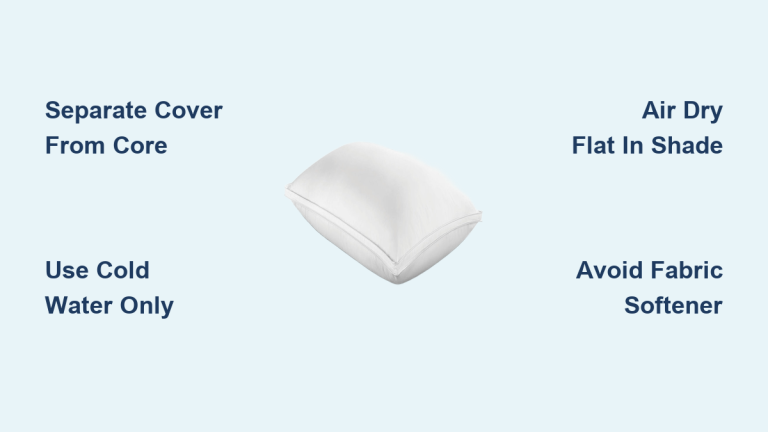
Wash in warm water with mild, non-detergent soap like Woolite or Nikwax Down Wash. Use the delicate cycle. Perform 1 to 2 extra rinse cycles to remove all soap residue. Leftover detergent weighs down clusters.
Dry Thoroughly
Tumble dry on medium heat with 2 dryer balls. Dry time may exceed 2 hours, especially for thick pillows. Check core dryness by squeezing deeply into the center. If cool or damp, continue drying. Shake between cycles to prevent clumping.
Never iron or steam a down pillow. Heat exposure damages natural fibers.
Opt for Professional Cleaning
Experts recommend professional laundering once or twice a year. Avoid dry cleaning. Solvents strip natural oils from down, causing brittleness and reduced loft.
Store to Preserve Loft
How you store your pillow affects its lifespan more than you think.
Short-Term Storage
Keep the pillow flat on a shelf or under clean bedding. Do not stack heavy items on top. Prolonged pressure collapses clusters.
Long-Term Storage
For seasonal or extended storage, use a breathable cotton or mesh bag. Never use plastic bags or vacuum-sealed sacks. They suffocate the down and cause permanent flattening. Store in a cool, dry, ventilated space away from sunlight and humidity.
Fluff thoroughly after removing from storage to reactivate loft.
Myth Busted: Some think compressing down saves space without harm. In reality, long-term compression weakens cluster structure and reduces resilience.
Know When to Replace Your Pillow
Even with perfect care, down pillows wear out. Continuing to use a degraded pillow harms sleep quality and neck alignment.
Signs It Is Time to Retire
The pillow stays flat after aggressive fluffing using hand, dryer, or sun methods. You notice visible thin spots, holes, or feather poking through. Lumps will not break apart even after washing. You experience neck or shoulder pain upon waking, a sign of lost support. Persistent odors or stains remain after laundering.
Lifespan Expectancy
Most high-quality down pillows last 5 to 10 years with proper care. Soft or low-fill-power models may degrade sooner.
Design Tip: For maximum fluffiness and durability, choose firm pillows with fill power above 600. Higher fill power means larger, air-trapping clusters that recover faster after compression.
Maximize Loft with Fill Power Knowledge

Not all down is created equal. The secret to a consistently fluffy pillow lies in fill power, a measure of how much air one ounce of down can trap.
What Fill Power Means
Fill power directly correlates to pillow performance. A range of 500 to 600 fill offers good quality and moderate loft. A range of 650 to 750 fill provides excellent resilience and is common in luxury bedding. A range of 800 to 900 plus fill represents premium down with superior bounce-back and longevity.
Higher fill power means fewer clusters are needed to achieve loft, resulting in lighter, fluffier, and longer-lasting pillows.
Performance Insight: Pillows with 700 plus fill power regain 90 percent of their volume within seconds after compression. Lower-grade down may take minutes or never fully recover.
Choose the Best Fluffing Method for Your Needs
| Method | Best For | Time Required | Tools Needed | Effectiveness |
|---|---|---|---|---|
| Hand Shaking | Daily maintenance | 30 seconds | Hands only | 4 out of 5 stars |
| Dryer plus Balls | Post-wash revival | 10 to 20 minutes | Dryer, tennis or dryer balls | 5 out of 5 stars |
| Sun and Air Exposure | Odor removal and mild fluff | 3 to 6 hours | Outdoor space | 3 out of 5 stars |
| Accordion Press | Feather-blend pillows | 1 to 2 minutes | Hands only | 4 out of 5 stars |
Quick Decision Guide: Choose hand shaking for flatness after sleep. Choose dryer with balls after washing. Choose sun exposure for smelliness or staleness. Choose dryer plus rest after months in storage.
Frequently Asked Questions About Fluffing a Down Pillow
How often should I fluff my down pillow?
You should fluff your down pillow every day. Daily fluffing takes only 30 seconds and prevents cumulative flattening. This simple habit maintains consistent loft and extends the pillow lifespan significantly.
Can I put a down pillow in the dryer to fluff it?
Yes, you can put a down pillow in the dryer to fluff it. Use low to medium heat and add clean tennis balls or wool dryer balls. Run 5 to 20 minute cycles, shaking the pillow between cycles. Never use high heat or fabric softener.
Why does my down pillow go flat so quickly?
Your down pillow goes flat quickly because of repeated compression from head pressure during sleep. Down clusters clump together when pressed for long periods. Using a pillow without rotating it or skipping daily fluffing accelerates this flattening.
Does washing a down pillow restore its fluffiness?
Washing a down pillow can restore its fluffiness if done correctly. Use warm water with mild, non-detergent soap. Run extra rinse cycles to remove all soap. Dry thoroughly with dryer balls, checking that the core is completely dry. Improper washing causes clumping and reduces loft.
What is the best way to store a down pillow long term?
The best way to store a down pillow long term is in a breathable cotton or mesh bag. Never use plastic bags or vacuum-sealed compression sacks. Store flat in a cool, dry, ventilated area away from sunlight. Fluff thoroughly when you remove it from storage.
How long does a quality down pillow last?
A quality down pillow lasts 5 to 10 years with proper care. Higher fill power pillows tend to last longer. Signs of needing replacement include persistent flatness after fluffing, visible thin spots, lumps that will not break apart, and morning neck or shoulder pain.
Key Takeaways for Fluffing Your Down Pillow
A well-maintained down pillow should feel light, springy, and supportive for years. By combining daily hand techniques, periodic deep refreshes, and smart storage, you will enjoy consistent comfort and avoid premature replacement costs.
The most important habits are fluffing every morning using shaking or clapping techniques, refreshing monthly in the dryer with dryer balls, and protecting your pillow with a zippered cover. Always wash professionally once or twice per year, skipping dry cleaning, and store flat in a breathable bag never compressed.
Now go grab that flat pillow and fluff it back to life. Your neck will thank you.