How to Use Pillow Spray for Better Sleep
Struggling to fall asleep or stay asleep is a common issue affecting millions of people. Whether stress, overstimulation, or poor sleep hygiene keeps you awake, pillow spray offers a simple, science-backed solution. These sprays use calming essential oils like lavender, chamomile, and cedarwood to signal your brain that it is time to rest. When applied correctly, a pillow spray can help you fall asleep faster, sleep more deeply, and wake up feeling refreshed.
This guide covers everything you need to know about how to use pillow spray effectively. You will learn the proper application technique, timing recommendations, safety precautions, and tips for choosing or making the best formula for your specific needs.
When to Apply Pillow Spray for Maximum Effectiveness
Timing plays a crucial role in getting the most benefit from your pillow spray. The scent needs time to work its magic on your brain while keeping your bedding comfortable.
Apply Spray 15 to 30 Minutes Before Bed
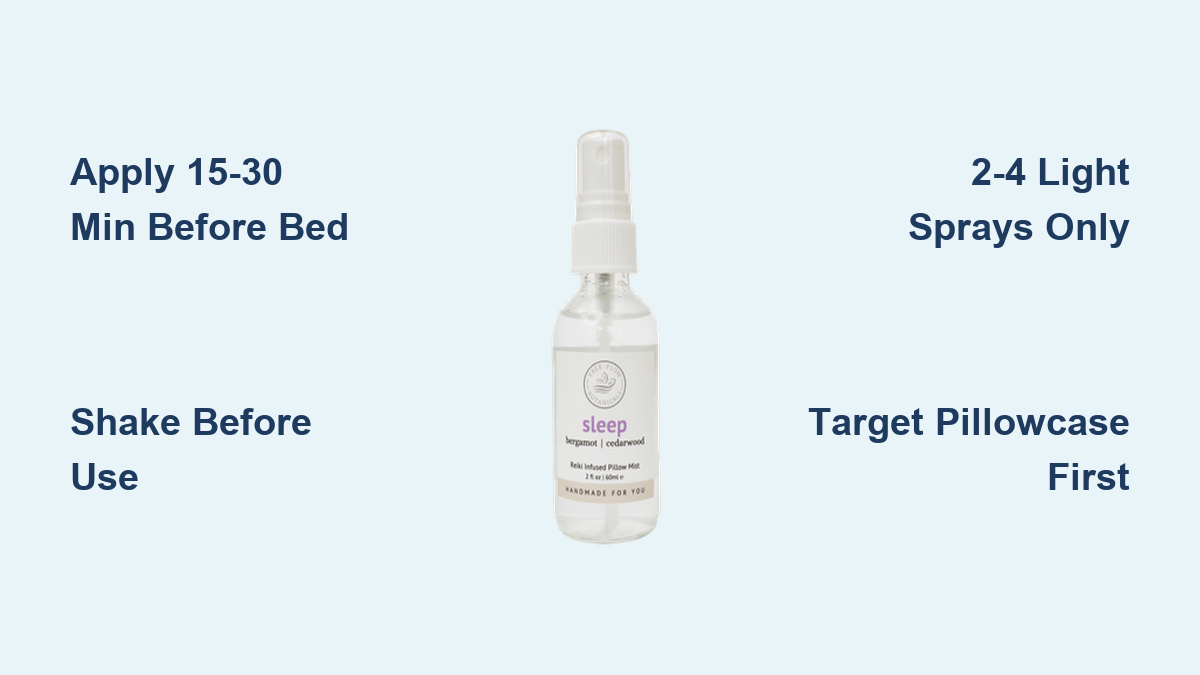
For optimal results, apply your pillow spray 15 to 30 minutes before lying down. This waiting period allows the alcohol or water base to evaporate, leaving behind a light, dry fragrance without dampening your pillowcase. Spraying too early can cause the scent to fade before you fall asleep, while spraying too late may leave moisture that feels uncomfortable on your skin.
This pre-sleep window also gives your brain time to register the aroma and begin shifting into rest mode, which is especially important if you typically struggle with racing thoughts at bedtime.
Integrate Into Your Nightly Wind-Down Routine
Incorporate the spray into your regular bedtime routine right after turning off bright lights or finishing a book. Pair it with other calming habits like dimming the lights, putting away screens, or doing a short breathing exercise. This layered approach strengthens your body’s natural sleep signals and enhances the spray’s effectiveness over time.
Step-by-Step Application Guide
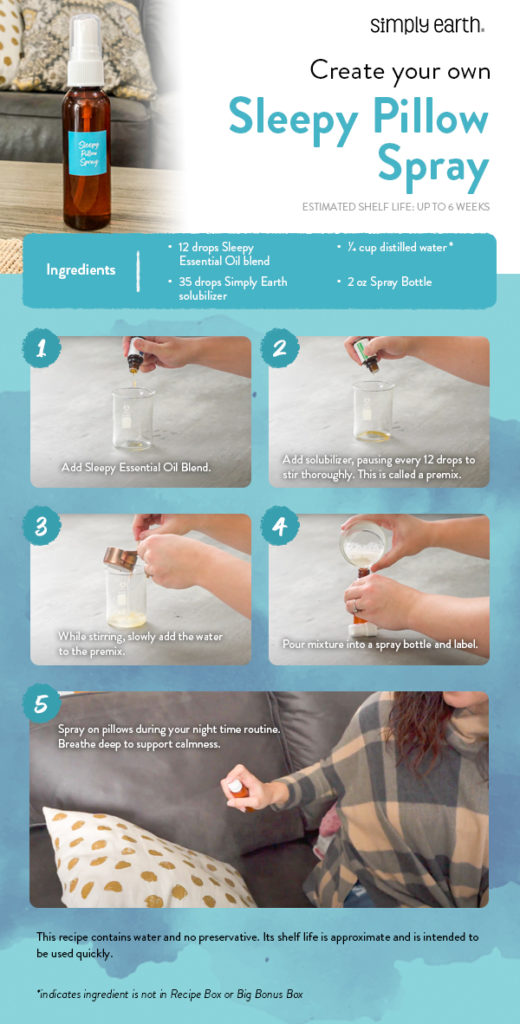
Following the correct application method ensures you get the full therapeutic benefit without wasting product or causing discomfort.
Shake the Bottle Before Each Use
Essential oils and water naturally separate in the bottle. Always shake the bottle vigorously before each use to ensure an even distribution of active ingredients. Skipping this step means you might get mostly water in one spray and concentrated oil in another, leading to inconsistent results or potential skin irritation.
Hold the Bottle at the Right Distance
Hold the bottle 6 to 8 inches away from your pillow or bedding. This distance ensures a fine, even mist that disperses properly without soaking through fabric layers. Spraying too close creates wet spots and concentrates the scent in one area.
Use the Recommended Amount
Less is more when it comes to pillow spray. Two to 4 light sprays are sufficient for most people. Focus on these key areas:
• The upper third of your pillow where your head rests
• The top edge of your duvet or comforter
• Your sleep mask or pajamas if fabric-safe
Avoid heavy spraying because excess moisture can damage pillows over time and increase the risk of skin irritation or respiratory discomfort.
Best Surfaces to Spray
Choosing the right surfaces maximizes the spray’s effectiveness by keeping the scent close to your breathing zone throughout the night.
Target Your Pillowcase First
Your pillowcase is the most effective surface because it sits closest to your nose. The fabric traps and slowly releases the scent throughout the night, ensuring continuous inhalation during sleep onset and light sleep stages.
Include Bed Linens Near Your Shoulders
Spray lightly on the sheets or blanket near your shoulders and face. This creates a subtle aromatic field around your breathing zone, enhancing the calming effect without overwhelming your senses.
Use on Sleep Masks and Pajamas With Caution
A single light mist on a cotton sleep mask can deepen relaxation. Avoid silk or delicate fabrics unless the spray is specifically formulated for them. For pajamas, use only 1 spray and test for staining first on an inconspicuous area.
Reapply on Travel or Hotel Bedding
Bring your spray when traveling. A few mists on a hotel pillow recreate your familiar bedtime cue, helping you fall asleep faster in unfamiliar environments.
Choosing the Right Pillow Spray

The quality of ingredients directly impacts how effective your pillow spray will be.
Look for Real Essential Oils
Always choose sprays made with 100 percent natural essential oils, not synthetic fragrances labeled as parfum or aroma. Synthetic scents may trigger headaches or allergies and lack therapeutic benefits. Check labels for specific oils like lavender, Roman chamomile, or cedarwood, which have clinical backing for sleep support.
Avoid Alcohol-Heavy Formulas
While small amounts of alcohol help disperse oils, excessive alcohol can dry out fabrics and irritate sensitive skin. Opt for balanced formulas with water or floral hydrosols as the base instead.
Consider Multi-Oil Blends for Enhanced Effects
Single-note sprays work well, but expert-blended formulas offer layered effects. Combinations like lavender plus chamomile plus cedarwood target multiple aspects of sleep, including calming nerves, reducing overthinking, and grounding the mind. Brands like anatomē and Pukka Herbs offer clinically informed blends with multiple oils for maximum impact.
DIY Pillow Spray Recipes
Making your own pillow spray allows you to customize ingredients and save money.
Simple Lavender Sleep Mist
Ingredients:
• 30 drops lavender essential oil
• Distilled water to fill a 2-ounce amber glass spray bottle
Steps:
- Add drops to the bottle
- Fill with distilled water
- Shake before each use
- Spray 2 to 3 times on your pillow nightly
Amber glass protects essential oils from UV light degradation and prevents leaching from plastic containers.
Calming Blend With Witch Hazel
Ingredients:
• 20 drops lavender essential oil
• 20 drops chamomile essential oil
• 40 milliliters witch hazel
• 40 milliliters distilled water
Steps:
- Mix witch hazel and oils first
- Add water and shake well
- Store in a cool, dark place
- Use within 6 months
Witch hazel helps preserve the spray and improves oil dispersion.
Custom Blends for Specific Sleep Needs
For anxiety, try 15 drops bergamot plus 15 drops frankincense. For restless sleep, use 10 drops vetiver plus 20 drops cedarwood. For congestion, add 10 drops eucalyptus to 20 drops lavender, but use sparingly. Always label your DIY sprays and use within 6 months.
Safety Tips and Precautions
Using pillow spray safely prevents adverse reactions and ensures the best experience.
Never Spray on Skin or Face
Do not spray directly on skin, face, or eyes. Essential oils in pillow sprays are concentrated and can cause irritation. Only apply to fabrics.
Test for Fabric Staining First
Patch test a small area of your pillowcase or sheet and wait 24 hours to check for staining, odor changes, or fabric damage. Silk, rayon, and treated synthetics are especially sensitive.
Keep Away From Pets
Cats should avoid exposure completely because lavender essential oil is toxic to them. Dogs are generally safe on bedding, but avoid direct exposure to their faces.
Use Caution With Children and Pregnancy
Children over 2 years old can safely use 1 to 2 sprays on bedding. Infants can use it on crib sheets with good ventilation, but never spray near their face. Pregnant women should consult their doctor before use, though lavender and chamomile are generally safe in low doses. Discontinue use if you experience headaches, dizziness, or breathing issues.
How Long Before Results Appear
Understanding the timeline helps set realistic expectations.
Feel Effects Within 5 to 10 Minutes
Most users notice a calming effect within 5 to 10 minutes of lying down. Deep inhalation helps activate the olfactory-limbic pathway faster.
Build a Sleep Cue in 2 to 3 Weeks
The real magic happens with consistency. After 2 to 3 weeks of nightly use, your brain starts to associate the scent with sleep, making it easier to relax even without other aids. Think of it like training your body, where the spray becomes a signal just like brushing your teeth or dimming the lights.
Benefits of Regular Use
Consistent pillow spray use offers measurable improvements in sleep quality and daytime wellbeing.
Fall Asleep Faster
Users report reduced sleep latency, falling asleep 15 to 20 minutes sooner than before. Many fall asleep within 5 to 10 minutes of lying down after consistent use.
Sleep More Deeply
Clinical studies show up to a 20 percent increase in deep sleep with lavender aromatherapy. This stage is crucial for memory consolidation, tissue repair, and immune function.
Wake Up Refreshed
Better sleep quality means less grogginess, improved mood, and higher daytime productivity. Studies find that 88 percent of users feel more alert and focused in the morning.
Reduce Night Wakings
The calming scent helps re-anchor relaxation if you wake up. A quick re-spray can help you fall back asleep faster.
Support Mental Calm Without Medication
Pillow sprays offer a non-drug, side-effect-free way to manage stress-related insomnia. They lower cortisol, boost GABA activity, and support emotional regulation without dependency.
Combining Pillow Spray With Other Sleep Habits
Pillow spray works best as part of a comprehensive sleep hygiene routine.
Dim Lights and Avoid Screens
Use your spray as part of a full digital detox. Turn off bright lights and screens 1 hour before bed to support melatonin production.
Maintain Cool, Quiet Bedroom Conditions
Pair the spray with a cool room temperature between 60 and 67 degrees Fahrenheit and white noise or calming music for a multi-sensory sleep environment.
Stick to a Consistent Schedule
Go to bed and wake up at the same time every day, even on weekends. This reinforces your body’s internal clock and makes the spray more effective.
Common Mistakes to Avoid
Knowing what not to do helps you get the best results.
Using Too Much Spray
Over-spraying can cause headaches, irritation, or fabric damage. Stick to 2 to 4 mists maximum.
Spraying Too Close to Your Face
Holding the bottle too close increases the risk of inhaling a concentrated burst. Always spray and step back before lying down.
Expecting Immediate Results
While some feel calm right away, true conditioning takes 2 to 3 weeks. Do not give up after a few nights.
Ignoring Expiry Dates
Essential oils degrade over time. Most sprays last 6 to 12 months. Discard if the smell changes or the liquid appears cloudy.
Travel and Portable Use
Pillow spray travels well and helps maintain sleep quality away from home.
Bring It on Trips
A mini bottle of pillow spray is highly portable and perfect for hotels, flights, or visiting family. A few mists recreate your home sleep environment, helping you adjust faster in unfamiliar places.
Use in Shared Rooms
Unlike diffusers or white noise machines, pillow sprays are discreet and personal, ideal for shared spaces where others may not want strong scents or sounds.
Final Tips for Best Results
These additional pointers help you maximize your pillow spray experience.
Store Properly
Keep your spray in a cool, dark place like a nightstand drawer. Heat and sunlight degrade essential oils and reduce effectiveness.
Start Low and Adjust as Needed
Begin with 2 sprays. If the scent fades quickly, add one more, but never saturate your bedding.
Explore Non-Lavender Options
Not everyone likes lavender. Try blends with frankincense, bergamot, or vetiver for a spa-like, non-floral scent.
Use It Beyond Bedtime
Some blends work great for naps, meditation, or stress relief during the day. Just pick one that calms without making you drowsy.
Frequently Asked Questions About Pillow Spray
How quickly does pillow spray work?
Most people feel calming effects within 5 to 10 minutes of lying down. The full relaxation response develops over 15 to 30 minutes as essential oils interact with brain chemistry and breathing patterns.
Can pillow spray help with insomnia?
Yes, especially mild to moderate stress-related insomnia. It reduces sleep onset time and supports deeper sleep. However, chronic insomnia should be evaluated medically. Pillow sprays can complement but not replace medical treatment.
Is it safe for children or pregnant women?
Children over 2 years old can use it when sprayed on bedding, using half the adult amount. Pregnant women should consult their healthcare provider first. Lavender and chamomile are generally safe in low concentrations.
Should you spray directly on your skin?
No, unless the product is specifically formulated and labeled for topical use. Standard pillow sprays contain alcohol and essential oils at concentrations that may irritate skin.
How often should you use it?
For best results, use it every night as part of a consistent bedtime routine. Effects are cumulative, with noticeable improvements typically occurring after 2 to 3 weeks of regular use.
Can you use it during the day?
Yes, for naps, meditation, or stress relief. Some blends like bergamot plus frankincense are ideal for daytime calm without drowsiness.
Key Takeaways for Using Pillow Spray
Pillow spray is more than just a pleasant smell. It is a practical tool for better sleep that works through the science of scent and brain chemistry. Using it correctly means applying 2 to 4 light mists 15 to 30 minutes before bed, targeting your pillowcase and nearby bedding, and storing it properly in a cool, dark place.
The real benefits come with consistency. After 2 to 3 weeks of nightly use, your brain begins to associate the scent with sleep, creating a powerful conditioned response that makes falling asleep easier. Combine your pillow spray with good sleep hygiene practices like dimming lights, avoiding screens, and maintaining a consistent schedule for the best results.
Whether you buy a premium blend or make your own at home, the key is regular use, proper application, and high-quality ingredients. Start tonight and breathe your way to better rest.