How to Wash Sunbrella Pillow Covers
Sunbrella pillow covers handle sun, rain, and spills better than almost any outdoor fabric. Still, sunscreen smears, pollen buildup, and unexpected stains mean you will eventually need to give them a proper wash. The trick is using the right cleaners, water temperature, and drying method so the 100% solution-dyed acrylic keeps its color and texture for years. This guide breaks down exactly how to wash Sunbrella pillow covers by hand or in the machine, how to treat stubborn stains, and how to keep them looking fresh season after season.
Act Fast Before Stains Set In
Sunbrella resists staining, but quick action makes every spill easier to remove.
Blot Spills Instead of Rubbing
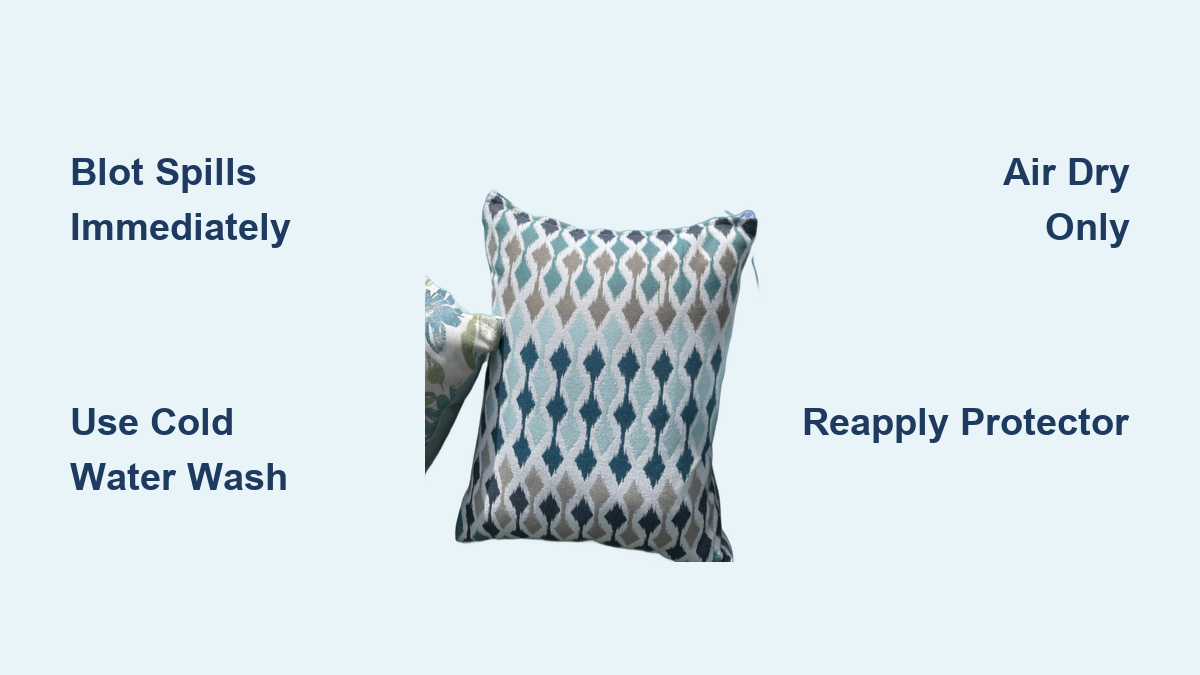
The moment wine, coffee, or food hits the fabric, grab a clean white cloth and blot the area. Rubbing forces liquid deeper into the fibers and spreads the mess. Paper towels or lint-free cotton cloths work well for absorbing moisture quickly.
Brush Off Loose Dirt First
Before applying any water, sweep away dust, pollen, and debris with a soft bristle brush. A vacuum with an upholstery attachment also works. Removing dry particles first prevents mud from forming when water hits the surface.
Choose Between Hand Washing and Machine Washing
Both methods work well. Your choice depends on how the covers are constructed and how dirty they are.
Hand Wash Fitted or Delicate Covers
Hand washing protects seams and helps tailored covers keep their shape.
- Mix 1/4 cup mild dish soap per gallon of lukewarm water (under 100°F).
- Soak the cover or sponge the solution generously across the surface.
- Scrub gently with a soft brush, working seam to seam rather than in circles.
- Rinse thoroughly until the water runs clear.
- Air dry completely before putting the cover back on the cushion.
Pro Tip: Cleaning the entire panel from seam to seam prevents water rings and ensures even drying.
Machine Wash Removable Covers Safely
If your cushion construction allows the cover to come off, machine washing offers a deep clean with minimal effort.
- Zip the cover fully closed to keep the zipper from snagging.
- Use cold water on the delicate or gentle cycle.
- Add mild detergent only. Skip fabric softeners and bleach unless you are tackling mildew.
- For stubborn mold, add 1 cup of chlorine bleach to the wash.
- Never use a dryer. Air dry only.
Warning: Heat from dryers, steamers, or steam irons can shrink or damage acrylic fibers.
Remove Tough Stains With Targeted Treatments

Different stains need different solutions. Always test any cleaner on a hidden spot first.
Lift Oil and Grease Stains
Sunscreen, cooking oil, and grease repel water and need a degreasing step.
- Step 1: Sprinkle cornstarch on a fresh spill to absorb the oil. Wait 15 minutes, then brush it away.
- Step 2: Apply Sunbrella Extract™ Oil Based Stain Remover or a mix of dish soap and white vinegar.
- Step 3: Agitate gently and rinse thoroughly.
Repeat the process if any discoloration remains.
Kill Mold and Mildew Growth
Mildew grows on dirt, not on the fabric itself. Regular cleaning prevents it from taking hold.
Mix This Bleach Solution:
- 1 cup chlorine bleach
- 1/4 cup mild dish soap
- 1 gallon lukewarm water
- Apply the mixture to the affected area.
- Let it soak for 15 minutes.
- Rinse extremely well to remove all bleach residue.
- Dry in direct sunlight, since UV rays help kill remaining spores.
Alternative: Use Sunbrella Renew™ Mold & Mildew Stain Remover for heavy buildup.
Treat Common Outdoor Stains
These proven mixtures handle the messes you are most likely to face:
| Stain Type | Cleaning Solution (per gallon of water) |
|---|---|
| Wine | 1/4 cup dish soap + 1/3 cup vinegar + 1/2 to 1 cup hydrogen peroxide |
| Blood | 1/4 cup dish soap + 1/2 cup ammonia |
| Chocolate | 1/4 cup dish soap + 1/2 cup hydrogen peroxide |
| Mustard or Ketchup | 1/4 cup dish soap + 1 cup bleach |
| Urine or Vomit | 1/4 cup dish soap + 1/3 cup vinegar |
Apply, agitate gently, and rinse well. Repeat for set-in stains.
Note: For wax, gum, ink, or nail polish, test specialty solvents on a hidden area or consult a professional cleaner.
Rinse and Dry the Right Way
Skipping proper rinsing or drying causes more damage than the original stain.
Rinse Until Water Runs Clear
Leftover soap attracts dirt and leaves a visible film. Rinse thoroughly, especially on thick covers. A garden hose or shower sprayer gives the best coverage. Blot with a dry towel or use a wet-vac to pull out extra moisture before drying.
Air Dry Only
Sunbrella must air dry. Skip the dryer, steamer, and steam iron entirely. Hang covers flat or on a line in direct sunlight and fresh air. UV light speeds up drying and helps prevent mildew.
Warning: Storing covers even slightly damp invites mold growth, even on Sunbrella fabric.
Smooth Wrinkles and Restore Water Repellency
After washing, your covers may need a little extra attention.
Iron Without Steam
If wrinkles appear, iron on the synthetic setting only.
- Do not use steam.
- Test on a hidden seam first.
- Iron over a cloth to protect the surface.
Reapply Fabric Protector
Deep cleaning strips away some water repellency. Restoring it keeps future messes from soaking in.
When to Retreat:
- After every deep clean
- At least once per year
- Before winter storage
Recommended Products:
- Sunbrella Restore™ Fabric Protector (US)
- Tex’Aktiv (International)
- 303 Waterproofing Spray, Iosso, or Aqua-Tite
How to Apply:
- Make sure the fabric is clean and completely dry.
- Spray evenly in a well-ventilated area.
- Saturate the surface rather than lightly misting.
- Let it dry fully, usually 6 to 12 hours.
Result: Water beads up, dirt slides off, and stains become much easier to clean next time.
Store Covers Correctly During the Off-Season
Smart storage prevents mildew, odors, and pest damage.
Clean and Dry Before Storing
Never put away dirty or damp covers. Wash and dry them fully first.
Pick a Dry, Sheltered Location
Good storage spots include:
- A dry basement
- An attic that does not get hot
- A garage kept off concrete
- A high closet shelf
Avoid damp sheds or any area where moisture collects.
Guard Against Pests
Mice and rodents love to nest in stored cushions.
- Wrap covers in old sheets or breathable fabric.
- Set rodent traps nearby.
- Skip plastic bags, which trap moisture.
Stick to a Simple Maintenance Schedule
A little routine care saves you from heavy cleaning later.
Weekly: Brush Off Debris
A quick pass with a soft brush or vacuum takes under two minutes and prevents buildup.
As Needed: Spot Clean Spills
Blot and clean immediately using soapy water or Sunbrella Erase™ for stubborn spots.
Seasonally: Deep Clean and Protect
At the start and end of each outdoor season:
- Wash the covers by hand or machine
- Rinse thoroughly
- Air dry completely
- Apply fabric protector
Annually: Inspect and Reassess
Check for fading, seam wear, and reduced water repellency. Retreat or replace covers as needed.
Avoid These Common Cleaning Mistakes

Even tough fabric can be damaged by the wrong care habits. Never:
- Use a dryer or any high heat
- Apply steam or hot water above 100°F
- Scrub with stiff brushes or scouring pads
- Rub spills instead of blotting
- Scrub in circles rather than seam to seam
- Skip rinsing and leave soap residue
- Store covers while damp
Reminder: Sunbrella is built to last, but heat and abrasion are its biggest enemies.
When to Call a Professional
If stains survive multiple attempts, or if your covers cannot be removed, consider hiring help.
- Look for a Sunbrella-certified cleaner.
- Confirm they use air drying, seam-to-seam cleaning, and proper rinsing.
- Ask if they offer re-treatment services.
Professionals use extractors that remove deep residue without soaking the cushion fill.
Frequently Asked Questions About Washing Sunbrella Pillow Covers
Can Sunbrella pillow covers go in the washing machine?
Yes, most removable Sunbrella covers are machine washable. Use cold water, the delicate cycle, and mild detergent. Always close zippers fully and air dry the covers afterward. Skip fabric softeners and never use a dryer.
What is the best cleaner for Sunbrella fabric?
A mix of 1/4 cup mild dish soap per gallon of lukewarm water handles most routine cleaning. For oil-based stains, use Sunbrella Extract™. For mold and mildew, a diluted bleach solution works well. Specialized products like Sunbrella Clean™ are also excellent for general use.
How do you get mold off Sunbrella pillow covers?
Mix 1 cup chlorine bleach, 1/4 cup mild soap, and 1 gallon of lukewarm water. Apply to the affected area, let it soak for 15 minutes, then rinse thoroughly. Air dry in direct sunlight so UV rays help kill remaining spores. For heavy buildup, try Sunbrella Renew™ Mold & Mildew Stain Remover.
Can you use bleach on Sunbrella covers?
Yes, chlorine bleach is safe on Sunbrella when diluted properly. It is especially useful for mold, mildew, and tough food stains. Always rinse thoroughly to remove all residue, and avoid getting bleach on surrounding non-Sunbrella surfaces.
How often should you wash Sunbrella pillow covers?
Brush off debris weekly and spot clean spills as they happen. Plan a deep clean at the start and end of each outdoor season, or whenever you notice visible grime. Reapply fabric protector after each deep clean for best results.
Should Sunbrella covers be ironed?
Only when necessary, and only on the synthetic setting without steam. Test on a hidden seam first and iron over a cloth to protect the fibers. Wrinkles usually relax on their own if you hang the covers properly while air drying.
Final Thoughts on Keeping Sunbrella Pillow Covers Clean
Washing Sunbrella pillow covers comes down to three essentials: use mild cleaners, rinse thoroughly, and always air dry. Hand washing works best for fitted covers, while machine washing offers a convenient deep clean for removable ones. Targeted stain treatments handle oil, mildew, and everyday messes without damaging the fabric. With a simple weekly brush-off, seasonal deep cleans, and annual fabric protector reapplication, your Sunbrella covers will resist stains, repel water, and hold their color for many seasons of outdoor use.