How to Wear a Neck Pillow on a Plane
You board your flight, settle into your seat, and loop your U-shaped travel pillow around your neck with the opening facing forward. Within minutes, your chin drops to your chest, your head jerks awake, and any chance of real rest vanishes. If that experience sounds painfully familiar, the problem isn’t your pillow. It’s how to wear a neck pillow on a plane.
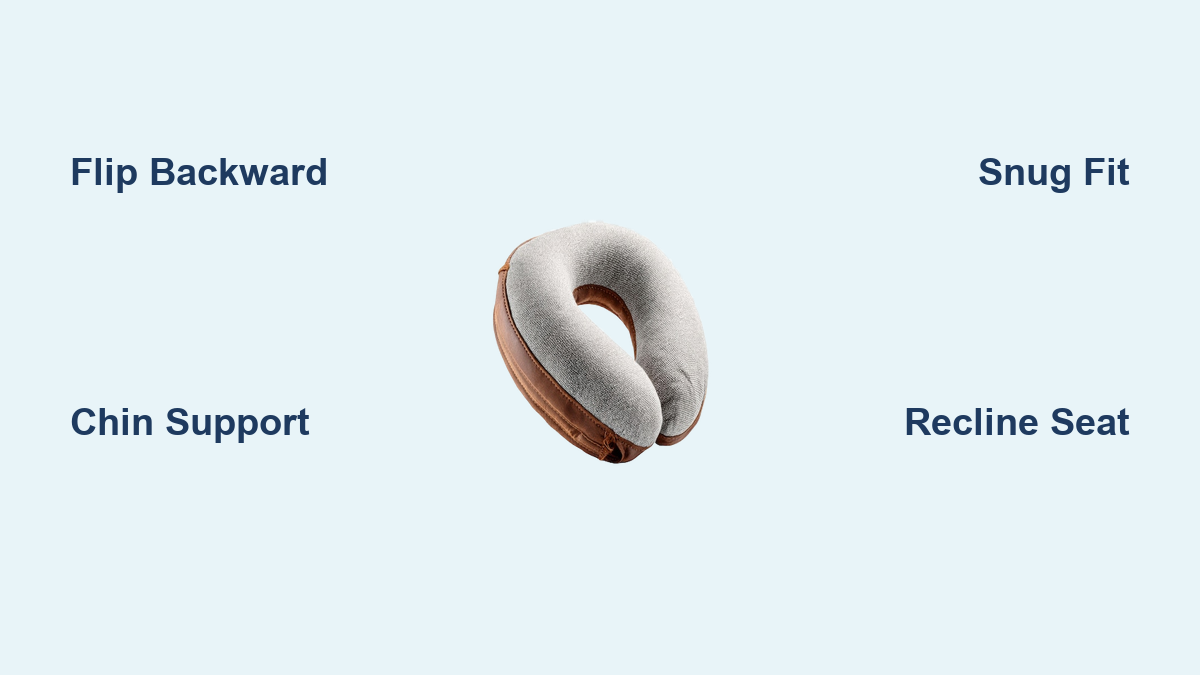
The fix is simpler than you think: flip it around. Wearing your neck pillow with the opening at the back of your neck and the padded curve cradling your chin is the most effective way to sleep on a plane. This guide breaks down the correct orientation, step-by-step application, pillow types, common mistakes, and care tips so you can land feeling rested instead of wrecked.
Why the Backward Neck Pillow Method Works
Most travelers wear their pillow with the gap at the front because that orientation looks intuitive. Comfort, however, trumps convention when you’re trying to sleep at 30,000 feet.
How the Backward Orientation Supports Your Head
Wearing the pillow with the U-shape opening at the back places the solid cushioning directly under your chin and along both sides of your jaw. This creates a supportive cradle that stops your head from tilting forward or rolling sideways during sleep.
- Prevents chin droop: The bulk of the pillow acts like a shelf holding your chin up.
- Reduces neck strain: Keeps your cervical spine aligned with the rest of your back.
- Eliminates the startle reflex: No more jolting awake when your head suddenly falls.
This setup mimics the function of medical cervical collars, offering passive stability even when turbulence hits or you drift into deeper sleep stages.
When the Standard Front-Gap Position Makes Sense
The traditional orientation (opening under the chin, bulk at the back of the neck) has limited use for sleeping. It offers no chin support and doesn’t prevent the forward head tilt that ruins in-flight naps. That said, it works well in specific situations:
- During meals or drinks when you need unobstructed access to your mouth
- While watching movies in an upright seated position
- Doubling as lumbar support tucked behind your lower back
Save the standard orientation for alertness. Switch to the backward method when you’re ready to actually sleep.
Step-by-Step: How to Put On a Neck Pillow on a Plane
Getting the fit right matters just as much as the orientation. Follow these steps for optimal support.
Positioning the Pillow Correctly
- Hold the pillow vertically and place the center of the U at the base of your skull.
- Wrap it forward, bringing both ends under your chin.
- Align the gap at the back of your neck. This is the critical step.
- Check for even padding on both sides of your jaw and neck.
For wrap-around models with Velcro or toggle fasteners, secure the closure so the chin support sits snugly but comfortably beneath your jawline.
Securing the Right Fit
- Snug, not tight: You should feel support without any pressure on your throat.
- Test mobility: Turn your head gently from side to side. The pillow should stay in place.
- Adjust the height: Slide the pillow up or down until it supports the base of your skull, not just the middle of your neck.
A loose fit lets your head slip through the U-shape, defeating the purpose entirely.
Adjust Your Seat for Better Sleep Support
Even the best pillow fails if your posture is off. Optimize your seat setup before you try to sleep.
Recline Slightly for Spinal Alignment
- Gently recline your seat, staying mindful of the passenger behind you.
- Aim for a 110 to 120 degree angle between your torso and thighs.
- This reduces spinal load and lets the pillow cradle your head naturally.
If reclining isn’t possible, roll up a jacket or travel blanket and place it behind your lower back for lumbar support. This indirectly helps your neck stay aligned.
Keep Your Head and Spine Stacked
- Position your ears directly over your shoulders.
- Avoid hunching forward or craning your neck upward.
- Let the pillow do the work. Your head should rest, not lean.
Best Sleeping Positions by Seat Type
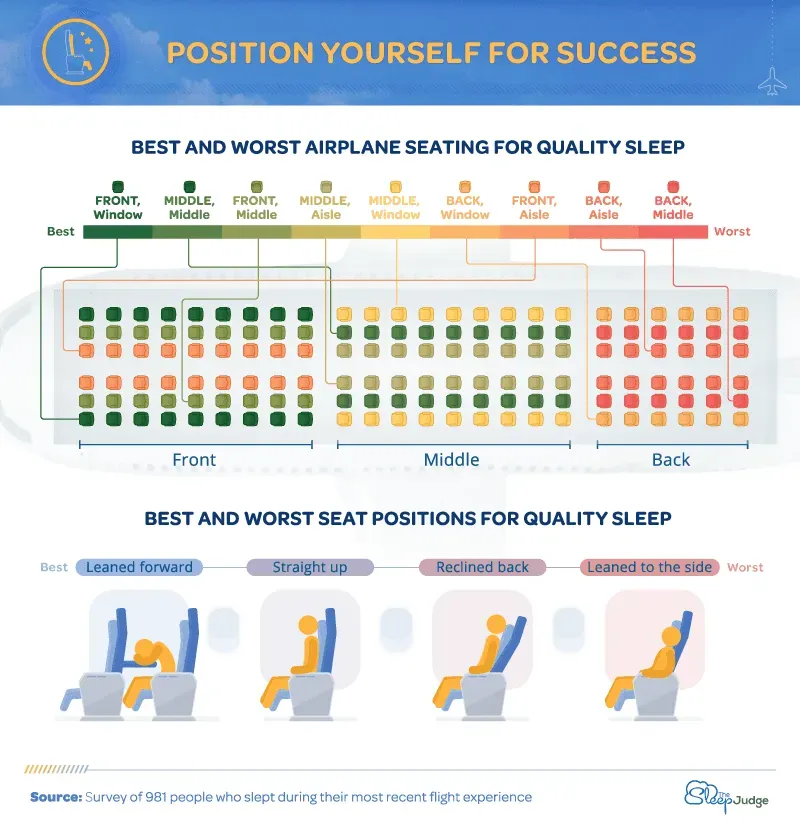
Your seat location changes how you should position your head. Adapt your technique accordingly.
Window Seat: Lean Into the Wall
- Tilt your head slightly toward the window.
- Let the pillow support your cheek and jaw as you lean.
- The cabin wall prevents sideways rolling while the pillow stops forward drop.
Adding a sleep mask and noise-canceling headphones enhances the effect significantly.
Aisle Seat: Rely on the Pillow
- Keep your head centered over your shoulders.
- Use the headrest for lateral stability.
- The backward-worn pillow prevents nodding forward during turbulence or sudden movements.
Avoid leaning on a stranger’s shoulder. Etiquette and hygiene both matter at 35,000 feet.
Middle Seat: Minimize Movement
- Stay upright and use the chin-support method.
- Place a soft item on the armrest to avoid elbow conflicts with seatmates.
- If you need to lean, alternate sides gently with the pillow providing support.
Choose the Right Neck Pillow Type
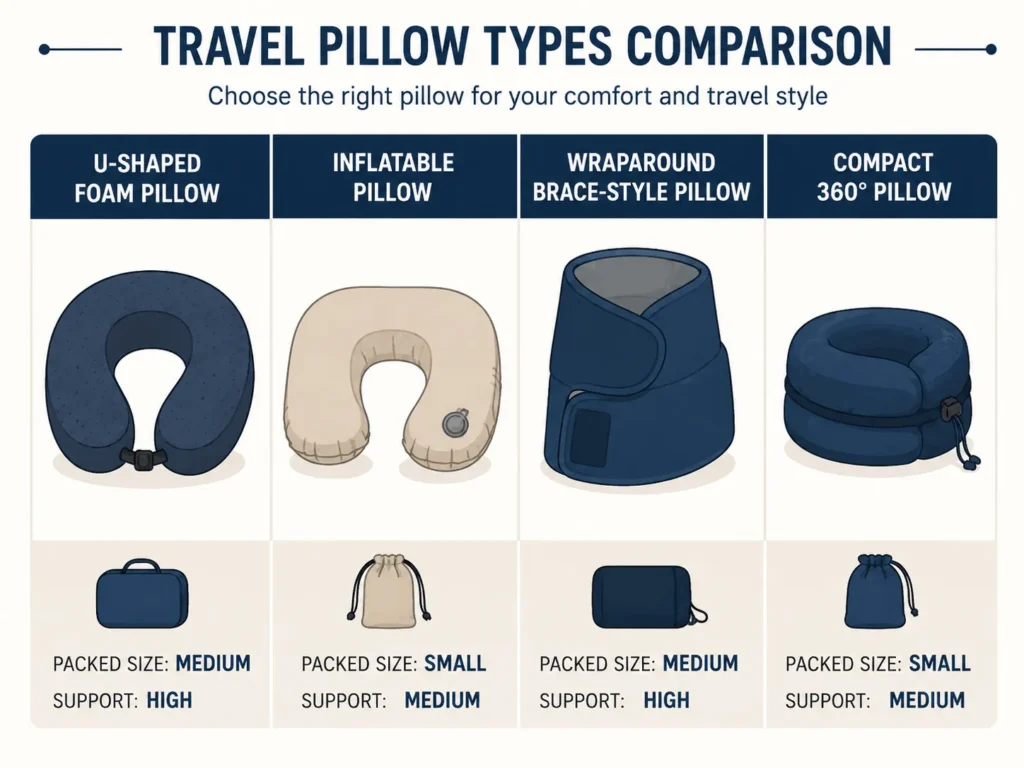
Not all travel pillows deliver the same experience. Match your choice to your sleep style and luggage constraints.
Inflatable Neck Pillows
Inflatable models work best for light packers and aisle-seat travelers who need frequent adjustments.
- Pros: Ultra-portable when deflated, adjustable firmness, easy to stash in a side pocket
- Cons: Can feel plasticky against the skin, occasional air leaks
- Tip: Inflate to 80 to 90 percent capacity for comfort without rigidity
Memory Foam Neck Pillows
Memory foam suits long flights and travelers who prioritize pressure relief over portability.
- Pros: Conforms to your neck shape, superior pressure distribution, excellent for side sleepers
- Cons: Bulkier and heavier, takes up more pack space
- Maintenance: Spot clean only. Never soak memory foam, as it breaks down the material.
Wrap-Around Travel Pillows
Wrap-around designs target restless sleepers and chronic chin-droopers.
- Pros: 360-degree support, secure fastening, prevents slumping during deep sleep
- Cons: Can feel restrictive, bulkier than standard U-shapes
- Design edge: Some pharmacist-designed models (like the Daymo GoodSnooze™) specifically target chin support through their wrap architecture
These function like soft cervical collars, making them ideal for deep sleepers who shift position throughout the night.
Common Neck Pillow Mistakes to Avoid

Small errors can completely undermine your rest. Steer clear of these frequent pitfalls.
Wearing the Pillow the “Standard” Way
The most widespread mistake is wearing the gap at the front and the bulk at the back of the neck. This orientation offers zero chin support and guarantees forward head tilt.
Fix: Flip the pillow so the bulk supports your chin and the gap sits at the back of your neck.
Adjusting Too Loose or Too Tight
A loose pillow lets your head slip through the U-shape. A pillow cinched too tight presses on your carotid arteries and causes discomfort.
Fix: Adjust until your head stays upright without any squeezing sensation.
Using Chin Support During Meals
Trying to eat or drink with a chin-cradling pillow is awkward and impractical.
Fix: Remove the pillow or switch to the rear-support orientation during meals. Reapply the backward method once you’re ready to sleep.
Wearing It Through the Airport
Walking through security or boarding with a neck pillow around your neck looks odd and serves no functional purpose.
Fix: Loop it over your carry-on handle until you’re seated and ready to rest.
Care and Maintenance for Travel Pillows
A clean, well-maintained pillow lasts longer and feels better against your skin.
Cleaning by Material Type
- Removable covers: Machine wash in cold water with mild detergent
- Memory foam: Spot clean with a damp cloth and mild soap, then air dry completely
- Inflatable pillows: Wipe down with a disinfectant wipe and ensure it’s dry before reinflating
- Delicate fabrics: Hand wash gently, squeeze out excess water without wringing, and lay flat to dry
Never bleach memory foam or put it in a machine dryer. Both actions break down the material.
Storage and Inspection
- Fully deflate inflatable pillows before storing them
- Roll memory foam neatly and keep it in a dust bag
- Check regularly for tears, weak seams, or slow air loss
- Replace your pillow if support diminishes or odors persist
Using a removable pillowcase adds a hygiene layer and makes washing much easier.
Airline Rules and Portability
Neck pillows are almost universally welcome onboard.
Carry-On Status
- Not counted as a personal item or standard carry-on
- Can be worn, carried, or packed freely
- Fits inside your bag or clips onto the outside
No airline charges extra for a neck pillow, though unusually large wrap-around models with hoods may warrant a quick check with your carrier.
Packing Smart
- Inflatable: Deflate fully and stash in a side pocket
- Memory foam: Use a compression sack to save space
- Wrap-around: Fasten the closure and clip it to your bag
Avoid checking your pillow. Checked bags get lost, crushed, or exposed to moisture that damages the material.
Real-World Benefits of Wearing a Neck Pillow Correctly
:max_bytes(150000):strip_icc()/tl-neck-pillow-hack-tout-67ab810751624b71868bafeb27448a3f.jpg)
You might feel self-conscious at first wearing your pillow “backward.” The payoff, however, is immediate and tangible.
Arriving Feeling Refreshed
Properly supported sleep during a flight means no stiff neck, no shoulder pain, and significantly less fatigue when you land. Your mood and focus improve noticeably compared to dozing in an unsupported position.
Sleeping Through Turbulence
With your head secured by the chin cradle, minor bumps won’t jolt you awake. The pillow absorbs micro-movements, allowing you to stay in lighter sleep stages longer without interruption.
Versatility Beyond Sleep
Your neck pillow pulls double duty in several ways:
- Lumbar support: Tuck it behind your lower back during upright sitting
- Footrest: Place it on the floor and rest your feet on long flights
- Armrest cushion: Soften hard plastic edges that dig into your elbows
One pillow, multiple uses across an entire journey.
Frequently Asked Questions About Wearing a Neck Pillow on a Plane
Should you wear a neck pillow backward on a plane?
Yes. Wearing the pillow with the opening at the back of your neck and the bulk under your chin prevents your head from falling forward. This backward orientation provides superior chin and jaw support compared to the standard front-gap position.
What is the correct way to wear a U-shaped neck pillow?
Hold the pillow vertically, place the center at the base of your skull, and wrap both ends under your chin. The U-shape opening should sit at the back of your neck. Adjust until the fit is snug but not tight.
Can you sleep on a plane with just a neck pillow?
Yes, especially when worn correctly. A properly positioned neck pillow supports your chin and jaw, reduces neck strain, and prevents the startle reflex that wakes you when your head drops. Pair it with a sleep mask and earplugs for best results.
Are neck pillows allowed on planes as carry-on items?
Yes. Neck pillows are generally not counted toward your carry-on or personal item allowance. You can wear them, carry them, or pack them without extra fees on most airlines.
How tight should a neck pillow be?
The pillow should feel snug enough to hold your head upright without slipping, but loose enough that you don’t feel pressure on your throat. If it restricts breathing or feels uncomfortable, loosen the fit.
Do inflatable neck pillows work as well as memory foam?
Inflatable pillows are more portable and adjustable, but memory foam generally provides better pressure relief and conforms more closely to your neck. Choose inflatable for compact packing and memory foam for maximum comfort on long flights.
Key Takeaways for Sleeping Comfortably With a Neck Pillow
Mastering how to wear a neck pillow on a plane comes down to three essentials. First, flip the orientation so the opening sits at the back of your neck and the cushioning cradles your chin. Second, adjust your seat to a slight recline and align your ears over your shoulders for proper spinal positioning. Third, choose a pillow type that matches your sleep style, whether that’s inflatable for portability, memory foam for pressure relief, or wrap-around for maximum stability.
Skip the front-gap method, avoid wearing your pillow through the airport, and care for it properly between trips. On your next flight, wear it backward with confidence. You’ll sleep better, wake up without a stiff neck, and arrive ready to enjoy your destination instead of recovering from the journey.