How to Use a Wedge Pillow for Sciatica
Sharp, radiating pain shooting from your lower back down your leg can turn a full night of sleep into an impossible goal. If sciatica disrupts your rest, you’re not alone, and relief may be simpler than you think. Learning how to use a wedge pillow for sciatica can reduce nerve pressure, support spinal alignment, and help you wake up with noticeably less pain.
This guide covers exactly how to position a wedge pillow based on your preferred sleeping style, what features matter when choosing one, and how to pair your pillow setup with stretches and habits that boost results. You’ll also learn when to seek professional care if symptoms persist.
Start With the Right Sleep Surface
A wedge pillow can only do its job if your mattress supports your spine from below. A soft or sagging bed undermines even the best pillow setup.
Test Your Mattress Firmness
A medium-firm to firm mattress is the gold standard for sciatica sufferers. It keeps your hips level with your shoulders instead of sinking downward, which twists the lumbar spine and compresses the sciatic nerve. If your current mattress feels too plush:
– Add a firm mattress topper to boost support
– Try placing a yoga mat on the floor for a rigid temporary surface
– Avoid deep memory foam that lets your hips sink
Align Head, Shoulders, and Hips
Your goal is a straight line from your head down through your pelvis. If your hips dip or your head tilts forward, your spine leaves its neutral position. Correct this base alignment before fine-tuning with wedges.
Use a Two-Piece Wedge System for Full-Body Relief

For comprehensive sciatica relief, especially when lying flat worsens pain, a dual-wedge setup replicates a recliner’s posture directly on your bed.
Support Your Upper Body and Legs Separately
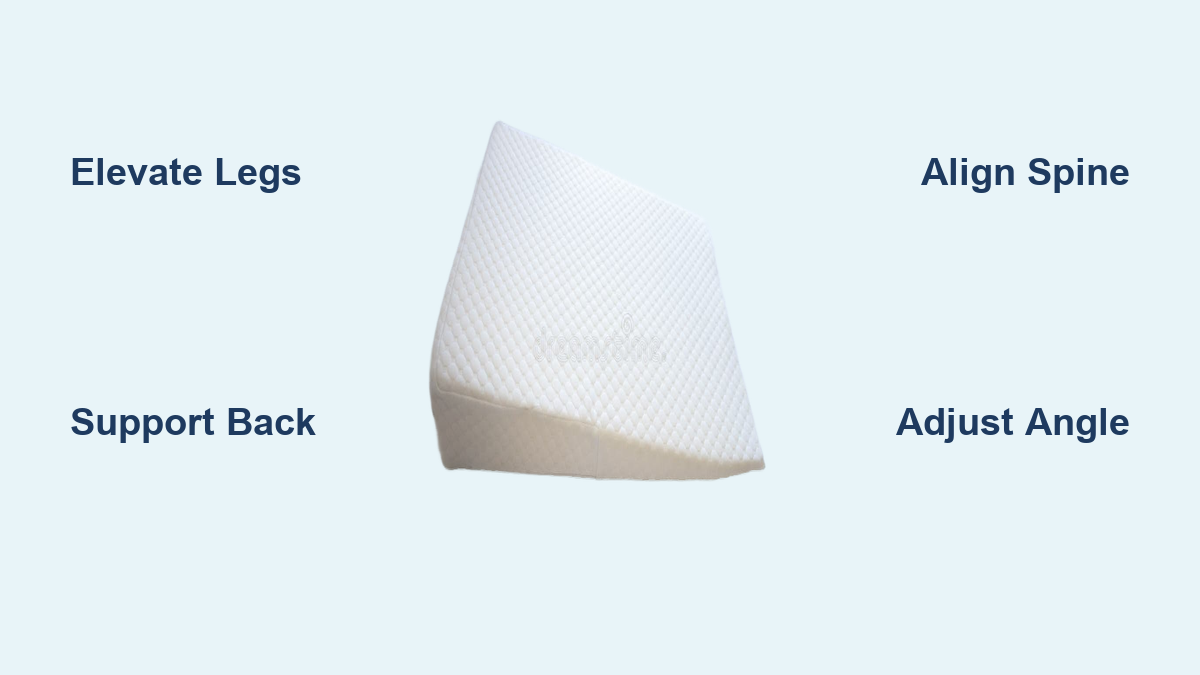
Place one wedge beneath your upper back and shoulders to keep your chest open and spine neutral. A second wedge under your legs lifts them above heart level, easing hydraulic pressure on compressed nerve roots.
- Best for: Herniated discs and general lower back pain
- Angle range: 30–45 degrees for the upper body; 6–10 inches of leg lift
- Key benefit: Stays in place far better than stacked pillows
Why This Setup Works
Elevating the legs reduces tension along the sciatic nerve pathway. Supporting the back prevents slumping, which narrows the spaces where nerve roots exit the spine. Together, these actions decompress the lower back, especially helpful during nighttime flare-ups.
Pro Tip: Choose wedges with non-slip bases or tuck them between fitted sheets to prevent overnight shifting.
Try a DIY Pillow Stack When Wedges Aren’t an Option
Not ready to invest in specialty wedges? Standard household pillows can deliver similar relief when stacked strategically.
Build a Stable Incline
- Upper body: Stack two firm, dense pillows behind your back to create a gentle recline
- Legs: Place one flat pillow under your knees and another beneath your calves
This setup mimics the two-piece wedge system but requires more frequent readjustment.
Avoid Common Mistakes
- Skip fluffy, low-density pillows that collapse under body weight
- Don’t prop only under your thighs; include calves to keep legs naturally aligned
- Fluff pillows nightly to maintain lift and support
While less durable than foam, this method is a great way to test what angles work best for your pain before buying equipment.
Elevate Legs With a Single Wedge for Targeted Relief
A dedicated leg elevation wedge offers consistent, long-term support, especially for sciatica linked to nerve compression or swelling.
Select the Right Size and Foam
Look for wedges with these features:
– Dimensions: Around 24.5″ x 20″ x 6″ for standard use
– Material: High-density polyurethane foam that resists flattening
– Cover: Removable, machine-washable polycotton blend
Taller options (8″ or 10″) work well for severe swelling or post-surgery recovery.
Improve Circulation and Reduce Swelling
Leg elevation does more than relieve back strain. It enhances blood flow and reduces fluid buildup that can worsen nerve irritation. Users commonly report:
– Less “heavy leg” sensation at night
– Reduced cramping after long days on their feet
– Faster recovery following physical activity
Sleep on Your Back With Knee Support
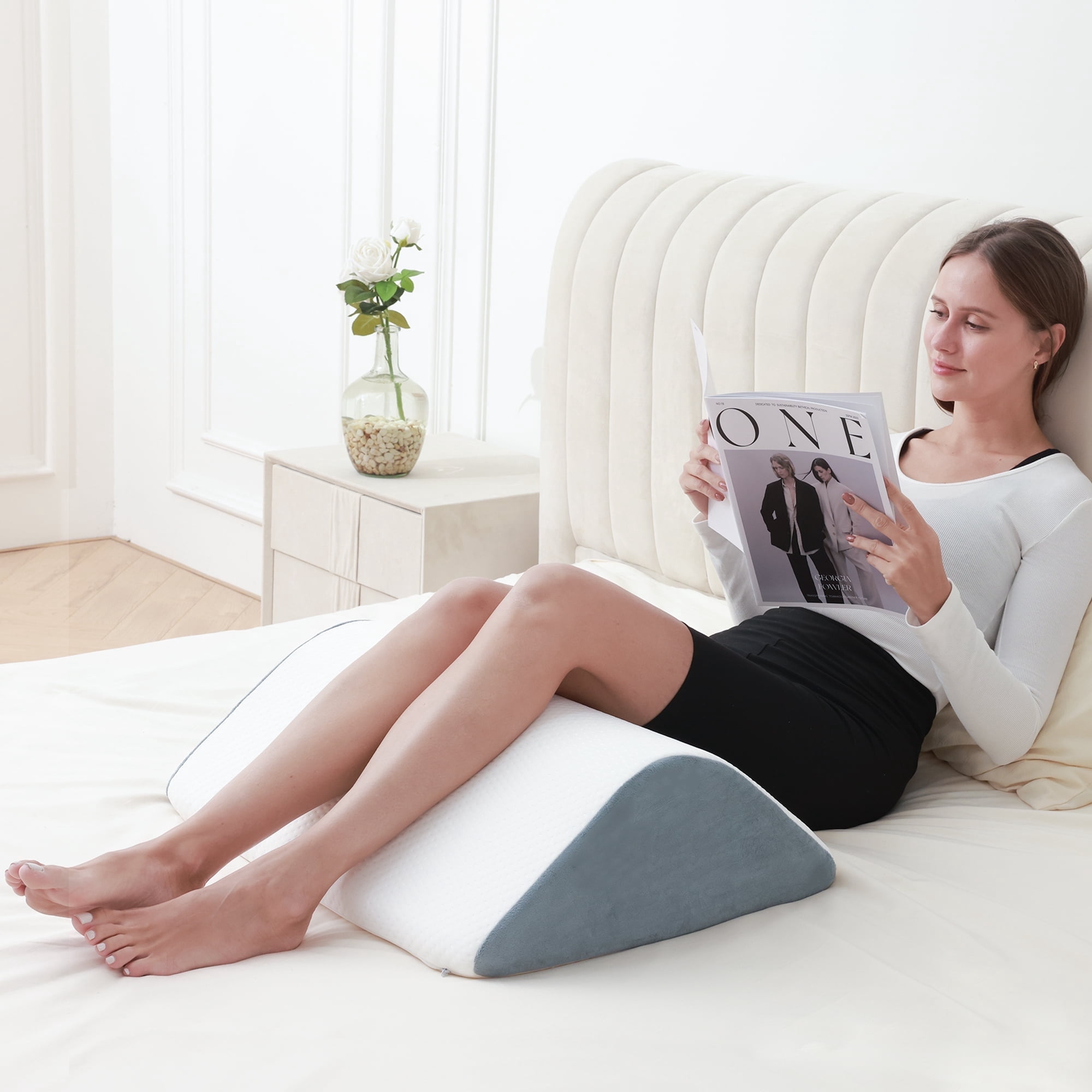
Back sleeping is the top-recommended position for sciatica when done with proper support.
Place a Wedge Under Your Knees
Lifting your knees 6–8 inches flattens your lower back against the mattress, reducing the excessive arch (lordosis) that pinches sciatic nerve roots.
- Use a contoured knee pillow or flat wedge
- Make sure both thighs and calves are fully supported
- Keep feet relaxed with toes pointing upward
Support Your Neck Without Overdoing It
Place a thin pillow under your head and neck only, never under your shoulders. This keeps your cervical spine aligned with the rest of your back.
Prevent Rolling With Side Barriers
Place firm pillows or rolled towels on both sides of your body to “hedge” yourself in. This keeps you from rolling onto your side and twisting your spine mid-sleep.
For Spinal Stenosis: Try a slightly higher knee wedge to gently round your back, which can open narrowed spinal spaces. Stop immediately if pain increases.
Sleep on Your Side With a Knee Wedge

Side sleeping can aggravate sciatica when your top leg pulls your pelvis forward, twisting the lumbar spine.
Use a Contoured Pillow Between Your Knees
A contoured wedge fits snugly between your knees, keeping your hips parallel and preventing lower back rotation.
- Choose a pillow thick enough to bridge the gap between your knees
- Adjust thickness based on your hip width
- Hug a large body pillow to stabilize your upper body
Hug a Pillow for Upper Body Alignment
Press a full-length pillow against your chest and hug it. This stops your torso from collapsing forward, which twists the spine and compresses nerves.
Add Back Support if Needed
Place a small pillow behind your lower back to prevent rolling backward and maintain hip alignment all night.
Modify Stomach Sleeping With Hip Elevation
Stomach sleeping is risky for sciatica because it forces neck rotation and arches the lower back. If you can’t break the habit, modifications are essential.
Lift Your Hips to Reduce Arching
Place a thin, firm pillow or low-profile wedge under your pelvis. This raises your hips to match your torso height and reduces the extreme lumbar curve.
- Avoid thick pillows that increase pressure
- Use no head pillow, or a very flat one
- Keep your arms at your sides or overhead
Know When to Stop
Some people with certain disc bulges find temporary relief from gentle arching, but most experience worsened nerve compression. If pain increases, stop immediately and transition to back or side sleeping.
Test and Adjust Your Setup
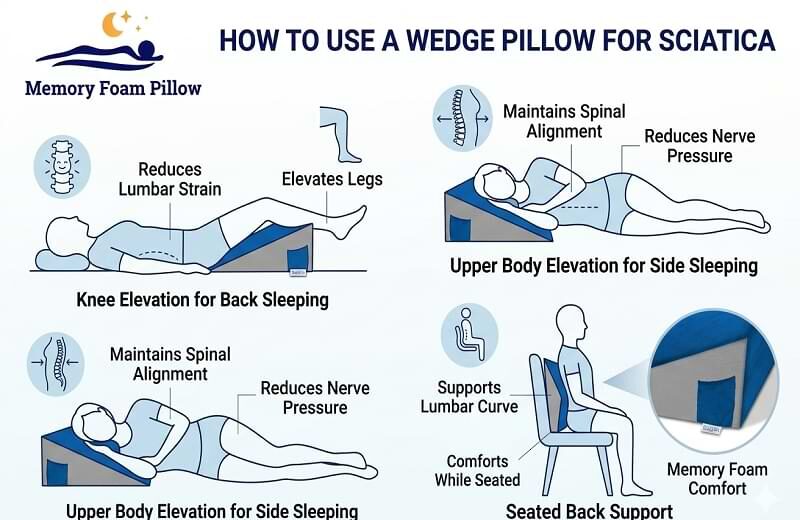
There’s no single “best” position for sciatica. Your pain response is the ultimate guide.
Follow a Step-by-Step Trial
- Start supine with a knee wedge in place
- Lie still for 15–20 minutes and rate your pain on a 1–10 scale
- Adjust height by adding or removing layers
- Try side sleeping with a knee wedge and body pillow
- Repeat over 3–5 nights since your body may need time to adapt
Combine With Stretching
Perform a piriformis stretch or cobra pose for 1–2 minutes before bed. This loosens tight muscles that compress the sciatic nerve and enhances the wedge’s effectiveness.
Therapist Tip: “Stretch first, then hold the position in bed. It primes the nervous system for relief.”
Maintain Your Wedge Pillow for Long-Term Use
A well-maintained wedge lasts for years, but neglect can compromise its support.
Clean the Cover Regularly
Remove and machine-wash the polycotton cover weekly or biweekly. Spot clean the foam with mild soap and water, but never submerge it.
Check for Foam Compression
Press down on the wedge. If it doesn’t spring back fully, it’s time to replace it. Flattened foam fails to maintain therapeutic angles.
Rotate the Wedge Monthly
Flip or rotate the wedge end-to-end to ensure even wear, especially if you use it nightly under your legs.
Know When to See a Doctor
A wedge pillow manages symptoms, but it doesn’t fix underlying structural problems.
Seek Medical Help If:
- Pain worsens despite correct positioning
- You experience numbness, tingling, or weakness in your leg
- Bowel or bladder control changes (a sign of cauda equina, requiring emergency care)
- Pain persists for more than 6 weeks
Conditions like herniated discs, bone spurs, or spinal stenosis may require imaging, physical therapy, or injections.
Maximize Results With Lifestyle Adjustments
Pain relief at night starts with what you do during the day.
Improve Daytime Posture
Sit with feet flat on the floor, back supported, and shoulders relaxed. Avoid slouching or crossing your legs, as both tilt the pelvis and strain the sciatic nerve.
Strengthen Your Core
Strong abdominal muscles support the spine and reduce disc pressure. Try these exercises:
– Pelvic tilts
– Bird-dog exercises
– Dead bugs (with guidance)
Perform 2–3 sets of 10 reps daily.
Use NSAIDs Strategically
Take ibuprofen or naproxen before bed if inflammation disrupts sleep, but avoid long-term reliance without medical advice.
Frequently Asked Questions About Wedge Pillows for Sciatica
What angle should a wedge pillow be for sciatica relief?
A 30–45 degree angle works best for upper body elevation, while 6–10 inches of leg lift provides optimal nerve decompression. Start at the lower end and adjust based on comfort.
Can a wedge pillow make sciatica worse?
Yes, if the angle is too steep or the pillow is poorly positioned. If pain, tingling, or numbness increases, discontinue use and try a different configuration or consult a specialist.
How long does it take to feel relief from a wedge pillow?
Many users notice improvement within the first night, though full adaptation may take 3–5 nights as your body adjusts to the new sleeping posture.
Is a memory foam wedge better than a regular foam wedge?
High-density polyurethane foam is generally preferred because it retains its shape longer. Memory foam can be too soft, allowing the hips to sink and reducing support.
Can I use a wedge pillow if I sleep on my stomach?
Yes, but place a thin wedge under your pelvis only and avoid thick pillows. Most physical therapists recommend transitioning to back or side sleeping for long-term spine health.
Do wedge pillows help with sciatica caused by a herniated disc?
Yes, back sleeping with knee support is particularly effective for herniated disc-related sciatica because it reduces pressure on the affected nerve roots.
Key Takeaways for Using a Wedge Pillow for Sciatica

Start with a firm mattress, then position a wedge based on your preferred sleep style. Back sleepers benefit most from knee elevation, side sleepers need a contoured pillow between the knees, and stomach sleepers should place a thin wedge under the hips. Stretch before bed, maintain your pillow properly, and track your pain levels over several nights.
Your next step: Try back sleeping with a knee wedge tonight for 15–20 minutes and rate your pain. If relief follows, you’ve found your starting point. If pain persists beyond six weeks or includes numbness or weakness, schedule a visit with a healthcare provider to address the root cause.