How to Strip Pillow Cases: Quick Steps
You wash your pillowcases every week, yet they still look dingy, feel stiff, or carry a faint musty smell. If your linens have turned yellow despite regular laundering, you’re not alone, and the problem isn’t too little detergent. The real culprit is a stubborn buildup of body oils, sweat, hair products, and makeup that standard wash cycles fail to remove. This residue embeds deep into fabric fibers over time, causing discoloration, stiffness, and lingering odors.
The solution is stripping, a deep-cleaning process that breaks down and removes the invisible grime regular cycles miss. Unlike bleaching, which can actually set oil-based stains, stripping uses heat, surfactants, and agitation to dissolve buildup without damaging fabric. Done correctly, it restores whiteness, softness, and freshness. In this guide, you’ll learn how to strip pillowcases safely using household ingredients, plus prevention tips to keep them clean longer.
Strip Grimy Pillowcases with the Deep Clean Method

This is the most effective way to tackle yellowed, waxy, or smelly pillowcases. It combines heat, degreasing agents, and mechanical action to break down years of buildup.
Mix the Stripping Solution
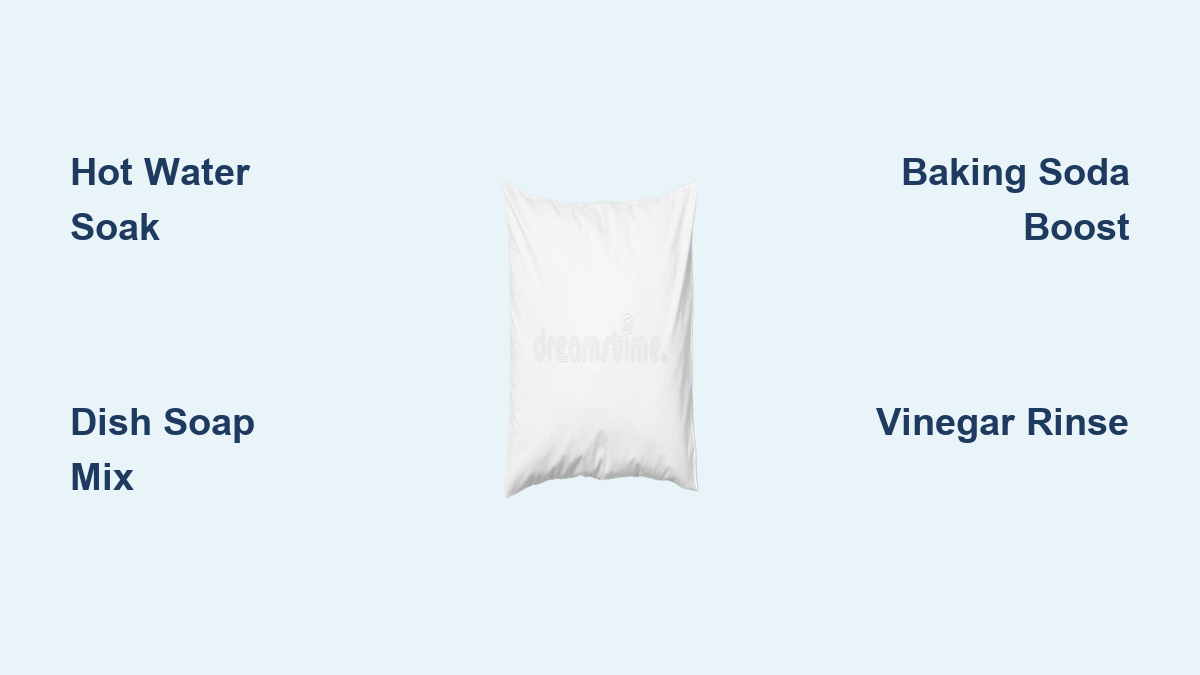
Fill your sink or bathtub with very hot water, around 140°F (60°C), as hot as your hands can tolerate. Heat is essential for melting body oils and sebum trapped in the fibers. Then add:
- ¼ cup Dawn Original dish detergent (or equivalent like Fairy or Sunlight)
- 1 cup baking soda
Swirl the water vigorously until the baking soda dissolves completely. Undissolved granules can scratch delicate fabrics.
Scrub Fabric Against Itself
Submerge the pillowcase and grab two sections of the fabric. Rub them together vigorously for 30 to 60 seconds. This self-scrubbing action creates friction that loosens grime from fibers. Move across the entire surface, focusing on stained or stiff areas. You’ll likely see cloudy residue in the water, which is the oil lifting out.
Soak for 1 to 2 Hours (or Overnight)
Drain the soapy water and refill with fresh very hot water. Add a few drops of dish soap to maintain cleaning power. Submerge the scrubbed pillowcase and let it soak:
- Minimum: 1 hour
- Severe buildup: Overnight (up to 8 to 12 hours)
Avoid exceeding 24 hours, as prolonged soaking can weaken fibers.
Rinse and Machine Wash
Remove the pillowcase and rinse under hot running water until the water runs clear. Any lingering soap or grease must be flushed out.
Then place it in the washing machine:
- Cycle: Hot water wash
- Detergent: Regular laundry detergent
- Add to rinse cycle: 2 cups white vinegar (critical for removing greasy residue and odors)
- Do not use: Fabric softener or dryer sheets
Select an extra rinse cycle to ensure all residues are gone.
Try Alternative DIY Stripping Methods
Not all pillowcases need the full deep clean. Choose a method based on fabric type, stain severity, and sensitivity.
Baking Soda and Vinegar Soak
Best for routine maintenance, not heavy buildup.
- Fill a basin with hot water.
- Add ½ cup baking soda and stir until dissolved.
- Soak pillowcases for 30 to 60 minutes.
- Rinse, then wash normally with vinegar in the rinse cycle.
This combo lacks the degreasing power of dish soap for oily stains.
Lemon Juice Soak
Ideal for brightening and mild stain removal.
- Mix ¼ cup lemon juice with 2 quarts hot water in a basin.
- Soak pillowcases for 30 to 60 minutes.
- Wash as usual.
Spot test first. Avoid on silk, satin, or colored fabrics. Does not kill dust mites or bacteria.
Hydrogen Peroxide Soak
Best for whitening white cotton.
- Mix equal parts 3% hydrogen peroxide and cold water.
- Soak for 30 minutes max.
- Rinse thoroughly and launder.
Can weaken fibers or cause yellowing in synthetics if overused. Never use on silk or colored fabrics.
Salt Water Soak
A gentle option for light stains and color-safe cleaning.
- Dissolve ½ cup salt in a basin of cold water.
- Soak for several hours or overnight.
- Rinse and wash normally.
Salt lifts stains but does not disinfect. Bacteria and allergens may remain.
Bobby Berk-Style 24-Hour Strip
For white cotton or linen only, too harsh for delicates.
- Fill a tub with the hottest water possible.
- Add ¼ cup baking soda, ¼ cup borax, and 2 cups liquid laundry detergent.
- Submerge pillowcases and soak for 24 hours.
- Squeeze out water, then run through a rinse-only wash cycle with no detergent.
Borax boosts cleaning power but avoid on silk, wool, or embellished fabrics.
Pre-Treat Specific Stains Before Stripping
:max_bytes(150000):strip_icc()/Baking-soda-and-stain-pre-treating-1901052_color-cdebdc6d60c648ada0099397a0253055.jpg)
Pre-treating stains improves results during the stripping process.
Remove Sweat Stains
Sweat contains proteins that yellow fabric and degrade fibers.
- Blot fresh stains with a dry cloth.
- Make a paste of equal parts baking soda and water.
- Apply to stain, gently scrub, and let sit 30 minutes.
- Rinse with cool water. Never use hot water, as it sets the protein.
- Wash in lukewarm water.
Break Down Makeup and Oils
Oily residues from lotions, moisturizers, and makeup resist standard detergents.
- Sprinkle baking soda directly on the stain.
- Gently rub with fingers or a soft brush.
- Let sit 15 minutes, then proceed with the Deep Clean method using hot water and dish soap.
Follow Fabric-Specific Strip Guidelines
Not all pillowcases can handle aggressive cleaning. Always check the care label.
Cotton Pillowcases
- Safe for hot water, dish soap, baking soda, oxygen bleach, and vinegar
- Recommended: Deep Clean method
- Drying: High heat is acceptable, but air drying preserves fibers
Silk and Satin
- Avoid hot water, scrubbing, bleach, peroxide, and vinegar
- Hand wash in cool water with mild, non-fragranced detergent
- Spot test any cleaner on an inside seam first
- Dry flat, away from sunlight
Bamboo and TENCEL
- Gentle cycle only with cold or warm water
- Use mild, sulfate-free detergent
- Avoid fabric softener
- Air dry or use low heat
Embellished or Decorative Cases
- Often dry clean only
- If hand washing, avoid agitation
- Use borax for spot cleaning, as it wipes off cleanly without damaging beads
Use Vinegar Correctly (And Know When to Avoid It)
Use Vinegar to Remove Grease Residue
After stripping, add 2 cups of white vinegar to the rinse cycle. This step:
- Dissolves leftover oils and soap scum
- Neutralizes odors
- Softens fabric naturally
- Prevents stiffness
Do not mix vinegar with bleach, as this creates toxic fumes.
Avoid Vinegar on Delicates
Skip vinegar on silk, wool, and bamboo (which can degrade fibers over time). For these fabrics, rinse thoroughly with water only.
Prevent Yellowing and Buildup
Stripping fixes the problem. Prevention stops it from returning.
Stop Using Fabric Softener
Fabric softeners and dryer sheets leave a petroleum-based coating on fibers. This layer traps oils, sweat, and makeup, accelerating grime buildup.
Better alternative: Use white vinegar in the rinse cycle to soften without residue.
Wash Pillowcases Weekly
- Minimum: Once a week
- Oily skin or hair? Wash twice weekly
- Use an extra rinse cycle to flush out detergent
Shower Before Bed
Washing your face and body removes oils and products before they transfer to your pillowcase. Even a quick wipe-down helps.
Use a Satin Sleep Cap
A satin-lined cap reduces oil transfer from the scalp, prevents hair breakage, and keeps hair products off linens.
Choose Breathable Fabrics
Opt for bamboo, linen, or lightweight cotton pillowcases. They wick moisture, reduce sweating, and resist odor.
Troubleshoot Common Stripping Problems
Stains Remain After Washing
The stain may have been set by heat or improper pre-treatment.
- Try a paste of hydrogen peroxide and dish soap on the spot.
- Let sit 5 minutes, then rinse with cool water.
- Re-wash in hot water (if fabric allows).
Fabric Feels Stiff
Likely detergent or mineral buildup.
- Run an extra rinse cycle with 1 cup vinegar.
- Avoid fabric softener permanently.
Yellowing Returns Quickly
Ongoing oil transfer or fabric softener use is the likely cause.
- Shower before bed
- Switch to a satin pillowcase or sleep cap
- Wash every 3 to 4 days
- Eliminate fabric softener
Color Fading
Harsh chemicals or hot water on dyes are the usual culprits.
- Use cold water for colored cases
- Avoid hydrogen peroxide, oxygen bleach, and lemon juice
- Wash colors separately with gentle enzyme detergent
Frequently Asked Questions About Stripping Pillowcases
How often should I strip my pillowcases?
Strip every six months, or immediately when yellowing appears. If you have oily skin or hair, consider stripping more frequently to prevent heavy buildup.
Can I use chlorine bleach instead of stripping?
Chlorine bleach is not recommended for oily stains because it can set grease and make discoloration permanent. Stripping with dish soap and baking soda is more effective for oil-based buildup.
Will stripping damage my pillowcases?
When done correctly, stripping is safe for durable fabrics like cotton and linen. However, avoid harsh methods on silk, satin, wool, or embellished fabrics. Always check care labels and spot test when using acidic or whitening agents.
Is vinegar safe for all pillowcase fabrics?
Vinegar works well on cotton and most durable fabrics but should be avoided on silk, wool, and bamboo, as it can degrade these fibers over time. For delicates, rinse with water only.
Why do my pillowcases still smell after washing?
Lingering odors usually indicate trapped body oils, sweat, or detergent residue. A vinegar rinse cycle removes these residues and neutralizes odor-causing bacteria. Make sure you’re using hot water (for cotton) and an extra rinse cycle.
Can I strip pillowcases with colored patterns?
Use gentle methods like salt water or a baking soda soak for colored cases. Avoid hydrogen peroxide, oxygen bleach, and lemon juice, which can cause fading. Always spot test on an inside seam first.
Key Takeaways for Stripping Pillowcases
Stripping pillowcases goes beyond appearance; it’s about hygiene. The invisible buildup of oils, sweat, and allergens can affect skin health and sleep quality. The Deep Clean method with hot water, dish soap, and baking soda remains the most effective approach for tackling heavy buildup, while alternative methods work for lighter maintenance. Pair your deep clean with smart prevention habits: skip fabric softener, wash weekly, and shower before bed.
Next step: Pick the method that matches your fabric type and stain severity, gather your supplies, and give your pillowcases the deep clean they’ve been missing. Your skin, hair, and sleep quality will thank you.