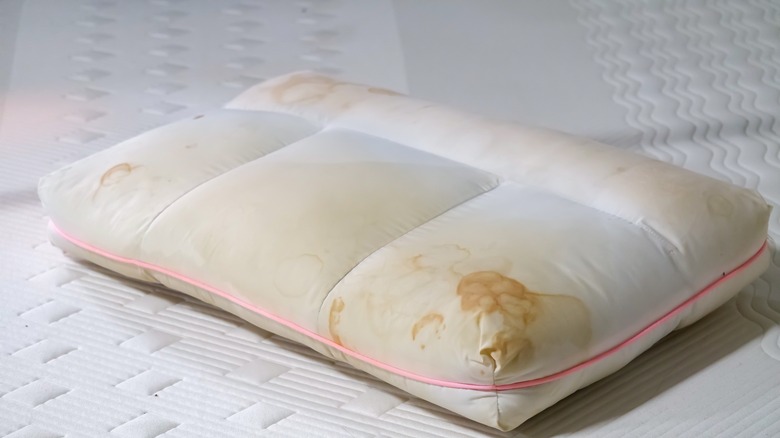
How to Wash a Yellow Pillow Clean
If you’ve pulled back your pillowcase to find a yellowed, dingy pillow, you’re dealing with one of the most common household cleaning challenges. How to wash a yellow pillow is a frequent search for good reason. Over time, sweat, skin oils, saliva, and dead skin cells seep through fabric, causing stubborn discoloration and odors that soap alone won’t fix.
This guide provides step-by-step methods for restoring yellowed pillows based on your pillow type. You’ll learn safe cleaning techniques for synthetic, down, and memory foam pillows, plus how to prevent future staining and know when it’s time for replacement.
Check the Care Label Before Washing
Always inspect the manufacturer’s tag on your pillow before any cleaning attempt. This small label contains critical information that prevents irreversible damage.
Look for these key symbols and instructions. “Machine Washable” means full washing is safe. “Spot Clean Only” indicates delicate or non-absorbent fill like memory foam. “Do Not Bleach” is common on down or silk-blend pillows. “Tumble Dry Low” guides your drying settings.
Warning: Never machine wash solid memory foam or latex pillows. They absorb water like a sponge and can develop mold internally. Spot cleaning is your only option for these materials.
Identify Your Pillow Type
Knowing your pillow’s fill material determines which cleaning method is safe and effective.
| Pillow Type | Machine Washable | Dryer Safe | Best Cleaning Method |
|---|---|---|---|
| Polyester fiberfill | Yes | Yes (medium heat) | Full wash with bleach soak |
| Down/feather | Yes (cautious) | Yes (low heat) | Oxygen bleach soak |
| Solid memory foam | No | No | Spot clean only |
| Solid latex | No | No | Surface wipe only |
| Shredded foam | Sometimes | Check label | Varies by product |
If you’re unsure about your pillow type, assume it cannot be machine washed. Spot cleaning is the safer choice that prevents permanent damage.
Pre-Treat Stubborn Yellow Stains
For visible yellow spots, pre-treatment significantly improves your chances of full restoration.
Three Effective Pre-Treatment Options
Hydrogen Peroxide (3%) works as a gentle oxidizing agent. Spray fresh peroxide directly on stained areas and let it sit for 30 minutes before washing. Check the expiration date because degraded solution loses cleaning power.
Enzyme-Based Stain Remover targets protein and fat-based soils. Apply products like OxiClean MaxForce or Shout directly to stains. Allow 15 to 30 minutes dwell time for enzymes to break down sweat, oil, and saliva residues.
Baking Soda Paste provides gentle abrasion for localized stains. Mix two parts baking soda with one part water. Apply the paste to stained areas, gently scrub with a soft brush, and wipe clean before washing.
Pro Tip: Always test any pre-treatment on a small, hidden area first to ensure it doesn’t damage or discolor the fabric.
Wash Two Pillows Together for Balance
Balancing your washing machine is essential for effective cleaning and machine longevity.
Washing a single pillow causes excessive vibration that damages your washer and leaves pillows unevenly cleaned. Always wash two pillows together, or add two to three clean towels if you’re only cleaning one pillow.
This approach prevents machine imbalance, ensures even cleaning, and reduces wear on your appliance.
Vinegar and Detergent Wash for Mild Yellowing
This method works best for routine cleaning or slightly discolored synthetic pillows.
Gather these supplies. You need half a cup of white vinegar, standard dose of HE-compatible detergent, and access to a bulky cycle setting.
Load two pillows into the machine. Add vinegar to the fabric softener dispenser or directly into the drum. Add detergent, reducing the amount by 25 percent to prevent residue buildup.
Select warm water, the bulky or bedding cycle, and enable the extra rinse option. Run an additional spin cycle to remove excess water before drying.
This treatment removes mild stains, neutralizes odors, and softens fibers. Users report approximately 85 percent improvement in brightness for mild cases.
Deep Bleach Soak for Severe Stains
Heavily yellowed synthetic or down pillows require a more intensive approach.
Create this powerful cleaning solution. Mix one cup laundry detergent, one cup powdered dishwasher detergent, one cup chlorine bleach or bleach alternative, and half a cup of borax. Dishwasher detergent’s high alkalinity effectively breaks down grease and body oils.
Fill your washer tub or a bathtub with hot water. Dissolve all ingredients completely. Submerge pillows fully, pressing out any air pockets. Soak for one to eight hours, with overnight producing the best results for extreme staining.
Run a hot wash cycle with no additives afterward. Use the extra rinse option to remove all chemical residue.
Safety Warning: Never mix bleach with vinegar or ammonia. This combination produces toxic chloramine gas. Work in a well-ventilated area and wear gloves.
This method removes 90 to 95 percent of yellowing in synthetic and down pillows after one treatment.
Oxygen Bleach Soak for Delicate Pillows

Down, feather, and silk-blend pillows require gentler treatment. Oxygen bleach provides effective whitening without damaging delicate fibers.
Fill a bathtub with warm water. Add oxygen bleach per product instructions, typically half to one scoop per gallon. Submerge pillows completely and soak for four to eight hours or overnight.
Gently squeeze out excess water without wringing. Wash on warm cycle using enzyme detergent. Enable extra rinse to remove all residue.
Oxygen bleach releases hydrogen peroxide in water, lifting stains safely. Users achieve gradual whitening over one to two treatments, making this ideal for sensitive fills.
Spot Clean Memory Foam Pillows
Solid memory foam cannot be submerged. Water retention leads to mold and structural breakdown.
Remove the cover if washable and clean it separately. Mix one part white vinegar with two parts water, or one teaspoon mild dish soap in one cup warm water.
Dampen a microfiber cloth with the solution. Never soak the foam. Gently dab and rub stained areas. Blot with a dry towel to absorb moisture.
Air-dry completely in a well-ventilated area. Use fans to increase airflow and rotate every few hours. Avoid direct sunlight, which can degrade foam.
Drying Time: Memory foam may take 24 to 48 hours to dry fully. Test for moisture by pressing the center of the pillow.
Dry Pillows Thoroughly
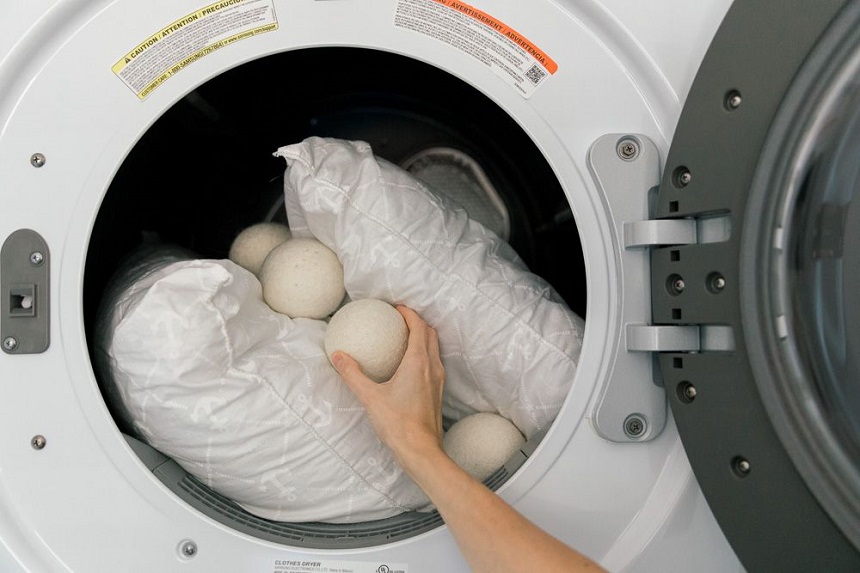
Improper drying causes mold, odors, and clumping. This is the number one cause of post-wash problems.
| Pillow Type | Dryer Safe | Heat Setting | Key Tips |
|---|---|---|---|
| Down/feather | Yes | Low heat | Add dryer balls; fluff every 30 minutes |
| Synthetic | Yes | Medium heat | Use balls to restore loft |
| Shredded foam | Limited | Low heat or air-dry | Ensure complete dryness |
| Memory foam | No | Air-dry only | Never machine dry |
| Latex | No | Air-dry only | Avoid sun exposure |
Add two to three wool dryer balls or clean tennis balls to fluff pillows and break up clumps. Pause the dryer every 20 to 30 minutes to manually fluff and reposition.
Test dryness by pressing the center. If it feels cool or damp, continue drying. Any remaining moisture leads to mold.
Alternative: Air-dry in indirect sunlight. UV rays naturally disinfect and help fade remaining stains.
Prevent Future Yellowing
Cleaning addresses existing stains, but prevention keeps pillows fresh longer and reduces how often you need to wash them.
Use these key strategies. Wash pillowcases weekly in hot water to remove surface oils before they penetrate. Use zippered pillow protectors made of breathable materials like TENCEL or cotton-poly blends. Shower before bed to minimize residue transfer. Avoid bedtime lotions or hair products. Air out pillows daily by propping them upright. Rotate pillows weekly to distribute wear evenly.
Reminder: Set calendar reminders every six months. The “spring forward, fall back” time change is a perfect cue to wash your pillows.
Know When to Replace Your Pillow
Even with perfect cleaning, pillows degrade over time and require replacement.
Replace pillows every one to two years because fill loses loft and support, allergens accumulate permanently, stains become irreversible, and cleaning effectiveness diminishes.
Watch for these signs. Lumps or flat spots indicate broken fill. Musty smell returning after washing suggests embedded contamination. Neck pain or poor sleep quality signals lost support. Immediate re-yellowing means the material is permanently saturated.
Expert Insight: The average pillow harbors thousands of dust mites and grams of dead skin after two years. Replacement is a hygiene necessity, not just a comfort choice.
Recommended Cleaning Products
Use these trusted supplies for optimal results.
| Product | Purpose | Price Range |
|---|---|---|
| OxiClean White Revive | Oxygen bleach soak | $10–$12 |
| OxiClean MaxForce | Spot treatment | $6–$8 |
| Hydrogen Peroxide (3%) | Pre-treatment | $2–$4 |
| Wool Dryer Balls (6-pack) | Fluffing, faster drying | $12–$18 |
| All Free & Clear Detergent | Residue-free wash | $15–$20 |
| Clorox Bleach | Deep whitening | $3–$5 |
| White Vinegar | Natural deodorizer | $2–$4 |
Wool dryer balls last up to 1,000 loads and reduce drying time by 20 to 30 percent.
Frequently Asked Questions About Washing Yellow Pillows
Can I wash a yellowed pillow in the washing machine?
It depends on the pillow type. Polyester and down pillows are machine washable. Memory foam and latex pillows are not. Always check the care label first. Never submerge memory foam or latex in water.
How do I get yellow stains out of my pillow?
Pre-treat with hydrogen peroxide, enzyme stain remover, or baking soda paste. Then soak in oxygen bleach for four to eight hours for delicate fills, or use a detergent plus bleach solution for synthetic pillows. Wash thoroughly and dry completely.
Why do pillows turn yellow?
Pillows yellow from accumulated sweat, skin oils, saliva, and dead skin cells. These substances penetrate the fabric, oxidize over time, and create persistent discoloration. Even people with excellent hygiene experience yellowing.
How often should I wash my pillows?
Wash pillows every six months for hygiene and appearance. People who sweat heavily at night or have allergies should wash every three to four months. Weekly pillowcase changes help prevent stains from becoming embedded.
Can I use chlorine bleach on all pillows?
No. Chlorine bleach damages down, feather, and silk fills. Use oxygen bleach instead for delicate materials. Chlorine bleach is safe only for synthetic polyester pillows that don’t have protein-based fills.
How long does it take to dry a pillow after washing?
Drying time varies by material. Synthetic pillows take one to two hours in the dryer. Down pillows take two to three hours. Memory foam takes 24 to 48 hours air-drying. Always ensure complete dryness to prevent mold.
Key Takeaways for Washing Yellow Pillows
Yellow pillow stains result from normal sleep physiology, not poor hygiene. Sweat, oils, and skin cells accumulate over time and oxidize, creating discoloration that responds well to proper cleaning.
Choose your method based on pillow material. Polyester responds to vinegar washes or bleach soaks. Down and delicate fills require oxygen bleach. Memory foam only allows spot cleaning. Always check the care label first to avoid permanent damage.
Prevention matters more than cleaning. Weekly pillowcase washing, zippered protectors, and daily air-out sessions dramatically slow yellowing. However, replacement every one to two years remains necessary regardless of cleaning frequency.
With the right approach, most yellowed pillows can be restored to near-new condition. However, cleaning has limits. Eventually, replacement becomes the only solution for truly clean, supportive sleep.