How to Use a Body Pillow for Hip Pain
Hip pain can ruin your nights and drain your days, especially when poor sleep posture is the hidden cause. If you wake up stiff, sore, or struggling to find a comfortable position, your pillow setup might be working against you. Learning how to use a body pillow for hip pain transforms your sleep into a therapeutic tool that supports healing rather than hindering it.
This guide breaks down the exact positions, shapes, and materials that deliver real relief. You’ll discover how to align your spine, reduce joint pressure, and finally sleep through the night without waking up aching.
Best Sleeping Positions with a Body Pillow

Your sleep posture controls how much stress your hips absorb overnight. The right body pillow setup keeps your spine neutral, your pelvis level, and your joints decompressed. Here’s how to position yourself based on your preferred style.
Side Sleeping: Align Hips and Prevent Rotation
Side sleeping is the most popular position for hip pain sufferers, but only when supported properly. Without a pillow between your legs, your top knee drops and drags your hip forward, twisting your spine and straining the joint.
Proper Technique:
1. Lie on your non-painful side to avoid direct pressure on the sore hip.
2. Place the body pillow vertically between your knees and thighs, extending from hip to ankle.
3. Hug the front of the pillow with your arms to stabilize your upper body.
4. Keep your spine straight from head to ankles in a neutral line.
5. Add a small pillow behind your lower back to prevent rolling during the night.
Pro Tip: If you dislike pressure between your knees, try the leg-alongside method. Rest your bottom leg flat against the pillow while hugging the front. This stabilizes your torso without inter-knee pressure.
Back Sleeping: Support Knees and Lumbar Curve
Back sleeping evenly distributes weight and minimizes hip strain, making it ideal when side sleeping worsens your discomfort.
Proper Technique:
1. Place the body pillow under your knees with a slight bend.
2. Maintain your lower back’s natural curve with no gap between spine and mattress.
3. Position the pillow diagonally behind your hips for extra cushioning.
4. Rest your arms at your sides or on the pillow to release shoulder tension.
Warning: Avoid straight-leg back sleeping. It overextends your lower back and increases hip strain.
Positions to Avoid
Some sleep postures worsen hip pain regardless of pillow quality.
Stomach Sleeping forces your pelvis into an anterior tilt, compressing hip joints and over-arching your lower back. This increases inflammation and morning stiffness. Use a body pillow as a barrier under your hips to discourage rolling onto your stomach.
Sleeping on the Painful Hip delays healing and intensifies pain, especially with bursitis or post-surgical swelling. Always sleep on the unaffected side and use a long body pillow to block accidental rolling.
Choose the Right Body Pillow Shape

Pillow shape directly impacts alignment, comfort, and long-term relief. Each design serves different needs.
C-Shape: Full-Body Spinal Support
The C-shaped pillow curves around your body, supporting head, back, hips, and legs in one continuous line.
Best For:
– Side sleepers with sciatica or post-hip surgery
– Users who need arm support through built-in arm tunnels
How to Use:
– Slide into the curve with the open end between your knees.
– Hug the front arm while the back arm supports your spine.
– The arm tunnel prevents shoulder collapse and rotator cuff strain.
U-Shape: Maximum Stability and No Rolling
The U-shaped pillow surrounds your body with support on both sides.
Best For:
– Frequent turners
– Pregnant individuals needing belly and back support
– Those recovering from hip replacement
How to Use:
– Position the gap at your waist.
– Hug one arm while the other supports your back.
– Keep knees resting inside the curve for all-night alignment.
I-Shape (Straight): Customizable and Versatile
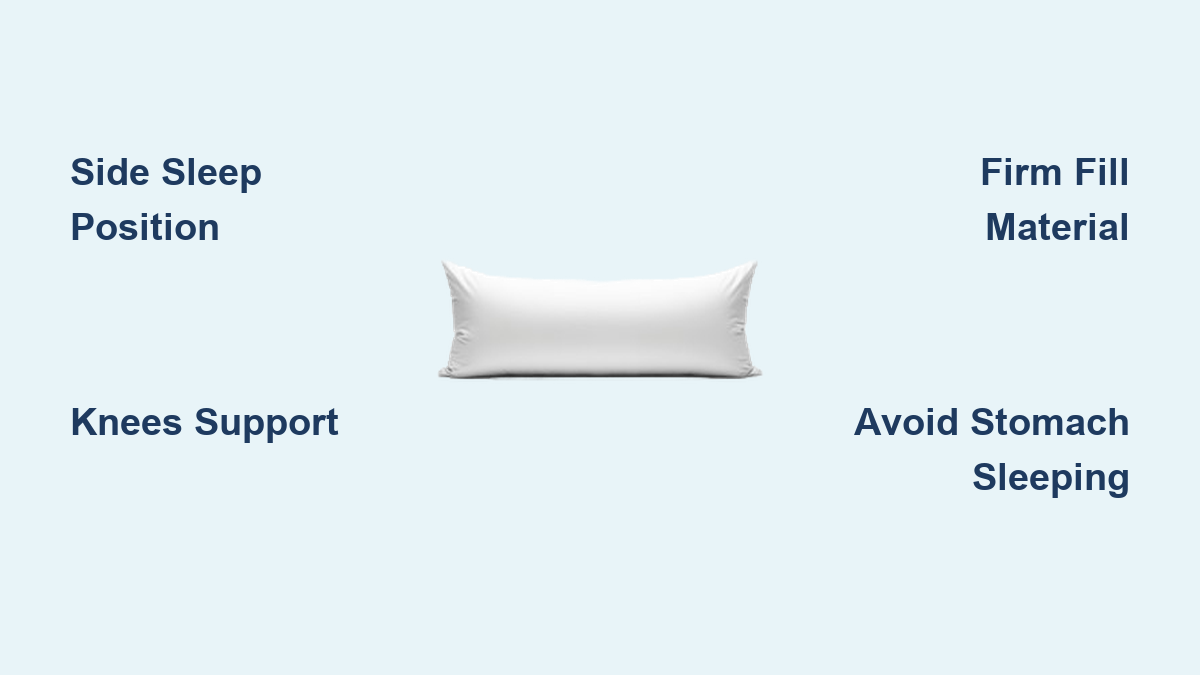
The long, straight body pillow (48 to 72 inches) offers flexible placement options.
Best For:
– Back sleepers using it under the knees
– Side sleepers wanting control over support zones
– Budget-conscious users
How to Use:
– Fold it in half for dual knee and torso support.
– Place it vertically between legs or diagonally behind your back.
– Use one end to hug and the other to support lower limbs.
J-Shape: Neck and Spine Alignment Focus
The J-shaped pillow features a looped top that cradles your head and a long tail running down your body.
Best For:
– Chronic back pain sufferers
– People with cervical spine issues affecting hip mechanics
How to Use:
– Rest your head in the loop with ears aligned with shoulders.
– Let the tail run along your spine and between your knees.
– Hug the curve to stabilize your core.
Pick the Best Fill and Material for Pain Relief
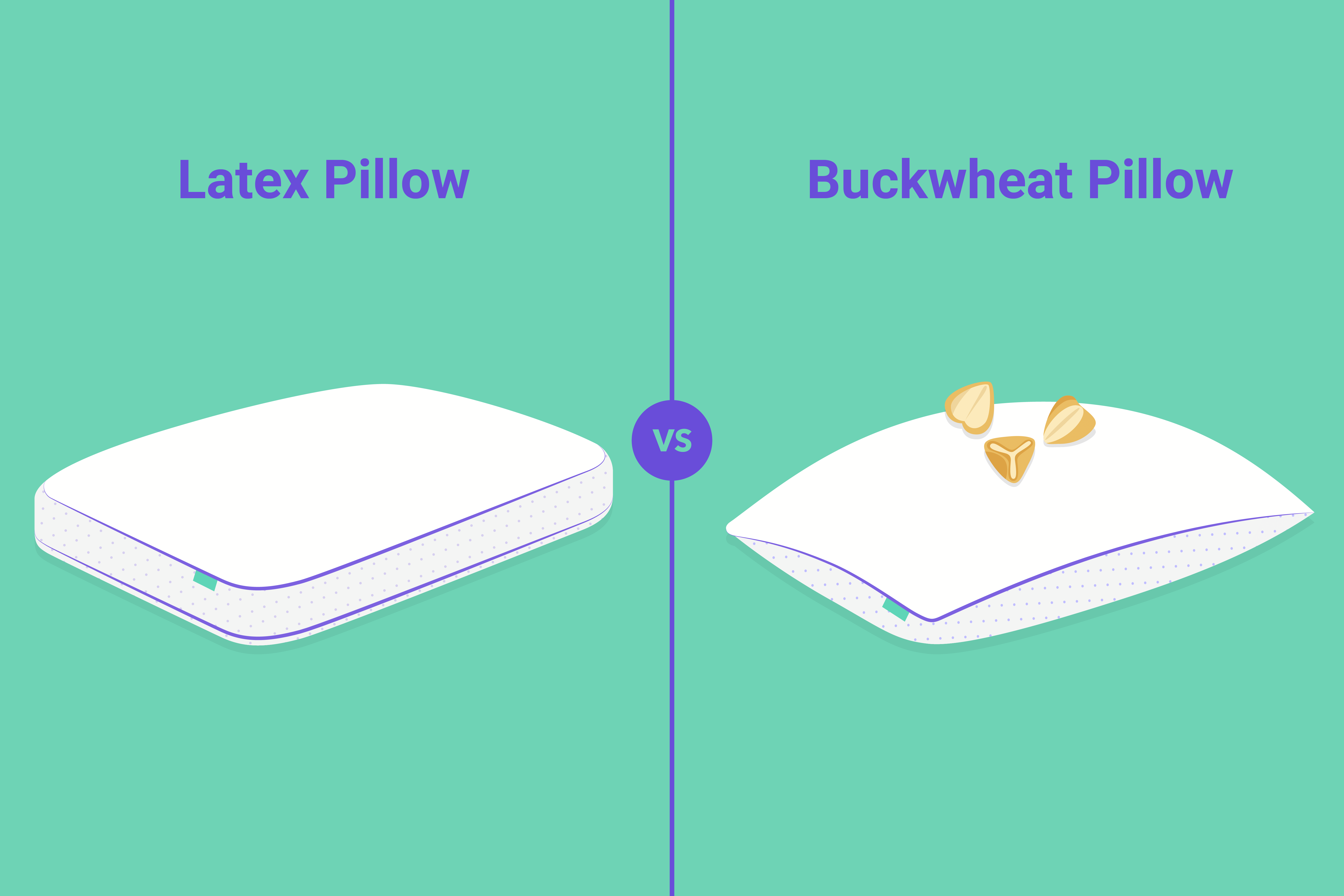
The pillow’s interior determines how well it maintains alignment throughout the night. Soft fills collapse; firm ones hold their shape.
Firm Memory Foam: Maximum Structural Support
High-density memory foam molds to your body and resists compression.
Pros:
– Keeps knees separated and hips level
– Maintains shape for years
– Ideal for post-surgical recovery
Cons:
– Can trap heat
– May off-gas (choose eco-certified options)
Upgrade: Look for cooling gel-infused foam to prevent overheating.
Latex (GOLS Certified): Natural and Responsive
Natural latex offers firm, bouncy support without the sinking feel of memory foam.
Pros:
– Breathable, hypoallergenic, and durable
– Free from chemical flame retardants
– Supports heavy legs without flattening
Best For: Hot sleepers and eco-conscious users.
Buckwheat Hulls: Adjustable and Immovable
Buckwheat pillows are heavy but stay firmly in place under pressure.
Pros:
– Provides unyielding support for severe misalignment
– Moldable to your exact needs
– Naturally cooling
Downside: Rustling noise and heavier weight make these best for C-shaped pillows where stability matters most.
Down and Down Alternatives: Soft but Less Supportive
These fills feel luxurious but often lack the resistance needed for hip pain.
Use Only If:
– Pain is mild
– You layer it with a firmer insert
– You have allergies (choose hypoallergenic synthetics)
Cover Matters: Choose breathable, washable materials like organic cotton (GOTS certified), Tencel, or bamboo for temperature control and hygiene.
Conditions That Benefit from Body Pillow Use
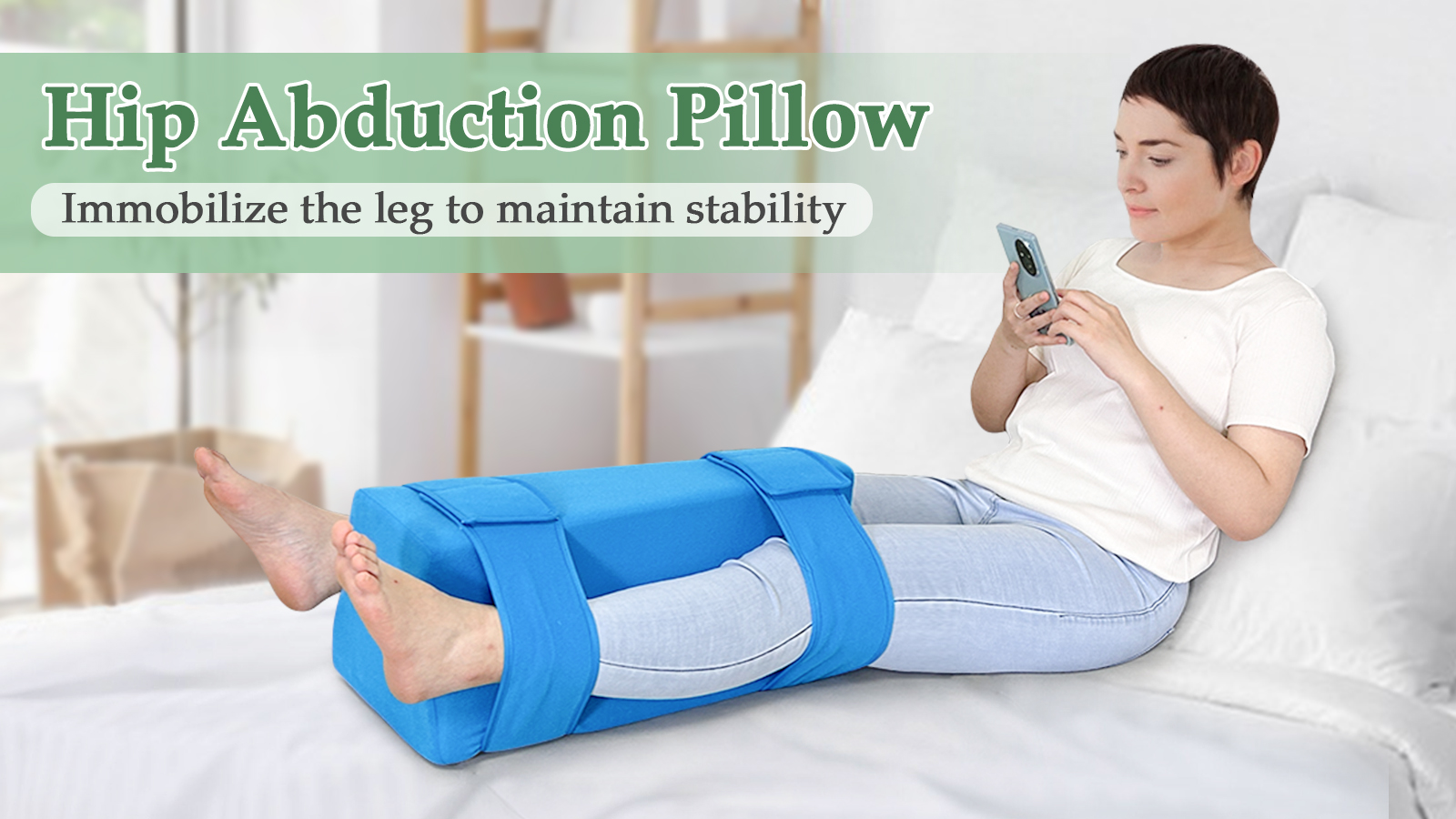
A body pillow serves as a targeted intervention for specific hip and spine conditions.
Hip Osteoarthritis: Reduce Joint Pressure
Worn cartilage causes bones to rub together, creating nighttime aching. A body pillow prevents hip adduction (knees collapsing together), reduces friction by keeping joints spaced, and supports restful sleep that lowers inflammation.
Use: C-shape or firm I-shape between knees while side sleeping.
Sciatica and Piriformis Syndrome: Relieve Nerve Compression
Tight piriformis muscles compress the sciatic nerve, causing radiating pain. A body pillow keeps hips neutral, reduces piriformis tension, prevents leg rotation that pinches the nerve, and encourages side sleeping to decompress the spine.
Use: U-shape or C-shape to lock in alignment all night.
Hip Dysplasia: Stabilize the Joint
A shallow hip socket leads to instability and pain. A body pillow acts as external support to limit micro-movements, prevents dislocation risk during sleep, and reduces strain on ligaments.
Use: Full-length I-shape or U-shape for 360-degree support.
Post-Surgical Recovery: Protect Healing Tissues
After hip replacement or labral repair, maintaining position is critical. A body pillow prevents crossing legs or rolling onto the surgical side, elevates limbs to reduce swelling, and provides a safe alternative to physical contact that might strain incisions.
Use: Hospital-grade wedge or C-shape with arm tunnel.
Boost Results with Complementary Strategies

A body pillow works best as part of a holistic pain management plan.
Pair with a Medium-Firm Mattress
Even the best pillow fails on a poor mattress. A medium-firm surface supports hips without creating pressure points. Too soft causes hips to sink and spine to twist; too firm builds pressure on hip bones.
Fix: Add a 2 to 3 inch latex or memory foam topper to adjust firmness without replacing the bed.
Do Pre-Bed Stretches
Loosen tight muscles before sleep to reduce nighttime tension.
Effective Stretch: Knee-to-Chest (Single Leg)
1. Lie on your back.
2. Gently pull one knee toward your chest.
3. Hold for 30 seconds and feel the stretch in your glutes and hip.
4. Switch sides.
This releases the piriformis and hip flexors, preventing cramping and sciatica flare-ups.
Optimize Your Sleep Environment
Pain perception increases when you’re hot, stressed, or in a disruptive space.
Key Upgrades:
– Cool room (65 to 68°F): Reduces inflammation and night sweats
– Blackout curtains: Supports melatonin production
– White noise machine: Prevents micro-awakenings that disrupt healing sleep
Maintain Your Pillow for Long-Term Relief
A dirty or sagging pillow loses its therapeutic value.
Clean Regularly
- Wash the cover every 1 to 2 weeks (more often post-surgery or during pregnancy)
- Spot clean the insert with mild detergent as needed
- Air out monthly to prevent mustiness
Never soak memory foam or latex. Water damages their structure.
Replace When Support Fails
Watch for these warning signs:
– Knees touch when lying down
– Pillow stays flattened after use
– You wake with more pain than before
Lifespan: 2 to 5 years (longest for latex and high-density foam).
Frequently Asked Questions About Body Pillows for Hip Pain
What type of body pillow is best for hip pain?
Firm memory foam, latex, or buckwheat-filled C-shaped or I-shaped pillows work best for hip pain. These materials maintain structural support throughout the night, keeping your hips level and preventing the collapse that worsens alignment.
Where do you put a body pillow when sleeping on your side?
Place the pillow vertically between your knees and thighs, extending from hip to ankle. Hug the front portion with your arms to stabilize your torso and prevent rolling. This stops your top leg from dragging your hip forward.
Can a body pillow help with sciatica?
Yes. A body pillow keeps your hips in a neutral position, reducing tension in the piriformis muscle that often compresses the sciatic nerve. Side sleeping with proper knee support decompresses the spine and prevents the leg rotation that triggers nerve pain.
How firm should a body pillow be for hip pain?
Medium-firm to firm is ideal. Soft pillows collapse under the weight of your leg, failing to maintain the hip separation needed for proper alignment. Firm fills like memory foam, latex, or buckwheat provide the resistance necessary for therapeutic support.
Is it bad to sleep on your stomach with hip pain?
Yes. Stomach sleeping forces your pelvis into an anterior tilt, compressing hip joints and over-arching your lower back. This position increases inflammation and morning stiffness. Use a body pillow as a barrier to discourage rolling onto your stomach.
How long does a body pillow last for hip pain relief?
A quality body pillow lasts 2 to 5 years. Latex and high-density memory foam offer the longest durability. Replace your pillow when it no longer holds its shape, allows your knees to touch, or fails to reduce morning pain.
Key Takeaways for Using a Body Pillow to Relieve Hip Pain
Using a body pillow for hip pain comes down to three essentials: proper positioning, the right shape, and adequate firmness. Side sleepers need a pillow between their knees to prevent hip rotation. Back sleepers need support under their knees to maintain the lumbar curve. Stomach sleeping and direct pressure on the painful hip should always be avoided.
Choose a C-shape for full spinal cradling, a U-shape for stability if you toss and turn, or a firm I-shape for versatile placement. Pair your pillow with a medium-firm mattress and pre-bed stretches to maximize relief.
Start tonight by positioning your pillow correctly, aligning your body from head to ankle, and giving yourself a week to adjust. Consistent use is what transforms a body pillow from a comfort item into genuine therapeutic support.