How to Use a Wedge Pillow for Snoring
Snoring disrupts millions of bedrooms every night, leaving both snorers and their partners exhausted. While occasional snoring is harmless, chronic snoring often points to airway collapse during sleep, where gravity pulls the tongue and soft tissues backward into the throat. A wedge pillow tackles this problem by tilting your upper body so gravity works with you instead of against you, keeping your airway open and your breathing quiet.
Success with a wedge pillow depends almost entirely on how you use it. Placing it under your head alone can actually worsen snoring by bending your neck forward. The real benefit comes from elevating your entire torso at the right angle with proper alignment. This guide walks you through selecting, positioning, and adapting to a wedge pillow so you can finally enjoy quieter, more restful sleep.
Choose the Right Wedge Pillow for Snoring Relief
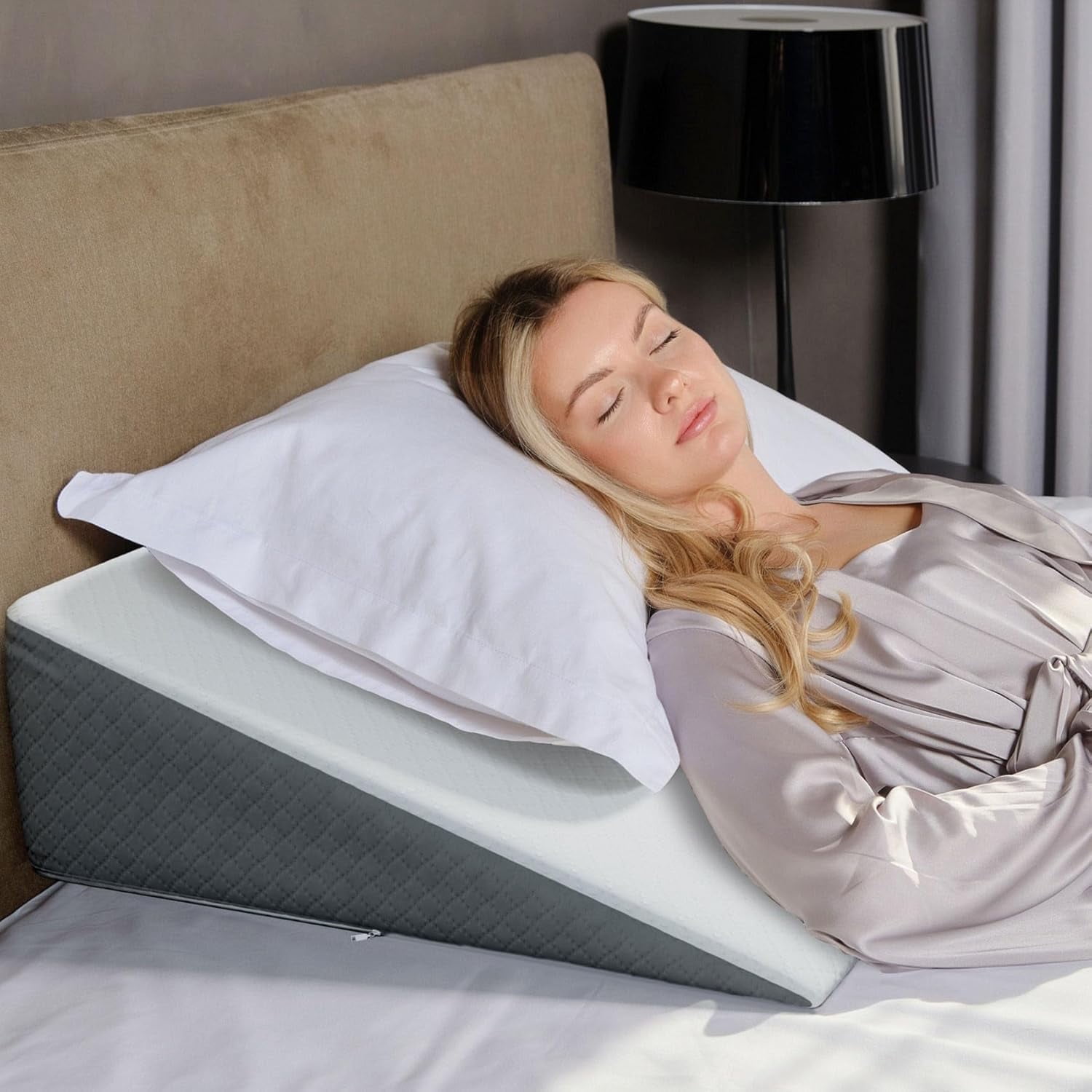
Not every wedge pillow works for snoring. The wrong size, angle, or material can leave you uncomfortable and still snoring. Here’s what to look for.
Optimal Incline Angle
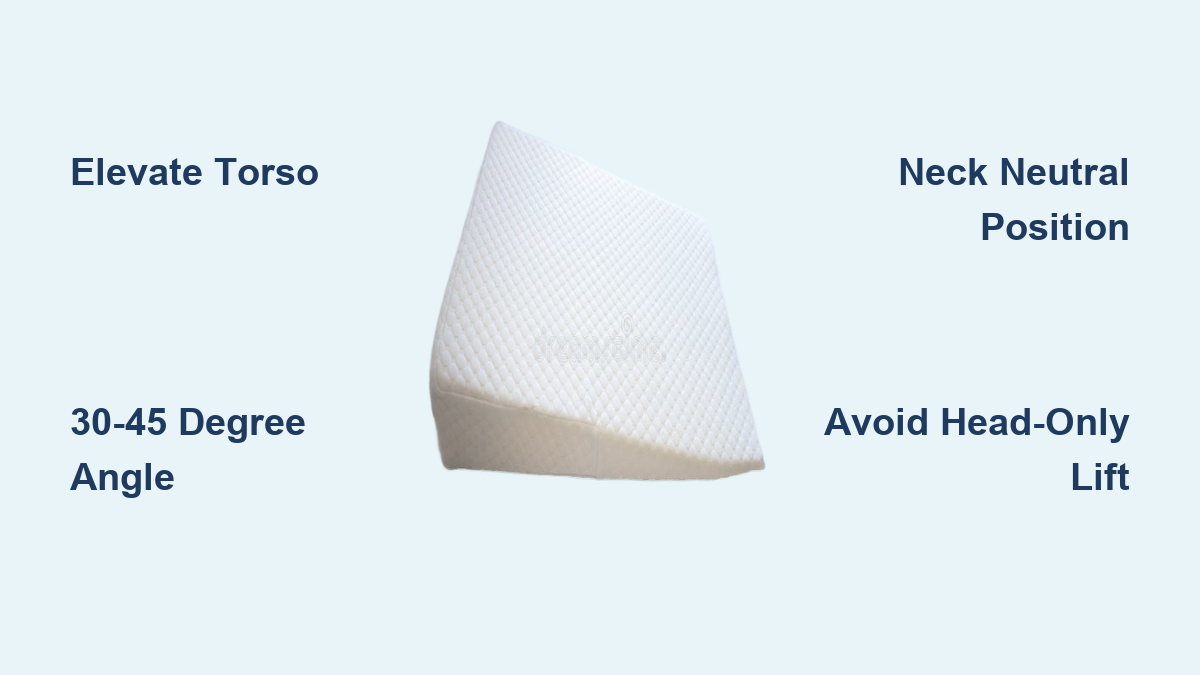
The sweet spot for snoring reduction is 30 to 45 degrees. At this range, gravity shifts downward along your torso rather than pulling throat tissues backward into your airway. Research shows that inclines below 7.5 degrees do little to open the airway, while angles steeper than 45 degrees often cause sliding and back strain. A 30–45° slope strikes the ideal balance between effectiveness and comfort.
Height, Width, and Length Specifications
- Height: Aim for 8 to 12 inches at the thickest point. A 7-inch wedge may help with acid reflux but usually lacks the lift needed for snoring.
- Width: Choose at least 24 inches so your shoulders stay fully supported and you won’t roll off.
- Length: The wedge must extend from your mid-back or waist up to your head. Short wedges that only lift the head are ineffective for snoring.
Foam Density and Cover Quality
- High-density memory foam holds its shape and keeps the incline consistent all night. Low-density foam flattens under your weight.
- Gel-infused or latex foam sleeps cooler, which helps if you tend to overheat.
- Removable, washable covers keep things hygienic. A non-slip bottom helps the wedge stay put on your mattress.
Position the Wedge Pillow Correctly

Even the best wedge pillow fails if you set it up wrong. Proper placement keeps your airway open and your spine aligned.
Place It Directly on the Mattress
Set the wedge flat on your bed with the thick edge pressed against the headboard or wall. If your mattress is slick, tuck the bottom edge slightly underneath or use a deep-pocket fitted sheet to anchor it.
Elevate Your Entire Upper Torso
Lie down so the wedge supports you from the waist or lower ribs up to your head. Your hips should rest on the mattress, not float above it. This full-torso lift prevents the “kinked” airway that happens when only your head is raised.
Warning: Never stack regular pillows or place the wedge under your head alone. This forces your chin toward your chest and narrows your throat, making snoring worse.
Check Your Neck Alignment
Your neck should sit in a neutral position, not bent forward or tilted back too far. If your chin tucks toward your chest, the incline may be too steep or you may need a thinner pillow on top. If your head falls backward, slide a flat pillow under your neck for support without flattening the angle.
Adapt to Inclined Sleeping
Your body isn’t used to sleeping on a slope, so expect an adjustment period before you feel comfortable.
Give Yourself 1–2 Weeks
Most people need 7 to 14 nights to adapt. Feeling awkward or slightly unstable at first is completely normal. Stick with it through that window before deciding whether it works.
Start Gradually
Try the wedge during naps or for a few hours at night first. Slowly build up to full nights. This eases the transition and helps you stay consistent long-term.
Use Support Pillows for Stability
Place a standard pillow beside you or behind your back. This keeps you from rolling off the wedge and adds comfort while you adjust.
Combine the Wedge with Side Sleeping

Wedge pillows work well for back sleepers, but pairing them with side sleeping can boost results even further.
Turn Slightly to One Side
Instead of lying straight on your back, rotate your body 30 to 45 degrees toward one side. This combines the airway-opening benefits of elevation with the natural advantages of side sleeping.
Avoid Being Forced Onto Your Back
If you’re a committed side sleeper, make sure the wedge doesn’t push you flat onto your back. A wider wedge with a moderate incline lets you maintain your preferred posture without rolling backward.
Know If You’re a Good Candidate

Wedge pillows help certain snorers more than others. Understanding your snoring type sets realistic expectations.
Ideal Users
- Back sleepers whose snoring worsens when lying flat
- Positional snorers who breathe quieter when propped up or reclining
- People with mild obstructive sleep apnea (OSA) or acid reflux (GERD), since elevation helps both
- CPAP users who want extra elevation to lower pressure settings
Limited Benefit Cases
- Severe OSA (AHI above 15): A wedge pillow alone is not enough
- Dedicated side sleepers who get pushed onto their backs
- Anatomical blockages like a deviated septum or enlarged tonsils
- Severe obesity-related snoring, where tissue pressure overwhelms positional gains
Quick test: If your snoring improves when you sleep in a recliner, a wedge pillow will likely help in bed too.
Avoid Common Mistakes
Even with the right pillow, small errors can cancel out the benefits.
Don’t Elevate Only the Head
Raising just the head bends your neck forward and narrows your airway. Always lift the entire upper body from the torso up.
Prevent Sliding Down the Slope
Sliding reduces your elevation and ruins the effect. To stay in place:
- Choose a wedge with a non-slip base
- Start with a 30° incline instead of 45° if sliding is a problem
- Place a textured towel or mat underneath
- Push the wedge firmly against the headboard
Never Replace CPAP Without Doctor Approval
If you’ve been prescribed CPAP for sleep apnea, don’t stop using it in favor of a wedge pillow. The wedge is a helpful add-on, not a substitute. Always talk to your doctor before changing any prescribed treatment.
Don’t Give Up Too Early
Many people quit after one or two uncomfortable nights. Remember that 1–2 weeks is the normal adaptation window. Consistency is what delivers results.
Maximize Long-Term Results
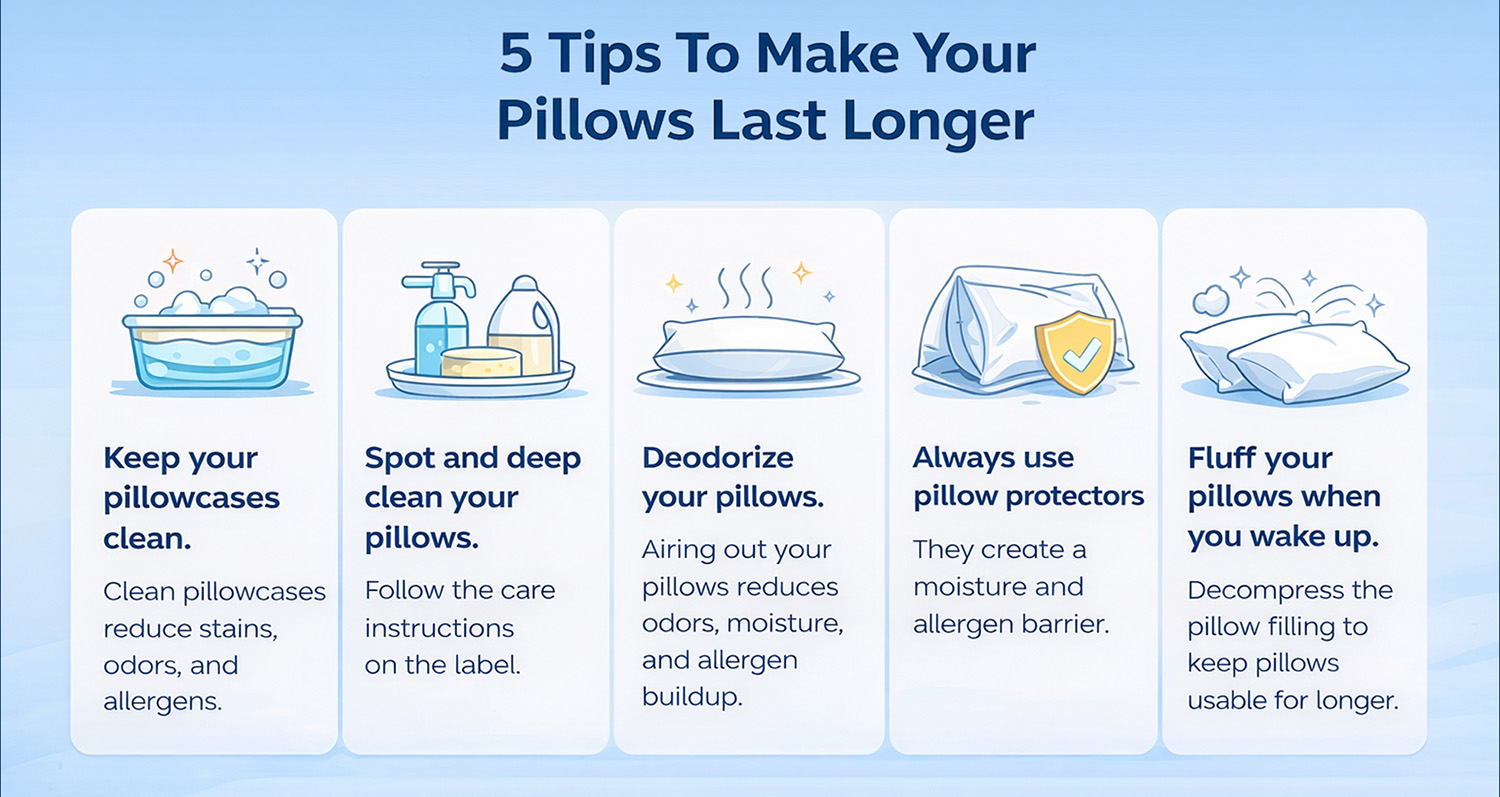
Once you’re comfortable with the wedge, a few simple habits keep it working well.
Clean the Pillow Regularly
Wash the removable cover every 1–2 weeks. Spot-clean the foam with mild soap and water, but never soak it. Let it air dry completely before using it again.
Replace Worn-Out Foam
Foam compresses over time. If the incline feels flatter or the pillow doesn’t bounce back, it’s time for a new one. High-density foam usually lasts 2–3 years with proper care.
Pair with Other Anti-Snoring Habits
For the best outcome, combine wedge use with these habits:
- Avoid alcohol and sedatives before bed
- Maintain a healthy weight
- Use nasal strips or dilators if congestion plays a role
- Stay hydrated to keep mucus thin
Recognize When to See a Doctor
Snoring can sometimes signal a serious condition that a wedge pillow can’t fix.
Watch for Sleep Apnea Warning Signs
Seek medical evaluation if you notice:
- Loud, chronic snoring with gasping or choking
- Witnessed pauses in breathing during sleep
- Excessive daytime fatigue
- Morning headaches or trouble focusing
These could point to obstructive sleep apnea, which needs professional diagnosis and treatment.
Consider a Sleep Study
A home sleep test or in-lab study can confirm OSA. A wedge pillow may still fit into your plan, but it should complement, not replace, treatments like CPAP or oral appliances when prescribed.
Frequently Asked Questions About Wedge Pillows for Snoring
What angle is best for a wedge pillow to stop snoring?
The optimal incline is 30 to 45 degrees. This range shifts gravity downward along your torso, keeping your tongue and soft palate from collapsing into your airway. Angles below 7.5 degrees have little effect, while steeper inclines often cause sliding and discomfort.
Can a wedge pillow actually cure snoring?
A wedge pillow can significantly reduce or eliminate snoring for many people, especially back sleepers with mild, position-dependent snoring. However, it is not a cure for underlying conditions like obstructive sleep apnea or anatomical blockages such as a deviated septum.
How long does it take to get used to sleeping on a wedge pillow?
Most people need 1 to 2 weeks to adapt. Starting with naps or a few hours per night can make the transition smoother. Quitting after one or two nights of discomfort is the most common reason people miss out on the benefits.
Should I put the wedge pillow under my head or my back?
Place it under your entire upper torso, from the waist or mid-back up to your head. Elevating only the head bends your neck forward and can actually make snoring worse by narrowing your airway.
Is a wedge pillow safe to use with CPAP?
Yes, many CPAP users add a wedge pillow to improve comfort and sometimes reduce pressure settings. However, you should never stop or adjust CPAP therapy without your doctor’s approval. The wedge is a supplement, not a replacement.
Who should not rely on a wedge pillow for snoring?
People with severe OSA (AHI above 15), anatomical obstructions like enlarged tonsils, or obesity-related snoring may not get enough relief from a wedge pillow alone. These individuals should seek professional evaluation and treatment.
Key Takeaways for Using a Wedge Pillow to Reduce Snoring

A wedge pillow works by elevating your entire upper body at a 30–45° angle, shifting gravity away from your airway so tissues don’t collapse and vibrate. The most common mistake is placing it only under the head, which bends the neck and worsens snoring. Instead, support your torso from the waist up and keep your neck neutral.
Choose a wedge with 8–12 inches of height, at least 24 inches of width, and high-density foam that holds its shape. Give yourself 1–2 weeks to adapt, and avoid alcohol, sedatives, and quitting too soon. For back sleepers and mild, position-dependent snorers, a wedge pillow can be a game-changer, and it doubles as relief for acid reflux and sinus congestion.
If your snoring comes with gasping, choking, or daytime fatigue, talk to a doctor before relying on a wedge pillow alone. Start tonight by choosing the right incline, positioning it correctly, and giving your body the time it needs to adjust.