How to Clean Sofa Pillows: Easy Steps
Sofa pillows collect body oils, sweat, pet dander, food spills, and dust mites—all while being touched daily. Over time, they become breeding grounds for allergens and odors, especially in homes with kids or pets. This guide walks you through every step for how to clean a sofa pillow properly, from checking labels to drying safely, so you can maintain hygiene, freshness, and longevity.
Whether your pillow has a removable cover or is one-piece construction, the right method depends on fabric type, filling, and care code. You will learn how to identify materials, treat stains, and avoid costly damage while keeping your sofa pillows fresh and comfortable.
Check the Care Label Before Cleaning
Every sofa pillow comes with a care tag stitched into a seam or corner. This label tells you exactly how to proceed and prevents permanent damage.
Understanding Cleaning Codes
The care label uses letters to indicate safe cleaning methods. Here is what each code means:
| Code | Meaning | Safe Methods |
|---|---|---|
| W | Water-safe | Spot clean or machine wash |
| S | Solvent-only | Dry cleaning or solvent cleaners only |
| WS | Water- or solvent-safe | Either method works |
| X | Vacuum only | No liquids; professional cleaning advised |
Never use water on “S” or “X” fabrics. Water causes permanent stains, shrinkage, or texture damage on these materials.
Identify Your Pillow Fabric Type
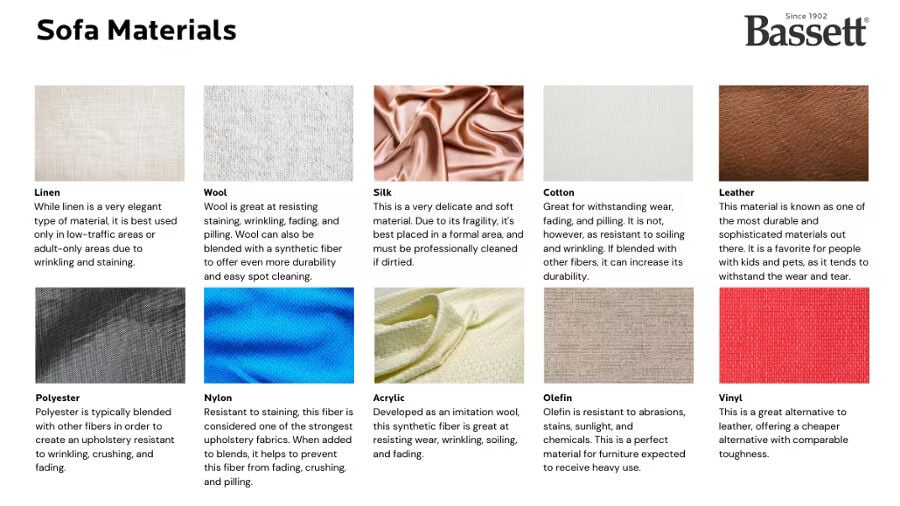
Different materials require different care approaches. Knowing your fabric prevents costly mistakes.
Common Fabric Types
- Cotton/Linen: Natural and breathable but prone to shrinking
- Polyester/Microfiber: Durable, stain-resistant, often machine-washable
- Velvet/Suede: Pile fabrics that are moisture-sensitive
- Leather/Faux Leather: Wipe-clean only surfaces
- Silk/Wool: Delicate materials that usually require dry cleaning
Test Clean Before Full Treatment
Perform a spot test on any pillow before applying cleaners:
- Mix 1 teaspoon mild detergent with 1 cup water
- Dampen a white cloth with the solution
- Blot an inconspicuous area like the bottom edge
- Wait 10 to 15 minutes
- Check for color fading, texture changes, or residual dampness
If problems appear, switch to dry cleaning or call a professional.
Vacuum and Prep Your Sofa Pillow
Remove surface debris before deep cleaning. This step lifts dust, crumbs, pet hair, and allergens trapped in seams.
Vacuum Thoroughly
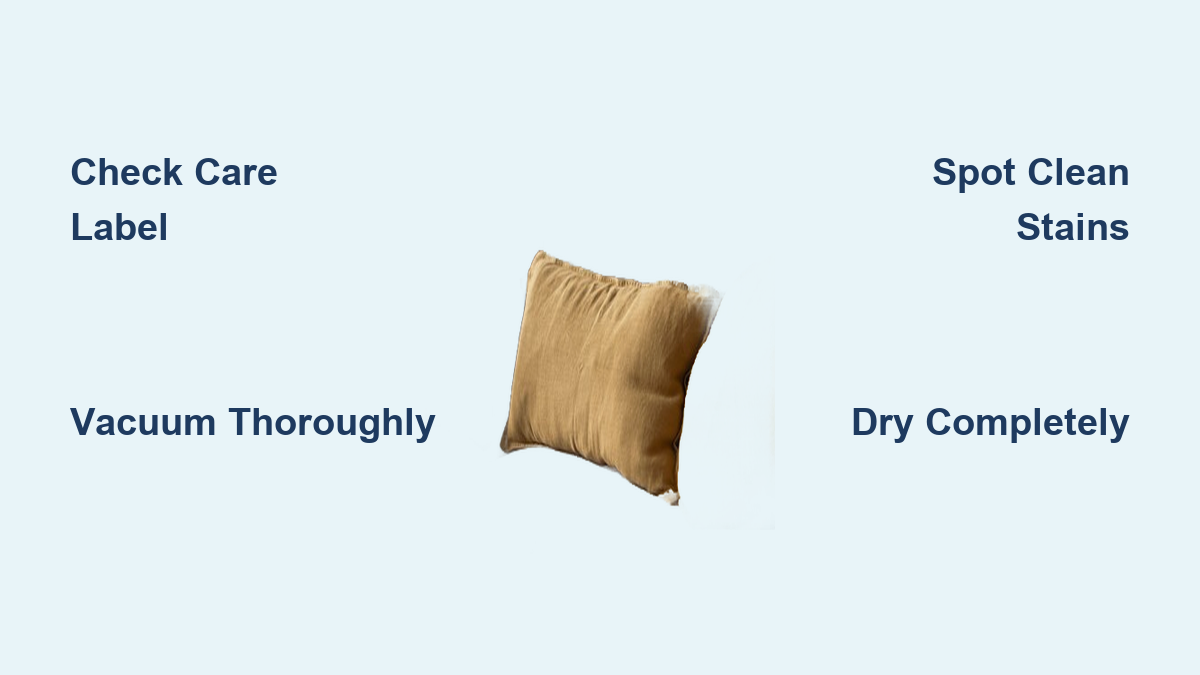
Use the upholstery attachment on your vacuum cleaner. Go over seams, corners, and crevices thoroughly. Vacuum weekly for high-use pillows.
Deodorize with Baking Soda
Sprinkle baking soda liberally over the surface. Let it sit for 15 to 60 minutes depending on odor intensity. Vacuum completely afterward. For antimicrobial effect, add 5 drops of tea tree or lavender oil to the baking soda before applying.
Remove Pet Hair
Choose one of these effective methods:
- Lint roller for quick touch-ups
- Slightly damp sponge wiped across the surface
- Rubber glove run lightly over the fabric
- Dry sponge, which works especially well on microfiber and suede
Clean Removable Covers Safely
Removable covers make cleaning easier. Follow these steps to avoid damage.
Washing Machine Settings
- Unzip and remove the cover carefully
- Turn it inside out to clean the inner layer where oils build up
- Pre-treat stains with laundry spray, dab of detergent, or 1:1 water and hydrogen peroxide
- Wash in cold or cool water on gentle cycle
- Use mild detergent without bleach or softener
- Add an extra rinse cycle to remove all soap residue
Drying Removable Covers
Air drying works best for most fabrics. Hang or lay flat away from direct sunlight. If using a dryer, select low heat or air-fluff and remove promptly. Iron on low heat if needed, but only when the cover is completely dry.
Clean Non-Removable Covers Without Submerging
Never soak or machine wash pillows with attached covers. Use these methods instead.
Sponge Cleaning Method
Apply upholstery shampoo or a DIY mixture of vinegar, water, and dish soap sparingly with a clean cloth. Blot in circular motions focusing on high-touch areas. Rinse with a damp cloth that is not soaking wet. Dry with fans or in open air for 24 to 72 hours.
Steam Cleaning Method
Use a handheld steamer to kill dust mites and lift dirt. Test on a small area first. This method is not suitable for silk, wool, or water-sensitive fabrics. Allow 24 to 48 hours for complete drying.
Baking Soda Deodorizing
Sprinkle heavily over the surface. Wait 20 to 60 minutes. Vacuum thoroughly. Repeat monthly or biweekly in homes with pets.
Clean by Fabric Type
Cotton and Linen Pillows
Machine wash removable covers in cold water on gentle cycle with mild detergent. Air dry only to prevent shrinkage. For non-removable covers, spot clean with cool water and mild soap, then blot gently without soaking.
Polyester and Synthetic Blends
Machine wash removable covers in cool water on gentle cycle. Tumble dry on low heat or air dry. Use a fabric shaver to remove pilling. For non-removable covers, spray with vinegar and water mixture, blot, then wipe with a damp cloth.
Microfiber Pillows
If labeled “W,” clean with mild soap and water using a sponge without soaking. Brush lightly after drying to restore the nap. If labeled “S,” use rubbing alcohol on a white cloth and blot without rubbing. Never use water on “S” coded microfiber.
Velvet Pillows
Spot clean only using foam from soapy water, never liquid. Blot gently without rubbing. For wine stains, apply 1:1 white vinegar and water. For grease, use dish soap foam. Restore the nap with a handheld steamer or iron on steam setting without pressing down. Never saturate velvet.
Suede Pillows
Brush regularly with a suede brush. Dry clean only for deep cleaning. Use a suede eraser for scuffs. For stains, apply vinegar or alcohol sparingly after testing first. For oil stains, apply cornstarch overnight, then brush off. Avoid water, detergents, and scrubbing.
Leather and Faux Leather
Wipe with a damp cloth and mild soap in distilled water. Dry immediately with a clean towel. For ink or grease, dab with rubbing alcohol after testing. For oil, apply cornstarch, wait 1 to 2 hours, then brush off. Condition every 6 to 12 months. Never use bleach, ammonia, or abrasive tools.
Clean the Pillow Insert
Never wash inserts unless the label specifically permits it.
Washable Inserts
Foam, fiberfill, and polyester inserts can be washed in a front-loading machine only. Use warm water on delicate cycle with mild detergent. No bleach or softener. Air dry flat, flipping every 4 to 6 hours. When 75 percent dry, tumble on air-fluff with wool dryer balls. Ensure 100 percent dry before reuse to prevent mold.
Non-Washable Inserts
Down, feather, wool, silk, and memory foam inserts require dry cleaning. At home, spot clean only with a damp cloth and mild soap. Air out in indirect sunlight. Never saturate or machine wash. Replace if flattened, clumped, or permanently stained.
Treat Stains the Right Way
Always Blot, Never Rub
Use a white cloth to prevent dye transfer. Work from outside the stain inward. Press repeatedly to absorb liquid rather than spreading it.
Sticky Substances
Place an ice pack on gum or syrup until hard. Scrape with a plastic knife from outside in. Treat remaining residue with soapy cleaner.
Ink Marks
Dab with rubbing alcohol on a cotton ball. Blot without rubbing. Test first on an inconspicuous area. Rinse with a damp cloth afterward.
Grease or Oil
Sprinkle cornstarch or baking soda on the stain. Wait 6 to 12 hours. Brush or vacuum off. If the stain persists, apply dish soap foam.
Wine or Juice
Blot immediately. Apply 1:1 white vinegar and water. Blot again and rinse with a damp cloth. Dry thoroughly.
Biohazards
Pre-rinse under water if the fabric allows. Soak in 3 percent hydrogen peroxide for 10 to 15 minutes. Scrub with soap and rinse well. Wash at the highest safe temperature or steam clean.
Dry Completely to Prevent Mold
Improper drying ruins pillows by causing mold, shrinkage, or structural damage.
Air Drying
Lay flat or hang over a line with airflow on all sides. Flip every 8 to 12 hours. Drying takes 12 to 72 hours depending on thickness. Keep away from direct sunlight to prevent fading.
Machine Drying
Only use for washable items on air-fluff cycle with no heat. Add dryer balls or clean tennis balls. Check frequently. Never use high heat, which melts foam and shrinks fabric.
Reassemble and Finish
Fluff and Reshape
Shake or knead inserts to restore loft. For foam, tumble in the dryer on no heat with dryer balls.
Reinsert into Cover
Ensure the insert is fully dry. Smooth corners and seams. Zip or button carefully without forcing.
Iron the Cover If Needed
Iron only the cover, never the filled pillow. Use a warm setting. Place a pressing cloth between the iron and delicate fabrics like cotton, linen, or polyester.
Maintain for Long Life
Cleaning Schedule
Vacuum weekly. Spot clean as needed. Deep clean removable covers every 1 to 2 months. Deep clean non-removable covers every 2 to 3 months. Deodorize with baking soda monthly, or biweekly in pet homes. Rotate and fluff monthly.
Homes with children, pets, or allergy sufferers should clean every 3 to 4 weeks.
Preventive Care
Use protective slipcovers. Avoid eating and drinking near pillows. Fluff daily to maintain shape. Store off-season pillows in breathable cotton bags. Keep away from direct sunlight.
When to Replace
Replace inserts every 1 to 2 years if flattened, lumpy, or stained. Replace covers when torn, faded, or hard to clean. Consider upgrading to removable washable covers or performance fabrics like Sunbrella.
Call a Professional When Needed
When to Hire a Pro
Call a professional if your pillow has “S” or “X” code with deep stains. Hire help for mold or mildew inside foam. Seek professional care for beads, sequins, or embroidery. Professional cleaning is advised for vintage or designer pillows and persistent odors like pet urine or smoke.
Common Professional Services
Professionals offer steam cleaning, dry extraction, solvent-based cleaning, and color restoration. Average cost runs $15 to $30 per cover for dry cleaning. DIY cleaning saves money and preserves your investment.
Use the Right Products
Best Detergents
Use Tide Free and Gentle, All Free and Clear, Woolite, Seventh Generation Free and Clear, or diluted Dr. Bronner’s Castile Soap.
Pre-Treatment Sprays
OxiClean MaxForce, Shout Advanced, or homemade 1:1 water and hydrogen peroxide work well.
Helpful Tools
Keep these on hand:
- Upholstery vacuum attachment
- Wool dryer balls
- Fabric shaver
- Suede brush and eraser
- Handheld steamer
Fix Common Problems
| Problem | Cause | Solution |
|---|---|---|
| Musty smell | Incomplete drying | Re-wash, dry fully, add vinegar to next load |
| Shrinkage | Hot water or heat | Use cold water and air dry |
| Fading | Harsh detergent or sun | Use color-safe soap and dry in shade |
| Foam damage | Top-loader agitator | Use front-loader only |
| Stiff fabric | Soap residue | Extra rinse, use less detergent |
| Allergies | Dust mites | Wash monthly, steam clean, use hypoallergenic inserts |
Key Takeaways for Cleaning Sofa Pillows
Always check the care label first to determine the correct cleaning method for your specific pillow. Never use water on “S” or “X” coded fabrics. Test any cleaner on an inconspicuous area before full application.
Vacuum weekly and deodorize monthly with baking soda to maintain freshness between deep cleans. Clean removable covers in the washing machine on gentle cycle with mild detergent, then air dry. For non-removable covers, use sponge cleaning, steam cleaning, or baking soda treatment depending on fabric type.
Ensure every component is 100 percent dry before reassembly to prevent mold. Replace inserts every 1 to 2 years if flattened or stained. Use zippered pillow protectors to extend life and simplify future cleaning.
Frequently Asked Questions About Cleaning Sofa Pillows
Can I machine wash all sofa pillow covers?
No. Only pillow covers labeled “W” or “WS” can be machine washed. Covers labeled “S” require solvent-based cleaning, and “X” coded covers should be vacuumed only or professionally cleaned. Check the care label before attempting any wet cleaning.
How do I remove pet hair from sofa pillows?
Use a lint roller, slightly damp sponge, rubber glove, or dry sponge. Rub gently across the surface to lift pet hair. For microfiber and suede, dry sponges work especially well. Vacuum first to remove loose hair before using these tools.
How often should I deep clean my sofa pillows?
Deep clean removable covers every 1 to 2 months. Clean non-removable covers every 2 to 3 months. In homes with children, pets, or allergy sufferers, clean every 3 to 4 weeks. Vacuum weekly and spot treat stains immediately.
Can I dry sofa pillow covers in the dryer?
Only if the care label permits. Use low heat or air-fluff setting. Remove promptly to prevent wrinkles. Air drying is safer and recommended for most fabrics, especially cotton, linen, and velvet which can shrink or become damaged in high heat.
What if my pillow insert is not machine washable?
Non-washable inserts include down, feather, wool, silk, and memory foam. These require dry cleaning or at-home spot cleaning only. Air out in indirect sunlight periodically. Replace if flattened, clumped, or permanently soiled.