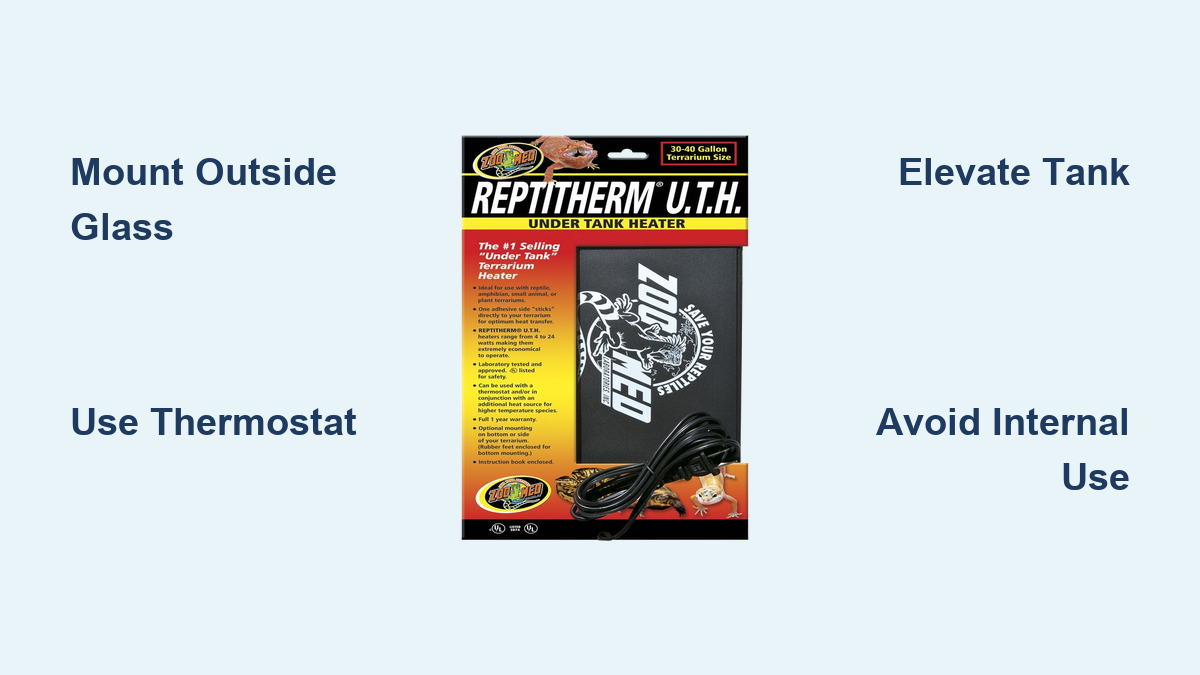
How to Use Zoo Med Heat Pad
You just brought home a new reptile and you’re staring at a Zoo Med heat pad wondering where it goes. You’re not alone. The Zoo Med ReptiTherm® Under Tank Heater is one of the most popular heat sources for reptile enclosures, but using it incorrectly can crack glass or burn your pet. This guide walks you through sizing, placement, safety rules, and thermostat setup so your reptile stays warm without the risks.
The Zoo Med heat pad is not a plug-and-play device. It’s a low-wattage heater designed to attach to the outside of your tank and create a warm zone your reptile can thermoregulate against. When installed correctly, it runs 24/7 and mimics natural ground warmth for burrowing species. Place it inside the tank or on an aquarium, and you risk cracked glass and overheated animals. Below, you’ll learn how to pick the right size, mount it safely, prevent burns, and pair it with a thermostat for full control.
Choose the Right Size Pad

Matching the heat pad to your tank prevents both cold spots and dangerous overheating.
Match Wattage to Gallon Capacity
A pad that’s too small won’t warm the enclosure effectively. One that’s too large can push temperatures past safe limits. Always match wattage and dimensions to your terrarium’s gallon rating.
| Item Number | Size | Dimensions | Wattage | Tank Size |
|---|---|---|---|---|
| RH-7 | Mini | 4″ x 5″ | 4 W | 1–5 gal |
| RH-4 | Small | 6″ x 8″ | 8 W | 10–20 gal |
| RH-5 | Medium | 8″ x 12″ | 16 W | 30–40 gal |
| RH-6 | Large | 8″ x 18″ | 24 W | 40+ gal |
Pro Tip: If your tank falls between sizes, go with the next larger pad, but only if you also install a thermostat.
Avoid Mismatched Wattage
Low-wattage pads like the RH-7 (4W) work best for small critter keepers. High-output models like the RH-6 (24W) suit larger enclosures. Never use a large pad on a small tank without temperature control.
Install on Exterior Glass Only

Where you mount the pad matters more than which model you buy.
Mount Under or on the Side
The ReptiTherm® U.T.H. must attach to the outside of the glass, never inside.
- Bottom Mounting: Place the pad under the tank to heat the floor zone. This mimics natural ground warmth for burrowing species like leopard geckos and snakes.
- Side Mounting: Attach to the lower third of a side panel for vertical or arboreal-leaning setups.
Visual cue: The manufacturer’s label should face outward so you can verify proper placement.
Elevate the Tank When Mounted Below
If you mount the pad underneath, you must elevate the enclosure to prevent heat buildup.
- Use the included “bump-on feet” or small rubber spacers.
- Create at least a 1/4-inch air gap so heat can dissipate.
Why it matters: Without airflow, heat gets trapped between the pad and the surface, causing thermal stress that can crack glass.
Never Place Inside the Tank
Putting the heat pad inside the enclosure, even under a towel or substrate layer, is dangerous.
- Direct contact with bedding insulates heat against the glass.
- Glass expands unevenly and may crack within hours.
- Animals can suffer burns from prolonged contact with heated surfaces.
Case study: Multiple reports show glass tanks cracking in multiple locations when U.T.H. pads were installed internally.
Prevent Burns with Interior Barriers
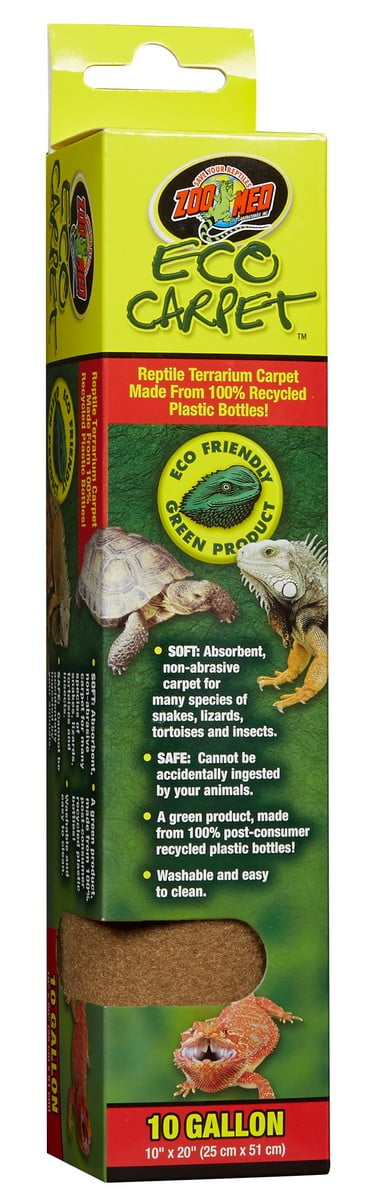
Even with correct exterior mounting, your pet can still get burned.
Use Eco Carpet Over Heated Zones
Loose, lightweight substrates like Aspen, pine shavings, or sphagnum moss can be pushed aside by burrowing reptiles. If your pet rests directly on the warm glass, thermal burns can occur.
- Install a Zoo Med Eco Carpet or similar non-insulating liner on the floor above the pad.
- This creates a protective barrier while still allowing heat to transfer upward.
Pro Tip: Avoid thick foam or insulating mats. They trap heat and reduce efficiency.
Monitor Animal Behavior
Watch for signs your reptile is avoiding the warm side:
- Refusing to bask on the heated end
- Piling substrate over the warm zone
- Spending all time on the cool side
These behaviors may signal the glass is too hot, even if ambient temps seem fine.
Regulate Temperature with a Thermostat
The heat pad alone cannot self-regulate, so external control is essential.
When to Use a Thermostat
Zoo Med requires a thermostat or rheostat if your room temperature reaches 80°F (27°C) or higher.
- Without regulation, the pad can push temperatures beyond safe limits.
- A thermostat cycles power based on actual floor temperature, keeping things stable.
Example: In summer, a room at 82°F combined with a 16W pad can easily push the warm end above 90°F.
Choose the Right Controller
- On/Off Thermostat: Cuts power completely when the target temp is reached.
- Proportional Thermostat: Gradually reduces power for smoother stability.
- Rheostat: Manual dial control. Less precise but budget-friendly.
Placement tip: Put the thermostat probe on the inside floor, directly above the pad, under the substrate or carpet.
Know When Not to Use a Heat Pad
Not every reptile or enclosure is suited for under-tank heating.
Avoid on Aquatic Tanks
The ReptiTherm® U.T.H. is not approved for aquariums.
- Water pressure plus thermal stress creates a high risk of cracks and leaks.
- Aquarium glass thickness differs from reptile enclosures.
Warning: Never use on paludariums or semi-aquatic setups unless explicitly approved by the manufacturer.
Not Ideal for Arboreal Species
Tree-dwelling reptiles like Green Iguanas need overhead heat, not bottom warmth.
- U.T.H. pads only heat the floor, not climbing zones.
- Basking spots should reach 95–100°F, achieved with:
- Ceramic Heat Emitters (CHE)
- Basking bulbs
- UVB fixtures
For iguanas, use the U.T.H. only as a secondary heat source, if at all.
Set Up a Proper Thermal Gradient

Reptiles need both warm and cool zones to regulate body temperature.
Daytime Temperature Zones
For species that benefit from bottom heat, such as leopard geckos and snakes:
| Zone | Temperature Range |
|---|---|
| Warm Side (above pad) | 84–88°F |
| Cool Side | 75–80°F |
| Basking Spot (with bulb) | 90–95°F |
Verify with a digital probe thermometer or an infrared temp gun.
Nighttime Heating Strategy
Most reptiles do not need extra heat at night if room temps stay above 75°F.
- Green iguanas require a temperature drop to support healthy sleep cycles.
- If nighttime temps fall below 77°F, use:
- A Ceramic Heat Emitter (CHE)
- Or thermal cable routed through the enclosure
Avoid heat rocks. They carry a high burn risk and offer poor temperature control.
Troubleshoot Common Problems
Even with proper setup, issues can arise.
Glass Cracked After Installation
Cause: Internal placement or lack of elevation.
Fix:
– Remove the heater immediately.
– Reinstall on the outside of the tank.
– Elevate with bump-on feet.
– Never reuse a cracked enclosure.
Reptile Avoiding Warm Side
Cause: Glass too hot or inadequate gradient.
Fix:
– Check surface temperature with a temp gun.
– Add a thermostat if glass exceeds 90°F.
– Ensure the cool side is shaded and accessible.
Pad Isn’t Heating
Cause: Poor adhesion, power issue, or dead unit.
Fix:
– Confirm the outlet is working.
– Ensure glass was clean and dry during installation.
– Replace the pad if adhesive failed. Do not attempt to re-glue.
Substrate Overheating
Cause: Thick bedding trapping heat.
Fix:
– Limit substrate depth over the pad to 1–2 inches.
– Use a reptile carpet as a moisture and heat barrier.
– Monitor with a probe thermometer.
Maintain and Monitor Long-Term
The U.T.H. is built for 24/7 use, but not indefinitely.
Check Monthly for Safety
- Inspect glass for stress cracks or warping.
- Verify thermostat accuracy against a separate thermometer.
- Look for discoloration or warping on the pad itself.
Replace After 1 Year or Damage
- Warranty: 1 year for RH-4, RH-5, RH-6, and Mini models.
- Replace if:
- Adhesive fails
- Glass shows cracks
- Temperature fluctuates wildly
Note: Solid-state design means no moving parts, but physical damage compromises safety.
Frequently Asked Questions About Zoo Med Heat Pads
Can I put a Zoo Med heat pad inside the tank?
No. Internal placement causes uneven glass expansion and has been documented to crack tanks within hours. Always mount the pad on the outside of the glass.
Do I need a thermostat for a Zoo Med heat pad?
Yes, if your room temperature reaches 80°F or warmer. Zoo Med explicitly recommends a thermostat or rheostat under those conditions to prevent overheating.
Can I use a Zoo Med heat pad on an aquarium?
No. The ReptiTherm® U.T.H. is not approved for aquatic tanks. Water pressure combined with thermal stress can cause cracks and catastrophic leaks.
How warm does a Zoo Med heat pad get?
Depending on mounting location, substrate, and ambient conditions, the pad typically raises the targeted area by 2 to 8 degrees Fahrenheit above room temperature.
Is a heat pad enough for a Green Iguana?
No. Green Iguanas are arboreal and need overhead basking heat of 95–100°F from a bulb or ceramic heat emitter. A U.T.H. can serve only as a secondary heat source.
How long does a Zoo Med heat pad last?
The unit is designed for continuous 24/7 operation and carries a 1-year warranty. Replace it if you notice adhesion failure, glass stress, or erratic temperatures.
Key Takeaways for Using a Zoo Med Heat Pad Safely
The Zoo Med heat pad is a reliable, low-wattage heating solution when used correctly. Start by matching the pad size to your tank’s gallon capacity, then mount it on the outside of the glass, either underneath or on the side. Always elevate the tank if mounting below, and add a thermostat if your room runs 80°F or warmer. Protect burrowing reptiles from burns with an Eco Carpet barrier over loose substrates.
For arboreal species like Green Iguanas, pair the pad with overhead heating or choose a ceramic heat emitter instead. Avoid aquariums entirely, and inspect your setup monthly for cracks or adhesion issues. With proper placement and regulation, your ReptiTherm® U.T.H. can deliver years of safe, consistent warmth for your reptile.