
Chronic Heating Pad Use: Safety Guide
You reach for your heating pad every evening, maybe for lower back pain, menstrual cramps, or stiff muscles. It brings relief, but what if that comfort comes at a cost? Chronic heating pad use can lead to a surprising and often overlooked skin condition called toasted skin syndrome, medically known as Erythema Ab Igne (EAI). This condition develops not from a single burn, but from repeated, low-level heat exposure over weeks or months.
The result is a mottled, netlike rash that starts red and may turn permanently brown. While it often fades with early intervention, long-term use without precautions can cause irreversible skin changes, and in rare cases, increase the risk of skin cancer. The good news: it is preventable. By understanding the signs, risks, and safe usage habits, you can continue using heat therapy safely. In this guide, you’ll learn how to spot early symptoms, avoid permanent damage, and protect your skin, especially if you rely on daily heat for chronic pain.
Recognize the Rash: Identifying Toasted Skin Syndrome

Toasted skin syndrome does not appear overnight. It develops gradually, making it easy to overlook until changes become visible. The most telling sign is a reticulated (netlike or lace-patterned) discoloration on the skin. This pattern follows the areas most exposed to heat, such as the lower back, abdomen, or thighs, which are common spots where heating pads are applied.
Early vs. Chronic Skin Changes
In the early stage, the rash appears reddish, patchy, and may blanch (fade temporarily when pressed). At this point, the damage is often reversible. However, with continued heat exposure, the color shifts to a darker, brownish hue. The skin no longer blanches, signaling permanent pigment changes. In advanced cases, the skin may feel thicker or slightly rough to the touch.
Warning: If you notice sores, ulcers, or persistent thickening within the rash, see a doctor immediately. These can be signs of precancerous or cancerous changes linked to long-standing EAI.
High-Risk Habits: When Heat Therapy Becomes Harmful
Using a heating pad occasionally is generally safe. But chronic heating pad use, especially daily or nightly application, significantly increases the risk of toasted skin syndrome. Certain behaviors turn a helpful tool into a source of skin damage.
Common Risk Factors
- Sleeping with a heating pad: Falling asleep with heat applied leads to prolonged, unmonitored exposure.
- Direct skin contact: Placing the pad directly on bare skin without a barrier intensifies heat absorption.
- High-temperature settings: Running the pad on high increases thermal damage, even if used briefly.
- Daily long-duration use: Using heat for hours every day, especially for chronic pain, accelerates cumulative injury.
People managing chronic back pain, fibromyalgia, or abdominal conditions are especially vulnerable. The same goes for those using laptops on their laps, heated car seats, or space heaters near the legs, all sources of low-grade, persistent heat.
How Heat Damages Skin Over Time
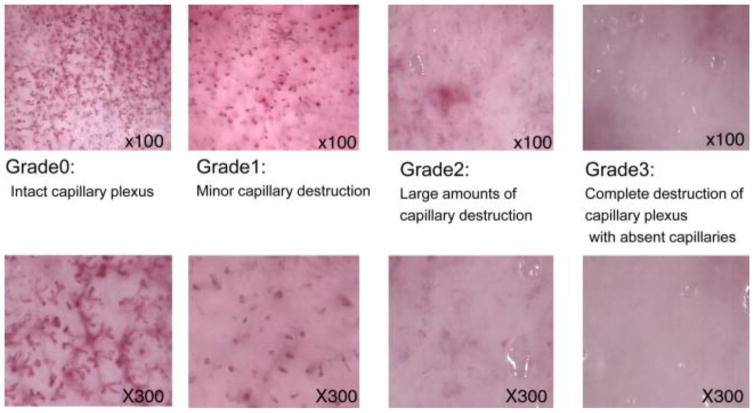
You might assume only hot burns cause skin injury. But chronic heating pad use causes a different kind of harm: cumulative thermal damage at a cellular level. Unlike a burn that damages skin instantly, EAI results from repeated exposure to heat that is hot enough to harm but not hot enough to cause immediate pain.
Underlying Skin Changes
Low-level heat alters the superficial blood vessels and skin cells. It triggers:
- Vascular dilation: Blood vessels expand, causing redness.
- Melanin redistribution: Pigment-producing cells become overactive, leading to hyperpigmentation.
- Collagen breakdown: Dermal fibers weaken, contributing to skin thickening over time.
These changes build up silently. The reticulated pattern forms because heat penetrates unevenly, more intense where the pad makes direct contact, and less where folds or gaps exist.
Fact: The temperature threshold for EAI is typically 43–47°C (109–117°F), below the burn point but high enough to cause damage with daily exposure over weeks.
Where the Rash Appears: Common Body Sites
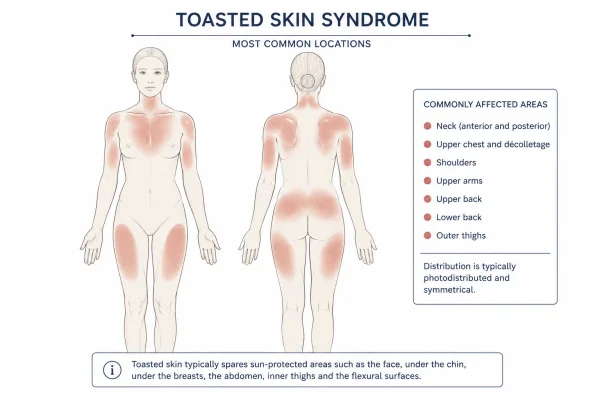
The location of the rash reveals the source of heat. For chronic heating pad users, the most common areas affected include:
Lower Back and Abdomen
- Cause: Heating pads placed directly on the lower back or abdomen for pain relief.
- Pattern: Netlike discoloration across the lumbar region or lower belly.
- Risk Group: People with chronic back pain, endometriosis, or IBS.
Thighs and Legs
- Cause: Laptops, car seat warmers, or space heaters aimed at the legs.
- Pattern: Discoloration on the upper thighs, often symmetrical.
- Risk Group: Office workers, drivers, students.
Other Sites
- Arms or shoulders: From using heating pads for muscle stiffness.
- Feet: From heated blankets or hot water bottles.
Knowing these patterns helps you monitor high-risk zones and catch changes early.
Cancer Risk: When Skin Damage Turns Serious
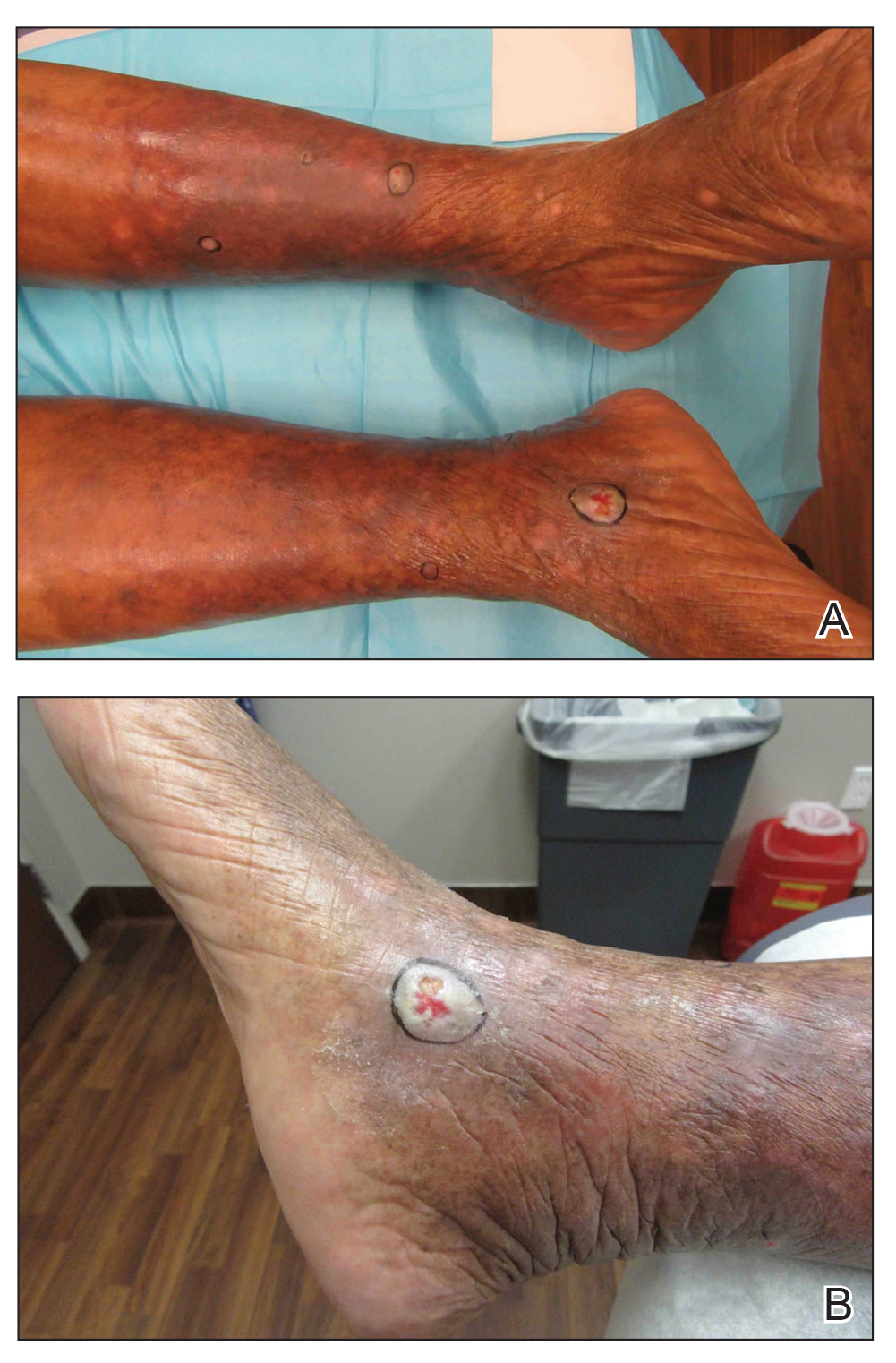
Most cases of toasted skin syndrome are benign and reversible. But long-term, untreated EAI carries a small but real risk of malignant transformation.
Linked Skin Cancers
- Squamous Cell Carcinoma (SCC): The most commonly associated cancer.
- Merkel Cell Carcinoma: A rare but aggressive form, reported in isolated cases.
These cancers typically arise in skin that has been chronically damaged and discolored for years. The risk is higher when the rash persists despite stopping heat exposure.
Red Flags for Malignancy
Seek medical evaluation if you notice:
- Skin thickening or hardening
- Open sores or ulcers that don’t heal
- Bleeding or crusting in the rash area
- Rapid changes in size, color, or texture
A skin biopsy may be needed to rule out cancer. Early detection is critical, as most cases are treatable when caught in time.
Diagnosis: How Doctors Confirm Toasted Skin Syndrome
You don’t need a biopsy to diagnose most cases of EAI. Doctors rely on clinical evaluation, which combines visual inspection and patient history.
Key Diagnostic Steps
- Visual Exam: The lacy, reticulated rash is a hallmark sign.
- Blanch Test: Pressing on the rash to see if it fades. Blanching suggests early, reversible damage.
- Exposure History: Questions about heating pad use, laptop habits, or occupational heat exposure.
- Location Correlation: Matching the rash pattern to the position of the heat source.
When a Biopsy Is Needed
A biopsy is rare but recommended if:
- The skin shows ulceration or thickening
- The rash doesn’t improve after stopping heat
- There’s concern about skin cancer or other dermatoses (like livedo reticularis or pigmented purpuric dermatosis)
Pathology will reveal dilated capillaries, pigment incontinence, and possible epidermal atypia.
Stop the Damage: Essential Treatment Steps
The single most effective treatment for toasted skin syndrome is stopping heat exposure. Without this step, no other therapy will work.
Immediate Actions
- Discontinue use of the heating pad or other heat source.
- Avoid reapplying heat to the affected area.
- Monitor skin changes weekly for improvement or worsening.
Healing Timeline
- Early-stage rash: May fade within weeks to months.
- Chronic hyperpigmentation: Can take months to years to resolve, or may be permanent.
- Skin texture changes: Thickened areas may not fully return to normal.
Tip: Improvement is slow. Be patient and consistent with avoiding heat.
Treat Persistent Discoloration
If the rash doesn’t fade after stopping heat exposure, your doctor may recommend:
Topical Treatments
- Retinoids (e.g., tretinoin): Help renew skin cells and reduce pigmentation.
- Hydroquinone: A skin-lightening agent for dark spots.
- Topical steroids: Used short-term to reduce inflammation if itching or redness persists.
Dermatological Procedures
- Laser therapy: Targets pigmentation and improves skin tone (e.g., pulsed dye laser, Q-switched lasers).
- Chemical peels: May help in select cases by removing damaged outer layers.
These are cosmetic interventions that improve appearance but don’t replace the need to avoid further heat exposure.
Prevent Toasted Skin Syndrome: Safe Heat Habits
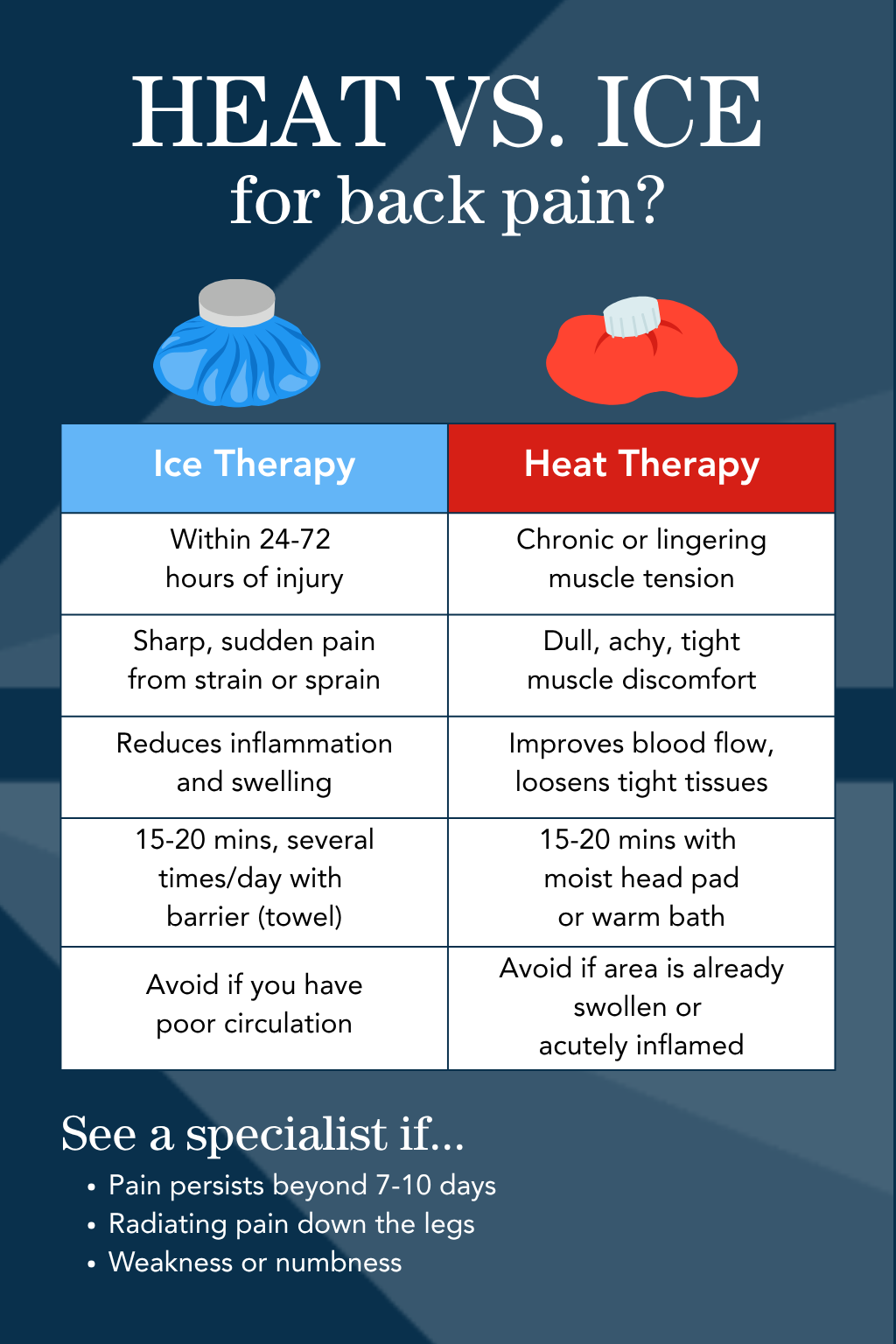
You don’t have to give up heat therapy. With smart, safe practices, you can enjoy pain relief without risking skin damage.
Use a Protective Barrier
- Never apply a heating pad directly to bare skin.
- Always place a towel, T-shirt, or pillow between the pad and your body.
- For laptops, use a lap desk or cushion.
Rule of thumb: If the heat feels intense through clothing, it’s too hot.
Control Heat and Time
- Use the lowest effective setting.
- Set a timer for 15–30 minutes to prevent overuse.
- Avoid sleeping with heating devices, as many models lack automatic shutoff.
Limit Frequency and Duration
- Max 2–3 sessions per day, no longer than 30 minutes each.
- Take breaks: Skip daily use if possible; alternate with cold therapy or stretching.
Safe Alternatives for Chronic Pain Relief
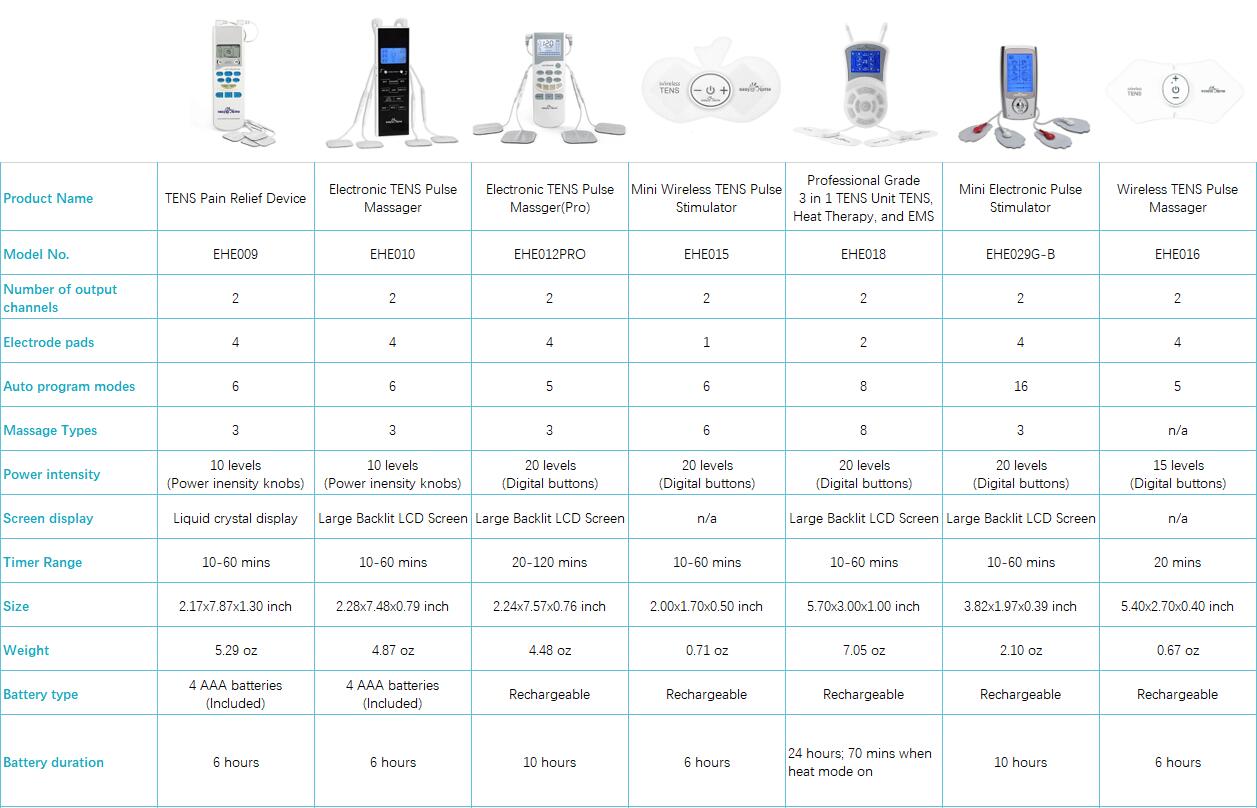
If you rely on chronic heating pad use for pain, consider safer, more sustainable options.
Non-Thermal Therapies
- Physical therapy: Strengthens muscles and improves mobility.
- Stretching and yoga: Reduces stiffness and promotes circulation.
- Massage therapy: Eases muscle tension without heat.
- TENS units: Use electrical stimulation to block pain signals.
Advanced Heat Options
- Microwavable wraps with natural fills (e.g., rice, flaxseed): Cool faster, reducing overexposure risk.
- Infrared heating pads with auto-shutoff: Often have built-in timers and lower surface temps.
- Heated blankets with adjustable zones: Allow targeted warmth without full-body exposure.
Talk to your doctor about creating a comprehensive pain management plan that reduces dependence on heat.
Monitor Skin Weekly for Early Warning Signs
If you use heat therapy regularly, make skin checks part of your routine.
What to Look For
- New redness or darkening in areas of contact.
- Changes in texture: Roughness, thickening, or scaling.
- Persistent warmth or itching after removing the pad.
When to See a Doctor
Seek medical advice if:
- The rash doesn’t fade after 4–6 weeks of stopping heat.
- You notice sores, blisters, or hard patches.
- The skin becomes painful or starts bleeding.
Early intervention prevents permanent damage.
Real-World Scenarios and Prevention Tips
Case 1: Chronic Back Pain Sufferer
Scenario: Uses a heating pad nightly on the lower back for years.
Signs: Brown, netlike rash on the lumbar area.
Solution: Switch to a barrier-protected pad on low heat, use for 20 minutes max, and add core-strengthening exercises.
Case 2: Office Worker with Under-Desk Heater
Scenario: Keeps space heater aimed at legs all day.
Signs: Reddish mottling on thighs.
Solution: Reposition heater to face the floor, maintain 2 feet distance, and rotate leg position hourly.
Case 3: Student with Laptop on Lap
Scenario: Studies for hours with a laptop on bare legs.
Signs: Discoloration on upper thighs.
Solution: Use a lap desk, limit sessions to 1 hour, and take breaks.
Frequently Asked Questions About Chronic Heating Pad Use
Can using a heating pad every day cause skin damage?
Yes. Daily use of a heating pad, especially on high settings or without a barrier, can lead to toasted skin syndrome. This condition develops from repeated, low-level heat exposure over weeks or months and may cause permanent skin discoloration if ignored.
What does toasted skin syndrome look like?
It appears as a netlike or lace-patterned rash, typically reddish in early stages and brownish in chronic stages. The rash often shows up on areas directly exposed to heat, such as the lower back, abdomen, or thighs.
Is toasted skin syndrome reversible?
In many cases, yes. If you stop heat exposure early, the rash may fade within weeks to months. However, long-term damage can cause permanent hyperpigmentation that requires medical or cosmetic treatment.
Can a heating pad cause skin cancer?
In rare cases, long-standing toasted skin syndrome has been linked to skin cancers such as squamous cell carcinoma and Merkel cell carcinoma. The risk increases when the rash persists for years and shows signs like thickening, sores, or ulcers.
How can I use a heating pad safely?
Always place a towel or clothing layer between the pad and your skin, use the lowest effective setting, limit sessions to 20–30 minutes, and avoid sleeping with the pad on. Set a timer to prevent overuse.
When should I see a doctor for a heating pad rash?
See a doctor if the rash doesn’t fade after 4–6 weeks of stopping heat, or if you notice skin thickening, open sores, bleeding, or rapid changes in the rash’s appearance.
Final Thoughts on Chronic Heating Pad Use and Skin Safety
Chronic heating pad use is a common and effective pain relief strategy, but it comes with hidden risks. Toasted skin syndrome is preventable with simple, consistent habits: use barriers, limit time, avoid high heat, and monitor your skin regularly. If you notice a reticulated rash, stop heat exposure immediately. Most cases improve, but ignoring the signs can lead to permanent discoloration or, rarely, skin cancer. Prioritize safe practices and explore alternative therapies to keep your pain management routine both effective and safe. Your skin will thank you.


